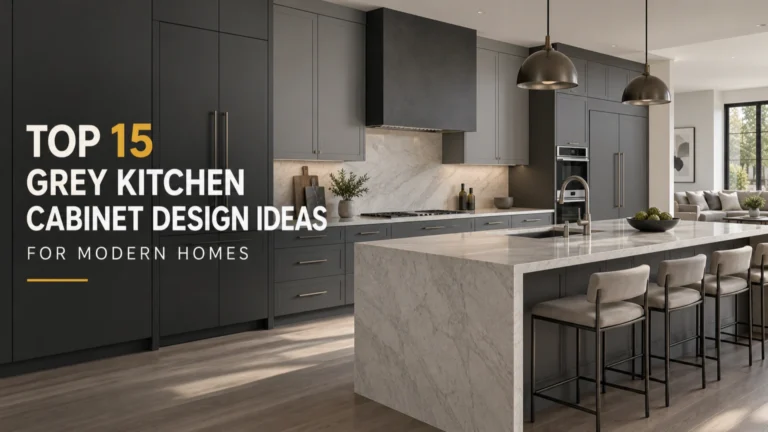
Grey kitchen might look just right in a photo, then feel too blue or too dark when you try to use the same colour at home. The cabinets have not necessarily changed. The light in your kitchen, the colour of the floor and the stone beside them can all affect how that grey appears.
That is why choosing grey kitchen cabinets takes more than finding a shade you like on a screen. Light grey kitchen cabinets can look fresh beside white stone but noticeably cooler beside a blue-grey floor. Dark grey cabinets may suit a bright, open kitchen, while the same amount of dark cabinetry could feel heavy in a room with little daylight.
The 15 ideas below compare different shades of grey and the materials paired with them. As you browse, look at where the grey is used—across every cabinet, on the lower units or only on the island. Those choices can help you decide which ideas are worth testing in your own kitchen.
15 Grey Kitchen Cabinet Design Ideas
Grey kitchen cabinet door can look very different depending on its undertone and the surfaces beside it. The ideas below start with lighter shades, move through mixed finishes, and finish with deeper greys. For each one, consider the whole kitchen rather than the cabinet colour on its own.
1. Pale Grey Cabinets with Crisp White Surfaces

Pale grey cabinets and clean white surfaces make a kitchen look bright without using white on every cabinet door. The grey is most noticeable where a door meets the white countertop or wall, so even a small difference in shade can change the result.
This pairing suits a kitchen that gets good daylight and has few other strong colours. To keep it from looking flat, vary the surfaces rather than adding another colour: smooth cabinet fronts, a lightly textured backsplash and a countertop with subtle movement can be enough. Check the door sample directly against the chosen white; some pale greys look blue beside a warm white.
2. Warm Light Grey Cabinets with Oak Flooring

Oak flooring brings warmth to light grey kitchen cabinets, making the room feel more comfortable than a grey-and-white scheme alone. A simple painted door lets the grain of the floor remain visible without competing with it.
This works well in a home where the same oak floor continues into the dining or living area. Look at the cabinet sample beside the actual flooring sample, particularly if the oak has a yellow or reddish tone. A grey that seems neutral by itself may look cooler once the two are placed together.
3. Cool Light Grey Cabinets with Dark Stone

Dark stone gives cool light grey kitchen cabinets a firm edge. It can define the countertop and cooking area while the cabinetry stays relatively light.
The combination is easier to use in a kitchen with plenty of natural light or light-coloured walls. If the stone has strong veins, choose a quieter grey door so the two surfaces do not compete. Check the kitchen cabinet and stone samples side by side under the lighting planned for the kitchen; a very dark countertop can make a pale door appear lighter than expected.
4. Greige Cabinets with Cream Stone

Greige sits between grey and beige. Paired with cream stone, it creates a softer kitchen than a cool grey with a bright white countertop.
It is a useful direction when the home already has beige flooring, warm white walls or similar finishes. The main risk is choosing two surfaces that are close, but not quite compatible: a pink-leaning cream stone, for example, may look odd beside a green-leaning greige. Put the samples together in daylight before deciding whether they belong in the same kitchen.
Have a floor plan or a grey kitchen you like? Share it with CenSo Home, along with your preferred materials and storage requirements. We can help you develop a cabinet layout and review finishes for a villa or multi-unit residential project.
5. Mushroom Grey Kitchen Cabinets with Natural Wood

Mushroom grey has more brown in it than a typical light grey. It looks particularly good when used on a large cabinet wall beside a clearly defined section of natural wood, such as an island or pantry doors.
Unlike the light grey and oak flooring in idea two, the wood here is part of the cabinetry itself. This gives both finishes a visible role. If you are considering oak cabinet fronts, our white oak wood kitchen cabinets show several ways to use the material. For this pairing, compare a full-size grey door with the selected wood finish; small samples may hide differences in grain and colour.
6. Blue-Grey Cabinets with Soft White Walls

Blue-grey kitchen cabinets give a kitchen more colour than a neutral grey while still feeling restrained. Soft white walls keep the surrounding surfaces light and allow the blue undertone to show without turning the entire room blue.
This direction can work well where daylight is generous. In a kitchen with limited light, however, the same shade may appear darker and cooler than it does in a reference photo. View the cabinet sample in the room in both daylight and evening light. If the blue is difficult to see in the sample but obvious in a large rendering, confirm which result you actually want.
7. Green-Grey Cabinets with Warm Stone

Green-grey has an earthy quality that pairs naturally with stone containing beige, sand or brown tones. From a distance, the cabinets may read as grey; up close, the green becomes more apparent.
It can suit a home with wood finishes or a view of greenery outside, but the stone needs careful selection. Some green-greys turn noticeably olive beside a yellow-toned surface. Compare the two materials together and check a larger cabinet sample before applying the colour across a full kitchen.
8. Grey Lower Cabinets with White Upper Cabinets

Putting grey on the lower cabinets gives the kitchen colour at eye level and below, while white upper cabinets keep the wall from feeling crowded. The division is especially clear in kitchens that need a full run of overhead storage.
Use the same door profile on both colours so the cabinets feel like one design. The countertop acts as the line between them, so its colour matters. If the white uppers are warm and the countertop is stark white, the difference may look unintentional. Confirm all three finishes together rather than approving the grey door alone.
9. Grey Island with Light Perimeter Cabinets

A grey island lets you try a stronger cabinet colour without covering the perimeter walls in it. It gives the island a clear role in an open kitchen, particularly when it is visible from the living area.
The shade can be medium or dark grey depending on the room’s light and the surrounding cabinets. Repeat one detail—such as the countertop, handle finish or door profile—to connect the island to the rest of the kitchen. Check the grey sample from the living and dining areas as well as from inside the kitchen; those are the views you will see every day.
10. Light and Dark Grey Cabinets in One Kitchen

Using two greys can give a kitchen depth without introducing a separate colour. Light grey might cover the main work area, while a darker shade defines the island or a bank of tall cabinets.
The two shades need enough difference to look deliberate. If they are only slightly apart, changing daylight may make them look mismatched rather than intentionally paired. Place both door samples together, then check them beside the countertop and flooring. This is one scheme where selecting each grey separately can lead to a poor result.
11. Grey Wood-Grain Cabinets with Solid Grey Fronts

Grey wood-grain fronts add visible texture; solid grey fronts provide a quieter surface beside them. One approach is to use wood-grain grey on tall pantry cabinets and a plain grey finish on the lower working area.
This combination suits a kitchen where an entirely painted cabinet wall would feel too uniform, but natural brown wood is not part of the interior palette. Ask to see a larger wood-grain sample and confirm its grain direction on the cabinet drawings. The pattern will be much more noticeable across several full-height doors than on a small sample.
Have a floor plan or a grey kitchen you like? Share it with CenSo Home, along with your preferred materials and storage requirements. We can help you develop a cabinet layout and review finishes for a villa or multi-unit residential project.
12. Matte Mid-Grey Cabinets with a Seamless Backsplash

Mid-grey cabinets can cover a substantial part of the kitchen without the brightness of pale grey or the weight of charcoal. Flat matte doors and a backsplash with few visible joints give the cooking wall a clean appearance.
This works best when the layout allows the cabinet lines, appliance openings and backsplash edges to align neatly. If you prefer this pared-back look, see our minimalist kitchen cabinet ideas for other ways to organize storage behind simple fronts. Before choosing the matte finish, handle a physical sample and check how easily everyday marks can be cleaned from it.
13. Slate Grey Cabinets with White Stone

Slate grey is deep enough to give cabinets a strong outline but usually reads lighter than charcoal. White stone provides a clear contrast across the countertop and backsplash.
This pairing suits a kitchen where you want dark cabinets without making every surface dark. Keep the stone selection in view when choosing the cabinet shade: a cool white stone may emphasize blue in the grey, while a warmer white may soften it. Check both samples together under the room’s planned lighting.
14. Charcoal Grey Cabinets with Walnut

Charcoal and walnut make a much darker kitchen than the earlier grey-and-oak combinations. Walnut can be used on an island, a recessed storage area or selected tall doors to break up the charcoal cabinetry.
This scheme has room to breathe in a larger kitchen with good daylight and lighter surfaces elsewhere. The wood should be distinct enough from the grey to show its grain. Review the full cabinet elevation before approving finishes: if both materials cover large, uninterrupted areas, a lighter countertop or wall may be needed to keep the work area clear and comfortable.
15. Graphite Grey Cabinets with Dramatic Veined Stone

Graphite grey cabinets can form a strong background for stone with prominent veining. The stone becomes the feature, while plain cabinet fronts keep the kitchen from looking overly busy.
This is a bold choice for a spacious kitchen where the stone backsplash or island is meant to be seen from the adjoining room. Select the actual slab—or review its full pattern—before finalizing cabinet colours and door divisions. A small stone sample cannot show where the strongest veins will fall, and those veins may change how the entire cabinet wall looks.
Which Grey Kitchen Cabinet Solution Fits Your Home?
Start with what is already in the room: the amount of daylight, the floor colour and whether the kitchen is visible from the living area. These details will help you narrow the 15 grey kitchen cabinet ideas to a few worth sampling.
| Your kitchen | Look you want | Ideas to compare |
|---|---|---|
| Limited daylight and a light-coloured floor | A bright kitchen with some contrast | 1. Pale Grey and White or 8. Grey Lower Cabinets and White Upper Cabinets |
| Oak flooring and moderate daylight | A light kitchen that still feels warm | 2. Warm Light Grey and Oak or 4. Greige and Cream Stone |
| Beige or brown flooring | A warmer grey with more depth | 5. Mushroom Grey and Natural Wood or 7. Green-Grey and Warm Stone |
| Plenty of daylight and a pale floor | Clear contrast between cabinets and countertop | 3. Cool Light Grey and Dark Stone or 13. Slate Grey and White Stone |
| Good daylight and a mostly white interior | A grey with a noticeable colour undertone | 6. Blue-Grey and Soft White Walls |
| An open-plan kitchen visible from the living area | Grey in a defined area rather than throughout the room | 9. Grey Island and Light Cabinets or 10. Light and Dark Grey Cabinets |
| An open-plan kitchen with a simple, modern interior | Texture or clean lines across a larger cabinet area | 11. Grey Wood-Grain and Solid Grey or 12. Matte Mid-Grey and a Seamless Backsplash |
| A spacious kitchen with good daylight | A darker kitchen where cabinets and stone are major features | 14. Charcoal and Walnut or 15. Graphite and Veined Stone |
Conclusion
Grey kitchen cabinets give you more choices than a single light or dark finish. You can use a pale grey across the whole kitchen, keep a deeper shade on the island, or pair grey doors with wood and stone. The right combination depends on what is already in your home. A cabinet colour that looks balanced in a bright reference photo may look quite different beside your flooring or under your kitchen lights.
After finding two or three ideas you like, compare full-size door samples with the actual countertop and flooring materials. Look at them during the day and again with the lights on. If you are planning custom cabinets, this is also the time to confirm where each finish will be used—not just its colour name. A little care at this stage will help the finished kitchen look much closer to the one you had in mind.