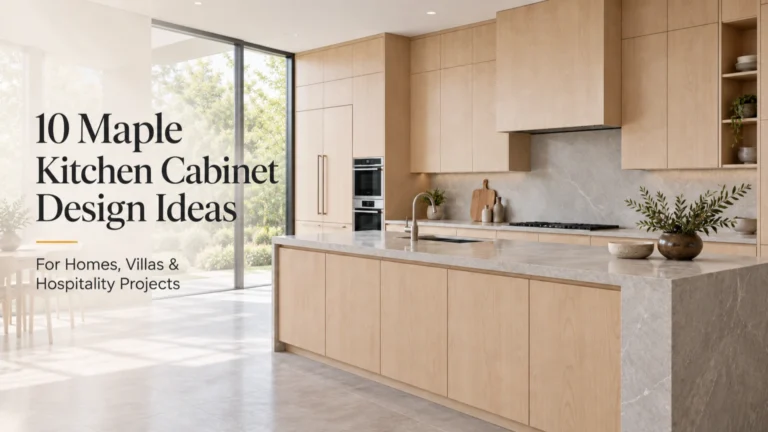
Maple kitchen cabinets are easy to overlook when you first see them in a photograph. Their grain is subtle, and their natural color sits somewhere between creamy white and pale honey. In a real kitchen, those qualities can make a difference: the wood adds warmth without drawing attention away from the room’s layout, stone surfaces, or natural light. It can look relaxed in a family home and more architectural when used across a long wall of cabinetry in a villa.
The 10 maple kitchen cabinets below show how much the design can change while maple remains the common thread. Some use simple flat-panel doors to create a continuous surface; others rely on Shaker details, a contrasting island, or a strong stone backsplash. We also look at how maple cabinetry can work in a compact hospitality suite, where storage and ease of use matter as much as appearance.
One detail is worth checking before you choose a design from an image: “maple cabinets” does not necessarily mean every part of the cabinet is solid maple. Doors, exposed panels, and cabinet boxes may use different materials. Once you have a preferred look, ask for a component-by-component specification and a full-size finish sample so you know what will actually be made for your project.
Top 10 Maple Kitchen Cabinet Design Ideas
The right maple kitchen cabinets design depends on more than the wood color. Door style, cabinet layout, storage, and surrounding materials all change how the kitchen looks and works. These 10 ideas show different ways to use maple, from bright family kitchens to larger villas and compact hospitality suites.
1. Natural Maple Cabinets for a Bright Modern Kitchen
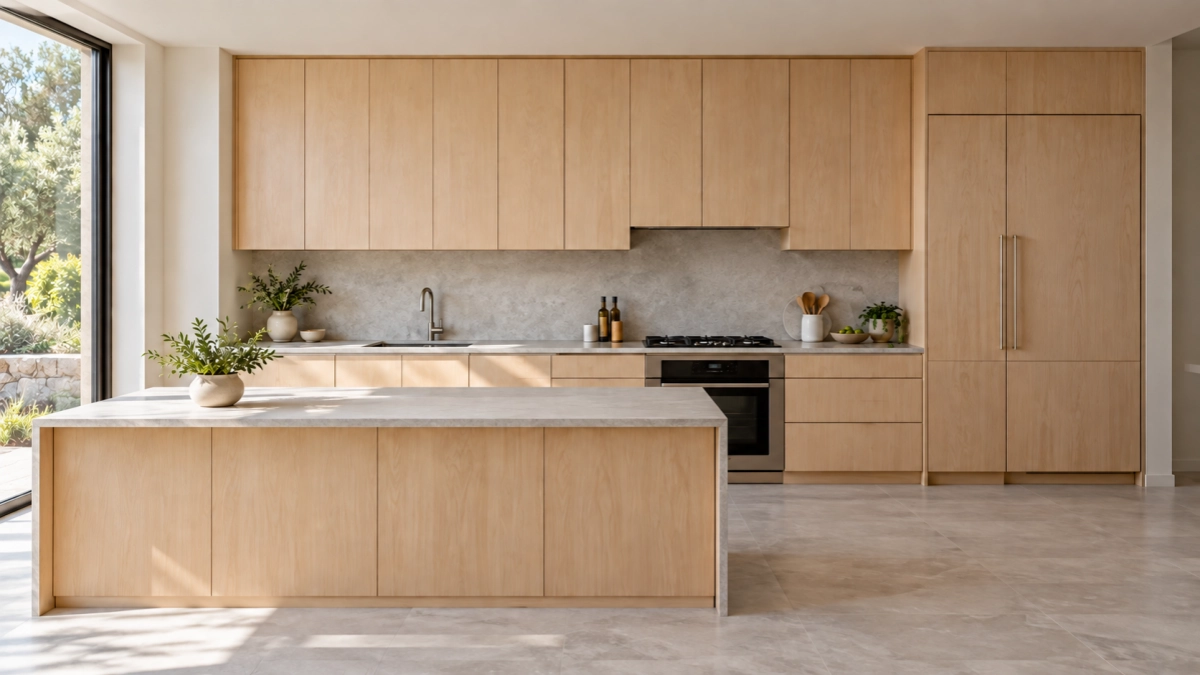
Natural maple looks especially appealing in a kitchen with generous daylight. Here, the light cabinet fronts bring warmth to an otherwise restrained palette of pale walls, a simple countertop, and understated hardware. The fine grain gives the cabinetry some visual depth without making the room feel busy.
This approach suits a modern home where the kitchen should feel open and comfortable rather than highly decorative. It also leaves room for the homeowner to change accessories or wall colors later without replacing the cabinets.
DESIGN CHECK
When selecting a natural finish, view a full-size door sample in the actual kitchen light. Small samples may not show the range of color and grain that will appear across a complete set of cabinets.
2. Light Maple Kitchen Cabinets with a White Stone Island

A white stone island provides a clear focal point against light maple perimeter cabinets. The stone brightens the center of the room, while the cabinetry gives the kitchen enough warmth to avoid an overly stark appearance. Keeping the tall cabinets together along one wall helps the island and preparation area feel more spacious.
This layout works well in a large, open kitchen where the island serves several purposes, from food preparation to informal seating. It is particularly useful when the kitchen connects directly to a dining or living area.
DESIGN CHECK
Before finalizing the design, check the island’s working clearances and the direction in which drawers, appliances, and nearby doors open. A generous island only works when people can move around it comfortably.
3. Maple Shaker Cabinets for a Transitional Home

Shaker doors give maple kitchen cabinets a defined frame without adding elaborate decoration. Paired with a quiet countertop, simple backsplash, and modest metal handles, they create a kitchen that feels familiar and current at the same time. The visible wood grain softens the straight lines of the doors.
This design fits a transitional home that combines classic architectural details with a more open, modern kitchen layout. It can also connect a new kitchen to existing timber floors or interior doors.
DESIGN CHECK
Pay attention to the width of the Shaker frame and the cabinet proportions. A narrow frame produces a cleaner look; a wider one feels more traditional. Approve a door sample before applying the style throughout the kitchen.
4. Flat-Panel Maple Kitchen Cabinets for a Minimalist Villa

Flat-panel doors allow the maple surface to take the lead. With consistent door widths, carefully aligned joints, and integrated appliances, the cabinetry reads as one continuous part of the room rather than a collection of separate units. A restrained countertop and backsplash keep the focus on the wood.
This approach is well suited to a minimalist villa, particularly when the kitchen is visible from the main living space. It gives the room a calm appearance while still providing substantial storage.
DESIGN CHECK
The simplicity makes details more noticeable. During design development, review the door layout around appliances, corners, and tall units. Good alignment matters as much as the finish when large areas of cabinetry are viewed together.
5. Two-Tone Maple Kitchen Cabinets with Painted Accents

A two-tone kitchen can show the natural character of maple without covering every wall in wood. One option is to use maple for the tall cabinets or island, then introduce painted cabinets in a soft off-white or muted green. The painted sections give the eye a place to rest and help define different parts of the kitchen.
This works well in a home where the kitchen shares space with dining or living areas. The painted color can pick up a tone already used elsewhere in the interior.
DESIGN CHECK
Choose which material will dominate before selecting individual colors. For a balanced result, confirm the maple finish, paint color, countertop, and flooring together under the same lighting—not as separate samples viewed on different days.
Share your floor plan, project requirements, or preferred design with CenSo Home. We can help you develop kitchen cabinetry around your layout, materials, and storage needs, whether you are planning a villa or multiple hospitality suites.
6. Floor-to-Ceiling Maple Cabinets with Integrated Storage

Full-height maple cabinets can make use of a tall kitchen wall while keeping small appliances, pantry goods, and serving pieces out of sight. Grouping the refrigerator, ovens, and storage in one zone also frees the remaining walls for a simpler run of base cabinets or a more open view.
The design is useful for families who need substantial storage and for villas where the kitchen must handle both everyday meals and entertaining. Its success depends on what happens behind the doors, not just the uninterrupted exterior.
DESIGN CHECK
Plan the interior before fixing the elevation. Confirm shelf heights, pull-out storage, appliance ventilation, and which items need to be within easy reach. The highest cabinets should hold things used less often.
7. Maple Kitchen Cabinets with a Statement Stone Backsplash

A striking stone backsplash can give a maple kitchen a strong focal point without requiring ornate cabinet doors. The fine, relatively quiet appearance of maple lets the stone’s movement stand out. Repeating the same stone on the countertop can make the cooking wall feel more cohesive.
This combination is especially effective in a villa kitchen with a wide range wall or a long, uninterrupted backsplash. It can also add character to a modern home built around otherwise simple finishes.
DESIGN CHECK
Choose the actual stone slab before approving the cabinet finish. Veining, background color, and slab layout vary, and a small stone sample may give the wrong impression. Keep hardware and surrounding materials restrained so they do not compete with the backsplash.
8. Warm Maple Cabinets for an Open-Plan Family Kitchen

In an open-plan home, kitchen cabinetry is part of the view from the dining table and sofa. Warm maple can help the kitchen feel connected to the rest of the room, especially when its tone relates to the flooring, dining furniture, or other built-in storage. Simple cabinet fronts keep that connection subtle.
This design is suited to a family kitchen that is used throughout the day. It needs accessible storage, enough counter space for shared activities, and surfaces that fit the household’s cleaning routine.
DESIGN CHECK
Before approving the wood tone, compare samples from the kitchen and adjoining rooms together. They do not have to match exactly, but their undertones should work in the same daylight and evening light.
9. Custom Maple Cabinets for a Luxury Villa Kitchen

A villa kitchen has room for more than a larger island. It may need distinct areas for cooking, preparation, pantry storage, and entertaining, with clear movement between them. Custom maple cabinetry can tie these zones together through consistent door details and finishes while allowing each area to serve a different purpose.
The result should feel considered at both room and whole-house scale. Maple may appear on the main kitchen cabinets, while related tones carry into a pantry or nearby built-in furniture.
DESIGN CHECK
Start with the layout and appliance plan before settling the cabinet elevations. Confirm work routes, storage requirements, seating space, and the relationship to adjacent rooms. Larger dimensions make small planning mistakes more expensive to correct.
10. Maple Cabinetry for a Hospitality Suite Kitchen

A kitchen in a hotel suite or serviced apartment has different priorities from a large residential kitchen. The cabinetry must fit a compact space, provide the essentials guests expect, and remain easy for staff to clean and maintain. Light maple can make the area feel welcoming while coordinating with the suite’s wider interior scheme.
A short cabinet run may include a sink, compact appliances, practical drawers, and closed storage. Keeping the layout straightforward helps guests understand the space immediately.
DESIGN CHECK
For a project with multiple suites, approve a complete sample kitchen or mock-up before production. Check door finishes, countertop joints, appliance access, and cleaning details, then record the approved materials so the same specification can be repeated across rooms.
How to Choose the Right Maple Cabinet Finish
The designs above show how much the cabinet finish can change a kitchen. Before choosing a color from a photograph, decide how much of maple’s natural appearance you want to see and confirm how that finish will be produced.
Natural vs. Stained Maple Cabinets
A natural or lightly tinted finish keeps maple’s pale color and fine grain visible. It works well when you want the kitchen to feel bright and the wood to remain a clear part of the design. A stain can create a deeper color, but the result depends on the wood and the finishing process.
Ask for a full-size door sample rather than choosing from a small color chip. View it beside the countertop and flooring in daylight and under the kitchen’s planned lighting. If the project includes many cabinets, agree on an acceptable range of natural color and grain variation before production.
Maple Veneer vs. Solid Maple Components
“Maple kitchen cabinets” describes an appearance or wood species, but it does not tell you how every cabinet component is made. A design may use solid maple for door frames, maple veneer on engineered panels for larger surfaces, and another specified material for cabinet boxes and interiors.
Request a component-by-component material schedule covering the doors, drawer fronts, exposed side panels, cabinet boxes, shelves, and decorative panels. This makes quotations easier to compare and helps ensure the finished kitchen matches the approved sample. For a large project, the drawings and material schedule should identify where the maple grain will remain visible.
Door Style, Countertop and Hardware
Choose these elements together rather than one at a time. Flat-panel doors and discreet pulls support a minimalist kitchen; Shaker doors and simple handles give the same wood a more transitional character. A quiet countertop lets the maple remain prominent, while a strongly veined stone becomes the focal point.
Review the complete combination in the room’s lighting. A door sample, countertop sample, backsplash, and hardware finish placed side by side will reveal clashes that are easy to miss when each item is selected separately.
Conclusion
Maple kitchen cabinets offer a light appearance and fine grain that work across a wide range of interiors. A natural finish can make a modern kitchen feel warmer, while different door styles, colors, and stone surfaces allow the same wood to suit a family home, a large villa, or a hospitality suite. The best choice is the one that fits the room’s layout and the way people will use it.
CenSo Home develops custom kitchen cabinets around each project’s dimensions, layout, materials, finishes, and storage needs. For residential and hospitality projects, the cabinetry can also be coordinated with adjoining wardrobes, wall panels, and other built-in furniture to create a consistent interior.
FAQ
Are maple kitchen cabinets suitable for modern homes?
Yes. Maple’s light color and fine grain pair well with flat-panel doors, simple hardware, and stone countertops. The same wood can also be used for Shaker cabinets if you prefer a softer, more transitional look.
What is the difference between natural and stained maple cabinets?
A natural finish keeps maple’s pale appearance and visible grain. A stained finish changes the color while allowing some wood character to show through. The final result depends on the wood and finishing method, so approve a full-size door sample before production.
Do maple kitchen cabinets turn yellow over time?
Maple can gradually develop a warmer or more amber tone as it ages, especially with exposure to light. The extent of the change depends on the finish and conditions in the room. Ask your supplier how the proposed finish will age, and keep a sample for future reference.
Can maple cabinets be used in a luxury villa kitchen?
Yes. Maple works particularly well when the kitchen design combines a large island, integrated storage, and coordinated cabinetry across several zones. In a villa, plan the layout and appliance positions first, then choose the maple finish to suit the adjoining rooms.
What should hospitality buyers specify for multiple kitchens?
Specify the materials for each cabinet component, approved door and finish samples, hardware, countertop details, appliance dimensions, and acceptable color variation. A completed mock-up kitchen helps the project team check usability and cleaning access before the design is repeated across suites or apartments.

Mavis Chen
Mavis Chen is the Marketing Operations Manager at CenSo Home, with 14 years of experience in building materials and furniture. She creates practical content on hotel furniture, custom cabinetry, materials and international project requirements.