KITCHEN LIGHTING GUIDE · 2026
Introduction
A well-designed kitchen is not only defined by cabinet materials, door styles, or countertop selections. Even high-quality cabinetry can become less practical when work areas, glass cabinets, drawers, or tall storage spaces lack proper lighting. Dark corners, hidden items, uneven illumination, and overly bright nighttime lighting can affect both daily use and the overall appearance of the kitchen.
Thoughtful kitchen cabinet lighting ideas help solve these issues by combining function and design. The right lighting plan can improve countertop visibility, highlight cabinet materials, illuminate internal storage, create softer ambient lighting, and make the kitchen easier to use at night.
LED lighting should not be considered an additional feature added after the kitchen is completed. For custom cabinetry projects, solutions such as led under kitchen cabinets and integrated lighting should be considered during the cabinet design stage to ensure proper wiring, placement, and installation.
In this article, we explore 10 led kitchen lighting ideas that show how lighting can enhance modern kitchen cabinets through better functionality, visual balance, and personalized design.
Where Should Lighting Be Integrated into Kitchen Cabinets?
Good kitchen cabinet lighting ideas should start with understanding how each cabinet area is used. In a well-planned kitchen, lighting is not only added to create visual effects but also to improve daily tasks, storage visibility, and the overall experience of using the space. Different cabinet zones require different lighting approaches, especially in custom kitchens where electrical planning and cabinet construction need to work together.
| Cabinet Area | Lighting Purpose | Best Used For |
|---|---|---|
| Wall Cabinets | Illuminate countertops and reduce shadows during tasks | Food preparation and cooking areas |
| Glass Cabinets | Highlight displayed items and add depth to the kitchen design | Decorative storage and display collections |
| Tall Cabinets | Improve visibility inside deeper storage spaces | Pantry units and appliance storage |
| Drawers | Make stored items easier to locate | Cutlery, cookware, and kitchen accessories |
| Open Shelves | Add functional and ambient lighting | Display areas and beverage stations |
| Toe-Kick Area | Provide low-level lighting for navigation | Nighttime kitchen use |
For example, integrated cabinet lighting works especially well when combined with kitchen cabinets with drawers, glass doors, and customized storage solutions. The most effective cabinet lighting plan starts with how each storage area will be used rather than adding LEDs simply for decoration.
10 Kitchen Cabinet Lighting Ideas
Lighting should be planned as part of the kitchen design, not added afterward. The best kitchen cabinet lighting ideas combine cabinet layout, materials, storage functions, and daily use to improve visibility, highlight details, and enhance the atmosphere of modern kitchen cabinets. These concepts also provide practical kitchen renovation ideas for creating a space where cabinetry and lighting work together from the beginning.
01
Continuous LED Lighting Under Wall Cabinets
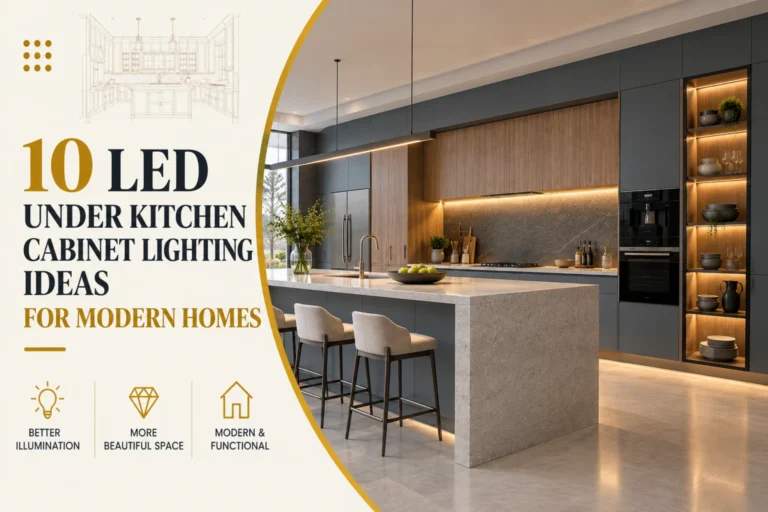
Continuous LED lighting under wall cabinets is one of the most practical kitchen cabinet lighting ideas for modern homes. In this design, the warm LED strip is hidden beneath the upper cabinets, creating a continuous light source across the backsplash and countertop. The simple grey cabinetry, stone surfaces, and integrated lighting create a clean and balanced look for a contemporary kitchen.
Beyond improving visibility during food preparation, this under cabinet lighting kitchen solution also enhances the texture of cabinet finishes and countertop materials. For custom projects, LED profiles and wiring should be considered during the cabinet design stage to achieve a seamless integrated cabinet lighting effect without visible cables or unnecessary modifications.
KEY PLANNING POINT
- Reserve space for LED profiles and wiring channels during cabinet production.

02
Recessed LED Profiles Under Cabinets
Recessed LED profiles create a cleaner and more refined lighting solution compared with exposed LED strips. In this kitchen design, the lighting is integrated beneath the upper cabinets, creating a continuous line of soft illumination across the backsplash and countertop. The combination of warm wood upper cabinets, light lower cabinets, and hidden lighting creates a balanced modern kitchen with a natural and comfortable atmosphere.
Unlike visible LED strips, recessed profiles are designed to sit neatly within the cabinet structure, making the lighting appear like a built-in part of the cabinetry. This approach works especially well for modern kitchen cabinets, where clean lines and minimal details are important. During custom cabinet production, the profile size, installation position, and wiring route should be considered in advance to achieve a seamless integrated cabinet lighting effect.
KEY PLANNING POINT
- Reserve space for recessed LED profiles during cabinet design to keep the lighting hidden and properly aligned.

03
Interior Lighting for Glass Display Cabinets
Glass display cabinets can add both storage value and visual interest to modern kitchens, but the right lighting is essential to make the design stand out. In this kitchen, warm LED lighting is integrated inside the dark-framed glass cabinets, highlighting the displayed tableware while creating contrast against the surrounding minimalist cabinetry. The soft illumination adds depth to the kitchen without making the space feel overly decorative.
This type of integrated cabinet lighting is especially suitable for contemporary kitchens where open display areas are used to showcase selected items while keeping the overall design clean. Compared with standard storage cabinets, glass cabinets require careful lighting placement to avoid shadows and uneven brightness. During custom cabinet planning, the position of LED strips, glass shelves, and electrical connections should be coordinated to achieve a refined result.
KEY PLANNING POINT
- Position interior lighting to evenly highlight displayed items while keeping LED components hidden from direct view.

04
LED Lighting Inside Tall Pantry Cabinets
Tall pantry cabinets provide valuable storage space in modern kitchens, but their depth and height can make it difficult to see and access stored items. In this design, LED lighting is integrated inside the full-height pantry cabinet, creating clear visibility across multiple shelves and storage zones. The warm internal lighting highlights the organized layout while maintaining a clean and minimalist appearance when the cabinet doors are closed.
For modern kitchen cabinets, interior lighting can greatly improve the daily experience of using tall storage units. This solution is especially useful for pantry shelves, appliance cabinets, and deep storage areas where natural light may not reach. When planning integrated cabinet lighting, the LED position, door structure, sensor options, and wiring routes should be considered together during the cabinet design stage.
KEY PLANNING POINT
- Place LED lighting where it can evenly illuminate deep storage areas without reducing available cabinet space.

05
Integrated Lighting Inside Kitchen Drawers
Drawer lighting is becoming an important part of modern kitchen design, especially as homeowners expect better organization and easier access to stored items. In this kitchen, LED lighting is integrated inside the large drawers of the island, automatically illuminating the interior when opened. The warm light helps highlight the drawer layout, from cutlery organizers to cookware storage, while maintaining a clean and minimalist appearance.
Compared with traditional storage solutions, kitchen cabinets with drawers benefit greatly from internal lighting because items are easier to locate without relying on overhead lights. This type of integrated cabinet lighting should be planned together with drawer construction, sensor placement, and electrical routes during custom cabinet production to ensure smooth operation and long-term reliability.
KEY PLANNING POINT
- Reserve space for lighting components and sensors inside drawers during the cabinet design stage.

06
LED Lighting for Open Cabinet Shelves
Open cabinet shelves provide an opportunity to combine storage with visual display, and integrated lighting can make these areas more functional and attractive. In this kitchen design, warm LED lighting is installed along the open shelving, highlighting coffeeware, decorative items, and everyday kitchen accessories while adding depth to the surrounding cabinetry. The soft glow creates a comfortable atmosphere without overpowering the clean modern design.
This type of kitchen cabinet lighting idea works especially well for modern kitchens with display niches, coffee stations, or partially open storage areas. Compared with traditional closed cabinets, open shelves require careful lighting placement to ensure items are evenly illuminated and the LED source remains hidden. When planning integrated cabinet lighting, the shelf structure, material finish, and wiring position should be considered together for a seamless result.
KEY PLANNING POINT
- Use concealed LED placement to highlight open shelves while keeping the focus on the displayed items and cabinet design.

07
Toe-Kick Lighting Under Base Cabinets
Toe-kick lighting is a simple but effective way to add depth and architectural detail to modern kitchens. In this design, a hidden LED strip is installed beneath the base cabinets and island, creating a soft floating effect that visually separates the cabinetry from the floor. The subtle lighting works particularly well with the dark matte cabinets, natural stone island, and minimalist layout, adding warmth while maintaining a clean appearance.
Beyond creating atmosphere, under cabinet lighting kitchen solutions like toe-kick lighting can improve nighttime visibility and make the kitchen easier to navigate without using bright overhead lights. For modern kitchen cabinets, the LED position, cabinet base height, and wiring access should be planned during production to achieve a seamless finish. When combined with other integrated cabinet lighting solutions, toe-kick lighting helps create a more balanced and layered kitchen environment.
KEY PLANNING POINT
- Keep toe-kick lighting subtle and evenly distributed to create a floating effect rather than a visible light source.

08
Warm LED Lighting for Wood Kitchen Cabinets
Natural wood cabinets can create a warm and timeless kitchen atmosphere, and the right lighting helps enhance their texture and character. In this design, warm LED lighting is integrated into the open shelving, wall cabinet areas, and backsplash zone, highlighting the natural wood grain while maintaining a soft and balanced appearance. The combination of light oak finishes, stone surfaces, and subtle illumination creates a comfortable modern kitchen with a strong connection to natural materials.
For wood-based modern kitchen cabinets, lighting should enhance the original color and texture rather than make the space appear overly yellow. A carefully planned integrated cabinet lighting system can bring out the depth of wood finishes while improving visibility in working and display areas. During custom cabinet design, the LED color temperature, installation position, and surrounding materials should be considered together to achieve a natural result.
KEY PLANNING POINT
- Choose a balanced LED color temperature that enhances wood finishes without changing their natural appearance.

09
LED Lighting Around Kitchen Islands
Kitchen islands are often the visual center of modern kitchens, and integrated lighting can enhance both their function and architectural presence. In this design, the large stone island is combined with concealed LED lighting beneath the base, creating a subtle floating effect that adds depth to the space. The warm lighting works together with the wood accents, green cabinetry, and natural stone surfaces to create a balanced and sophisticated residential atmosphere.
Beyond decorative appeal, island lighting can improve the overall experience of using a kitchen by adding another layer of illumination alongside countertop and cabinet lighting. For modern kitchen cabinets, LED placement around the island should be planned with the cabinet structure, island dimensions, and electrical layout to ensure a clean finish. Combined with other integrated cabinet lighting solutions, it helps create a more complete led kitchen lighting system.
KEY PLANNING POINT
- Use concealed LED lighting around the island base to create depth while keeping the light source invisible.

10
Layered Lighting Design for Modern Kitchens
A successful kitchen lighting plan is not based on a single light source but on combining different layers to support both function and atmosphere. In this kitchen design, multiple lighting elements work together, including under-cabinet LED lighting for countertop tasks, interior lighting inside glass display cabinets, and soft ambient illumination throughout the space. The combination of white cabinetry, marble surfaces, and warm lighting creates a balanced and elegant residential kitchen.
This layered approach allows modern kitchen cabinets to look more refined while improving everyday usability. Instead of adding lighting only for decoration, each layer serves a specific purpose, from preparing food to highlighting cabinet details and creating a comfortable evening atmosphere. For custom kitchens, integrated cabinet lighting should be planned together with cabinet layout, materials, and electrical requirements to achieve a seamless result.
KEY PLANNING POINT
- Combine task, accent, and ambient lighting layers to create a kitchen that is both functional and visually balanced.

Have a kitchen layout or renovation project in mind? Share your cabinet requirements, storage needs, preferred materials, and lighting ideas with CenSo Home. Our team can help develop a customized kitchen solution for villas, residential projects, and whole-house interiors.
How to Plan LED Lighting with Your Kitchen Cabinets
LED lighting should be planned together with the kitchen cabinet design rather than added after installation. For custom kitchens, cabinet structure, electrical layout, and lighting components need to be coordinated early to achieve a clean appearance and reliable performance. A well-planned system can improve daily usability while keeping the lighting visually integrated with the cabinetry.
01
Plan Lighting Before Cabinet Production
The best time to plan LED lighting is during the cabinet design and engineering stage. This allows manufacturers to reserve the correct space for wiring, profiles, and electrical components before production begins.
Key items to confirm include:
- Cabinet dimensions – Ensure enough space for lighting components and installation access.
- Wiring routes – Plan hidden cable paths to avoid exposed wires after installation.
- Driver locations – Position LED drivers where they can be accessed for future maintenance.
- Profile positions – Determine where LED channels or profiles should be installed for the best lighting effect.
02
Match Lighting to Cabinet Function
Different cabinet areas serve different purposes, so the lighting solution should be selected according to how each space is used. Using the same lighting method throughout the kitchen may create unnecessary brightness or reduce functionality.
Common applications include:
- Countertop work lighting – Provides clear illumination for food preparation areas.
- Pantry visibility – Helps users quickly find items inside deep storage cabinets.
- Drawer lighting – Improves visibility inside kitchen cabinets with drawers for cutlery and accessories.
- Display lighting – Enhances glass cabinets, open shelves, and decorative storage areas.
03
Choose the Right Color Temperature
The color temperature of LED lighting affects how cabinet finishes and interior materials appear. It should be selected based on the overall kitchen environment rather than personal preference alone.
Consider the relationship between:
- Cabinet finish – Especially important for wood veneer and natural wood cabinets.
- Countertop material – Stone and quartz surfaces reflect light differently.
- Wall color – Affects the overall warmth of the space.
- Natural daylight – Helps maintain a balanced and realistic appearance.
For wood kitchens, the wrong lighting temperature can make natural finishes look overly yellow or change the original character of the material.
04
Consider Controls and Maintenance
Modern kitchens often include more advanced lighting features, but convenience should be balanced with long-term reliability. Smart cabinet lighting can improve the user experience, while proper maintenance planning ensures the system continues working efficiently.
Important considerations include:
- Motion sensors – Automatic lighting for drawers, pantries, and storage areas.
- Dimming functions – Adjust brightness according to different situations.
- Smart controls – Allow easier operation and customization.
- Replaceable components – Simplify future repairs.
- Accessible drivers – Make maintenance easier without removing cabinets.
Conclusion
Well-designed kitchen cabinet lighting is not only about adding decorative effects to a space. The right lighting plan should improve daily kitchen performance while enhancing the overall design. It helps provide better visibility for food preparation, improves storage usability for different cabinet areas, creates a comfortable atmosphere, and highlights the craftsmanship and materials of the cabinetry.
For custom kitchens, lighting decisions should be considered during the early design stage. LED profiles, wiring routes, sensors, cabinet structures, and surface finishes need to be coordinated together to achieve a clean and reliable result. This is especially important when creating integrated solutions where lighting becomes part of the cabinetry rather than an added feature.
CenSo Home provides custom kitchen cabinets and whole-house customization solutions tailored to each project’s requirements. From cabinet layout and storage planning to materials, finishes, and integrated lighting requirements, we help create coordinated interior solutions for modern homes, villas, and residential projects.
Frequently Asked Questions
What is the best lighting for under kitchen cabinets?
LED strip lighting is one of the most common choices for under kitchen cabinets because it provides even illumination, saves space, and can be integrated into custom cabinetry with a clean appearance.
Where should LED lights be placed under kitchen cabinets?
LED lights are typically installed beneath wall cabinets to illuminate countertops. They can also be added inside drawers, glass cabinets, open shelves, and tall storage units depending on the cabinet function.
What color temperature is best for kitchen cabinet lighting?
For most residential kitchens, 3000K–4000K LED lighting provides a balanced look. Warm white lighting works well with wood cabinets, while neutral white is suitable for modern kitchens with stone and lighter finishes.
Can LED lighting be integrated into kitchen cabinets?
Yes. LED lighting can be integrated into kitchen cabinets during the design and production stage. Wiring, LED profiles, sensors, and power components can be planned to create a cleaner installation.
Can kitchen drawers have integrated LED lighting?
Yes. LED lighting can be installed inside kitchen drawers and activated through sensors. This improves visibility and makes it easier to organize cutlery, cookware, and other accessories.