Hotel wardrobes are no longer just storage solutions—they play a critical role in shaping guest experience, room efficiency, brand perception, and operational costs. For B2B clients such as hotel owners, developers, and procurement teams, selecting the right wardrobe design often involves balancing durability, functionality, and aesthetics while managing budgets and logistics.
Modern hotel rooms demand smarter, multi-functional, and comfortable storage solutions that cater to diverse guest needs, from business travelers to long-stay guests. A poorly designed wardrobe can lead to cramped spaces, operational inefficiencies, and diminished guest satisfaction.
This guide explores the latest trends in hotel wardrobe design, highlighting innovations in materials, functionality, and style. It also evaluates different wardrobe types and their applications, helping hotel professionals make informed decisions for their guestrooms and public areas.
Top 10 Hotel Wardrobe Design Trends for Hospitality Projects
Modern hotel wardrobes are evolving beyond basic storage to enhance guest comfort, maximize room efficiency, and strengthen brand identity. From built-in solutions to smart technology and sustainable materials, these latest trends help hotels create functional, stylish, and future-ready guestrooms for today’s travelers.
Trend 1
Built-in Wardrobes
One of the most significant trends in modern hotel wardrobe design is the growing preference for built-in wardrobes. As hotel guestrooms become more compact and guest expectations continue to evolve, developers and designers are looking for storage solutions that maximize space while maintaining a clean and sophisticated appearance.
Unlike freestanding units, a built in hotel wardrobe is designed as an integral part of the guestroom. It can be customized to fit the exact room dimensions and seamlessly coordinated with other hospitality casegoods such as TV units, mini bars, luggage benches, and bathroom vanities. This integrated approach helps create a more organized and visually cohesive environment.
For hotel owners and operators, built-in wardrobes offer several practical advantages:
- Maximize usable floor space, especially in compact guestrooms.
- Create a streamlined and modern interior aesthetic.
- Improve housekeeping efficiency by reducing hard-to-clean gaps around furniture.
- Allow customized storage layouts for different hotel concepts and guest profiles.
- Integrate multiple functions such as luggage storage, in-room safes, mini bars, and open shelving.
This trend is particularly popular in upscale, luxury, and boutique hotels, where custom millwork and carefully planned guestroom layouts are essential to the overall brand experience. However, built-in solutions are also increasingly being adopted by business and select-service hotels seeking to improve room efficiency without increasing room size.

Why Built-in Wardrobes Are Becoming the Preferred Choice
| Advantage | Benefit for Hotel Projects |
|---|---|
| Space Efficiency | Maximizes available guestroom area |
| Integrated Design | Creates a seamless and premium appearance |
| Custom Storage | Accommodates different guest needs |
| Housekeeping Friendly | Simplifies daily cleaning and maintenance |
| Brand Consistency | Supports unique interior design concepts |
| Long-Term Value | Durable and adaptable for long-term operations |
Another factor driving this trend is the increasing demand for personalized guest experiences. Modern travelers expect more than a simple hanging closet—they want convenient storage for luggage, electronics, clothing, and personal belongings. A thoughtfully designed hotel guestroom wardrobe can meet these expectations while contributing to the overall functionality of the room.
Trend 2
Open Closet Concepts
Another growing trend in hotel wardrobe design is the shift from traditional enclosed wardrobes to open closet concepts. Inspired by residential interiors and modern lifestyle hotels, open closets create a lighter and more spacious guestroom while offering convenient access to everyday essentials.
ather than hiding storage behind large cabinet doors, open closet systems typically combine hanging rails, open shelving, luggage racks, and display compartments into a visually integrated feature. This approach helps guestrooms feel less crowded and enhances the overall sense of openness, particularly in compact spaces.
For hotel owners and designers, open closets offer more than aesthetic appeal. They can simplify room layouts, improve housekeeping efficiency, and reduce the amount of cabinetry required, making them an attractive option for many modern hospitality projects.
Why Open Closets Are Becoming More Popular
- Create a more spacious and contemporary guestroom environment.
- Provide easy access to clothing, luggage, and personal belongings.
- Reduce visual bulk compared with traditional wardrobes.
- Simplify cleaning and daily housekeeping.
- Support lifestyle-focused and experience-driven hotel concepts.
Open closet systems are particularly well suited for boutique hotels, lifestyle brands, and select-service properties that prioritize modern design and relaxed guest experiences. Many luxury hotels are also incorporating open storage elements alongside enclosed cabinetry to achieve a balance between functionality and sophistication.
Open Closet Features
Modern hotel wardrobe furniture often includes a combination of:
- Open hanging rails.
- Adjustable shelving.
- Integrated luggage benches.
- Display shelves for personal items.
- Built-in lighting.
- Full-length mirrors.
- Hidden drawers for smaller belongings.
- Dedicated shoe storage.
Best Applications for Open Closets
| Hotel Type | Suitability |
|---|---|
| Boutique Hotels | Excellent |
| Lifestyle Hotels | Excellent |
| Business Hotels | Good |
| Luxury Hotels | Often combined with enclosed storage |
| Resorts | Good |
| Extended-Stay Hotels | Moderate, depending on guest needs |

While open closets offer many advantages, they may not completely replace traditional wardrobes for every hospitality project. Long-stay guests and luxury travelers often require additional concealed storage for larger amounts of clothing and personal items. As a result, many designers are adopting hybrid solutions that combine open shelving with enclosed cabinetry to deliver both convenience and organization.
Trend 3
Multi-Functional Storage
Modern hotel wardrobes are increasingly designed as multi-functional storage units. Instead of serving solely as a place to hang clothes, these wardrobes integrate multiple guest amenities, improving room efficiency and the overall guest experience.
Typical multi-functional features include:
- In-room safe for valuables
- Mini bar storage
- Ironing board and accessories
- Luggage racks or shelves
- Laundry bags and hampers
By consolidating these elements into one integrated cabinet, hotels can maximize usable floor space while ensuring that guests have everything they need within easy reach. Multi-functional wardrobes also simplify housekeeping and reduce clutter, which is especially valuable in compact or mid-sized hotel rooms.
Designers often customize the layout based on hotel type:
- Business hotels: Prioritize efficiency with well-organized compartments for suitcases, clothes, and electronics.
- Luxury hotels: Include additional hidden drawers, high-end finishes, and integrated lighting for premium experience.
- Boutique or lifestyle hotels: Use flexible layouts to combine function with distinctive design aesthetics.
This trend reflects a shift toward guest-centered design, where convenience and operational efficiency go hand in hand with style. Multi-functional wardrobes are now a standard in modern hotel wardrobe storage solutions.

Trend 4
Integrated Lighting
Lighting is becoming an essential element of modern hotel wardrobe design, transforming wardrobes from simple storage units into functional and inviting guest amenities. Rather than relying solely on ambient room lighting, many hotels are integrating dedicated illumination within wardrobes to improve usability and enhance the overall guest experience.
Today’s travelers often arrive late at night or leave early in the morning, making it inconvenient to search for clothing or personal belongings in poorly lit spaces. Integrated lighting solves this problem while adding a premium touch to the guestroom.
Common lighting solutions for custom hotel wardrobes include:
- LED sensor lights that automatically activate when wardrobe doors are opened.
- Interior wardrobe lighting for improved visibility.
- Illuminated hanging sections and shelving.
- Mirror lighting for dressing and grooming.
- Soft ambient lighting integrated into open closet systems.
Beyond guest convenience, integrated lighting also supports hotel operations. Better visibility helps guests locate their belongings more easily, reducing frustration and improving the overall perception of room quality. Motion-sensor lighting can also improve energy efficiency by activating only when needed.
Benefits of Integrated Wardrobe Lighting
| Feature | Benefit |
|---|---|
| LED Sensor Lights | Hands-free convenience and energy savings |
| Interior Lighting | Improved visibility and easier organization |
| Mirror Lighting | Better grooming experience for guests |
| Ambient Lighting | Creates a warm and luxurious atmosphere |
| Motion Sensors | Reduces unnecessary energy consumption |
This trend is particularly popular in luxury hotels, boutique properties, and upscale business hotels, where attention to detail helps reinforce the brand’s positioning. Many designers are also incorporating wardrobe lighting into broader smart room concepts, creating a seamless connection between furniture, technology, and interior design. As guest expectations continue to evolve, integrated lighting is becoming a defining feature of the modern luxury hotel wardrobe. It demonstrates that even small design details can have a meaningful impact on comfort, convenience, and the overall hospitality experience.

Trend 5
Smart Technology Integration
As guest expectations continue to evolve, technology is becoming an increasingly important part of modern hotel wardrobe furniture. However, the latest trend is not about adding more gadgets—it’s about seamlessly integrating smart features that improve convenience while maintaining a clean and elegant design.
Today’s travelers carry multiple electronic devices and expect guestrooms to support their daily routines. Hotel wardrobes are gradually evolving from simple storage units into functional spaces that accommodate charging, security, and connected living without creating visual clutter.
Modern wardrobe designs may incorporate:
- Built-in USB-A and USB-C charging ports.
- Wireless charging shelves for mobile devices.
- Smart electronic safes.
- Integrated power outlets for personal appliances.
- Motion-sensor lighting systems.
- Concealed cable management solutions.
Rather than exposing technology, designers are focusing on discreet integration that complements the overall guestroom aesthetic. Hidden charging stations and integrated power access allow guests to conveniently charge devices while keeping surfaces organized and uncluttered.
Benefits of Smart Wardrobe Features
| Smart Feature | Guest Benefit |
|---|---|
| USB & USB-C Ports | Convenient charging for personal devices |
| Wireless Charging | Reduces cable clutter |
| Smart Electronic Safe | Improved security and ease of use |
| Integrated Power Outlets | Supports personal appliances and electronics |
| Motion Sensor Systems | Hands-free convenience and energy efficiency |
| Concealed Cable Management | Cleaner and more organized appearance |
For hotel owners and operators, smart wardrobe solutions can also contribute to a better guest experience without requiring significant changes to the room layout. Many of these features can be incorporated into custom millwork and FF&E packages during the design phase, helping future-proof guestrooms for changing technology needs.
This trend is particularly relevant for business hotels, upscale properties, luxury resorts, and extended-stay accommodations, where guests often travel with multiple electronic devices and expect modern conveniences as part of their stay.

Trend 6
Residential Inspired Design
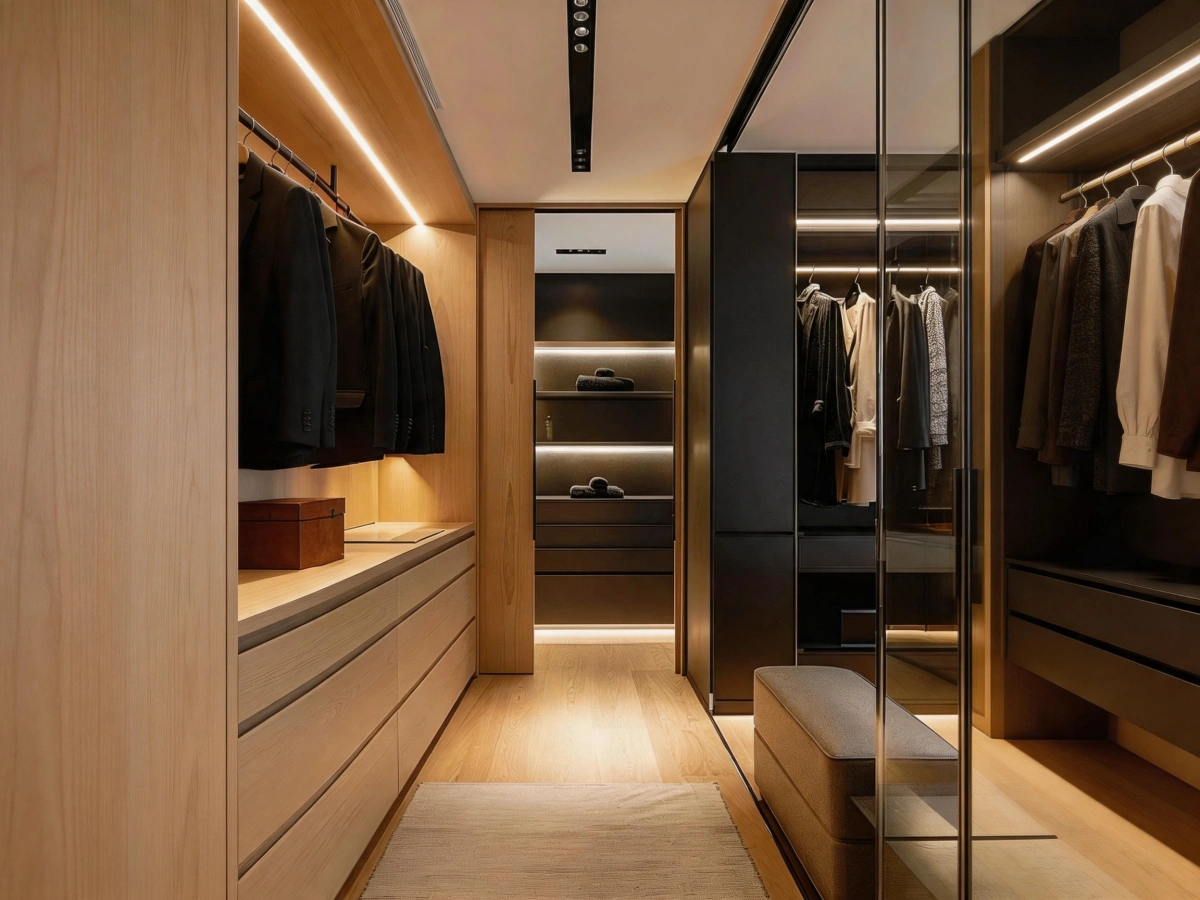
In modern hotel wardrobes, the residential-inspired design trend—also called “resimercial”—blurs the line between home and hospitality. Warm wood tones, soft curves, and textured finishes create a sense of familiarity and comfort, making guests feel at home while traveling.
Key features of residential-inspired wardrobes include:
- Natural wood veneers in oak, walnut, or maple.
- Smooth, rounded edges and soft detailing.
- Textured surfaces such as linen-look laminates or matte finishes.
- Integrated storage solutions that balance function and aesthetic appeal.
This approach enhances the guest experience, encouraging longer stays and increasing perceived value. It also supports brand positioning, signaling a property that prioritizes comfort, style, and attention to detail.
Best Applications:
- Boutique hotels seeking a cozy, personalized feel.
- Extended-stay accommodations where comfort and functionality are equally important.
- Upscale hotel guestrooms aiming for a warm, inviting aesthetic.
Trend 7
Sustainable Materials
Sustainability is becoming an important consideration in modern hotel wardrobe design, but today’s hospitality projects are looking beyond simple environmental labels. The focus is shifting toward materials and manufacturing processes that combine environmental responsibility with durability, long service life, and long-term operational value.
For hotel owners and developers, sustainable wardrobes are not simply about reducing environmental impact—they are also about making smarter investments that require less maintenance and fewer replacements throughout the property’s lifecycle.
Common sustainable material choices for modern hotel wardrobes include:
- FSC-certified wood and responsibly sourced veneers.
- Low-VOC paints, adhesives, and finishes.
- CARB P2, E0, or E1 compliant panels.
- Durable laminates and surface materials with extended service life.
- High-quality hardware designed for long-term commercial use.
By selecting materials that are both environmentally responsible and highly durable, hotels can support their sustainability initiatives while maintaining the performance standards required for high-traffic hospitality environments.
Benefits of Sustainable Hotel Wardrobes
| Sustainable Feature | Benefit for Hospitality Projects |
|---|---|
| FSC-Certified Wood | Supports responsible forestry practices |
| Low-VOC Finishes | Improves indoor air quality |
| Durable Materials | Extends furniture lifespan |
| Certified Panels | Meets environmental compliance standards |
| Premium Hardware | Reduces maintenance and replacement costs |
Sustainability also aligns with broader hospitality trends such as green building certifications and ESG strategies. Many hotel brands and developers now consider environmentally responsible furniture as part of their overall project planning, helping strengthen brand reputation while meeting evolving guest and investor expectations.
At the same time, sustainable design should never compromise aesthetics or functionality. Modern custom hotel casegoods combine timeless design, durable construction, and environmentally responsible materials to create wardrobe solutions that remain attractive and practical for years to come.

Trend 8
Modular Storage Systems
Flexibility has become an increasingly important consideration in hospitality design, driving the popularity of modular storage systems in modern hotel wardrobes. Rather than relying on fixed interior layouts, today’s modular hotel furniture is designed to adapt to changing guest expectations and evolving operational needs.
Hotels are no longer built with the expectation that guestrooms will remain unchanged for decades. Renovations, brand refreshes, and changing travel patterns require furniture solutions that can accommodate future updates without complete replacement. Modular wardrobe systems provide that flexibility by allowing individual components to be adjusted, upgraded, or reconfigured over time.
Common modular features include:
- Adjustable shelving systems.
- Movable hanging rails.
- Interchangeable drawer modules.
- Flexible luggage storage compartments.
- Removable accessory trays and organizers.
- Configurable open and enclosed storage sections.
These adaptable layouts allow hotels to optimize storage for different room types and guest profiles. For example, extended-stay accommodations may prioritize additional shelving and drawers, while business hotels may allocate more hanging space and luggage storage.
Benefits of Modular Wardrobe Systems
| Modular Feature | Benefit for Hotel Projects |
|---|---|
| Adjustable Shelves | Adapt to different storage needs |
| Flexible Hanging Space | Accommodate various guest profiles |
| Interchangeable Components | Simplify future upgrades |
| Modular Drawers | Improve organization and functionality |
| Reconfigurable Layouts | Support different room categories |
| Replaceable Parts | Reduce maintenance and replacement costs |
Another advantage of modular design is easier maintenance. Individual components can often be repaired or replaced without dismantling the entire wardrobe, reducing downtime and extending the useful life of the furniture.
For hotel owners and operators, modular storage systems offer a practical balance between customization and long-term adaptability. They help future-proof guestrooms while providing the flexibility needed to respond to changing market demands and guest preferences.
As hospitality projects continue to prioritize efficient use of space and long-term operational value, modular storage is becoming one of the most practical hotel wardrobe ideas for modern guestrooms. Well-planned hotel guestroom storage systems not only improve functionality but also help hotels maintain consistent design standards throughout future renovations and upgrades.

Trend 9
Hidden Storage Solutions
Maximizing storage while maintaining a clean, uncluttered room is a growing focus in modern hotel wardrobe design. Hidden storage hotel furniture allows hotels to provide ample space for guest belongings without compromising aesthetics or flow.
Key Features:
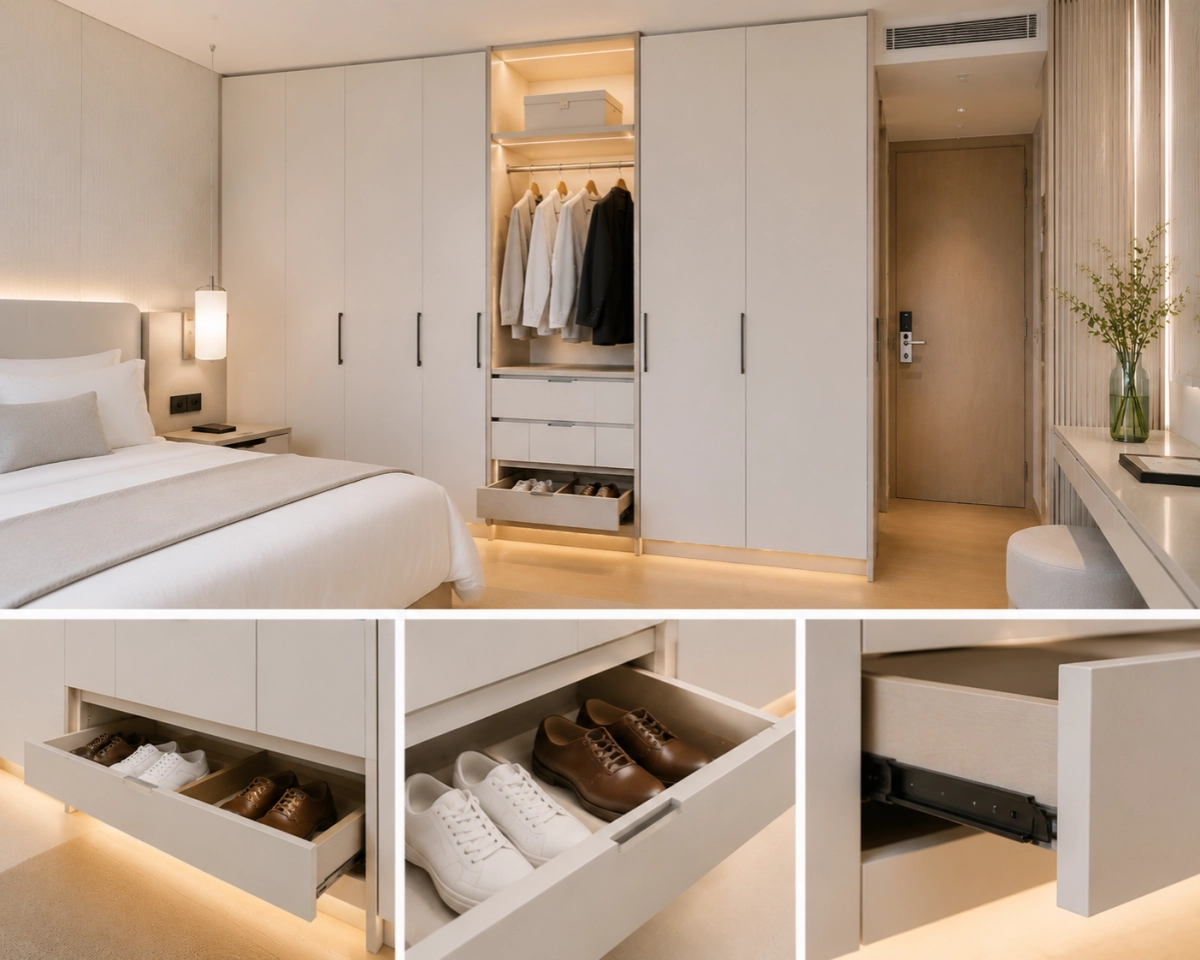
- Concealed drawers behind paneling or sliding doors
- Pull-out trays and compartments integrated into wardrobes or bed units
- Multi-purpose furniture with hidden storage (e.g., ottomans, benches)
- Integrated hooks or foldable racks that stay out of sight
Benefits for Hotels:
- Maintains a sleek and organized guestroom appearance
- Maximizes usable storage without expanding room footprint
- Reduces clutter for housekeeping efficiency
- Enhances guest perception of premium design
For designers and hotel operators, hidden storage solutions are an effective way to combine practicality with style. They work well in small guestrooms, boutique properties, and luxury suites, offering custom hotel wardrobes that are both functional and elegant.
For hotel owners and operators, modular storage systems offer a practical balance between customization and long-term adaptability. They help future-proof guestrooms while providing the flexibility needed to respond to changing market demands and guest preferences.
Trend 10
Luxury Dressing Areas
For premium suites or presidential rooms, luxury hotel wardrobe design extends beyond standard storage to create an exclusive dressing experience. These walk-in closets combine functionality with high-end aesthetics, offering guests a sense of privacy, organization, and indulgence.
Key Features:
- Spacious walk-in layouts with dedicated hanging zones, drawers, and shoe racks
- Integrated lighting, mirrors, and seating for dressing comfort
- High-quality materials such as premium veneers, natural wood, and polished hardware
- Optional built-in safes, minibar cabinets, or tech integration for convenience
Benefits for Hotels:
- Elevates the guest experience with a boutique or luxury feel
- Reinforces brand positioning for high-end or resort properties
- Allows for highly organized storage of clothing, luggage, and personal items
- Enhances the perceived value of premium rooms
These hotel suite wardrobes are particularly suited for luxury properties seeking to deliver exceptional comfort and functionality in every guestroom.

Which Type of Hotel Wardrobe Is Best?
After exploring the latest hotel wardrobe design trends, one question remains: Which type of hotel wardrobe is the best choice? The answer depends on several factors, including the hotel’s positioning, guestroom size, target guests, operational requirements, and overall design concept.
There is no universal solution for every hospitality project. A luxury resort suite has very different storage needs than a compact business hotel room, while a boutique property may prioritize aesthetics over maximum storage capacity. The key is selecting a wardrobe design that balances guest convenience, operational efficiency, and long-term value.
Comparison of Popular Hotel Wardrobe Types
| Wardrobe Type | Advantages | Considerations | Best Applications |
|---|---|---|---|
| Built-in Wardrobe | Space-efficient, highly customizable, seamless appearance | Permanent installation | Mid-scale, upscale, and luxury hotels |
| Open Closet | Modern aesthetic, accessible storage, airy feel | Less concealed storage | Boutique and lifestyle hotels |
| Freestanding Wardrobe | Flexible and easy to replace | Occupies more floor space | Renovations and adaptive reuse projects |
| Walk-in Closet | Premium storage and luxury experience | Requires larger guestrooms | Suites and luxury resorts |
| Luxury Dressing Area | Exclusive guest experience and custom functionality | Higher investment | Presidential suites and high-end hospitality projects |
Choosing the Right Wardrobe for Your Hotel
When selecting hotel wardrobe furniture, consider the following factors:
1.Hotel Category
- Economy and business hotels often benefit from compact built-in solutions.
- Boutique and lifestyle hotels can leverage open closet concepts to create distinctive interiors.
- Luxury properties and resorts may incorporate walk-in closets or dedicated dressing areas.
2. Guestroom Size
- Smaller rooms require efficient built-in or modular storage.
- Larger guestrooms and suites allow for more elaborate wardrobe layouts.
3. Guest Profile
- Business travelers value organized hanging space and luggage storage.
- Extended-stay guests appreciate additional shelving and drawer capacity.
- Luxury travelers expect premium finishes and enhanced functionality.
4. Operational Efficiency
- Built-in wardrobes simplify housekeeping and maximize usable space.
- Modular and customizable storage systems make future renovations easier.
Our Recommendation
- While each wardrobe type has its advantages, built-in hotel wardrobes remain the most versatile solution for modern hospitality projects. They maximize space, integrate seamlessly with other casegoods, and can be customized to suit different hotel concepts and guest needs.
- Open closets continue to gain popularity in boutique and lifestyle properties, while walk-in closets and luxury dressing areas provide a premium experience for high-end suites.
Ultimately, the best wardrobe design should complement the hotel’s brand identity while improving guest comfort and operational efficiency.
For a more comprehensive look at wardrobe planning, dimensions, materials, and custom solutions, you may also explore our related guides:
Conclusion
Hotel wardrobes have evolved far beyond simple storage units. As modern hospitality projects continue to prioritize guest comfort, operational efficiency, and brand differentiation, wardrobe design has become an integral part of the overall guestroom experience.
The latest hotel wardrobe trends reflect this evolution, with built-in solutions maximizing space, open closet concepts creating lifestyle appeal, multi-functional storage improving convenience, integrated lighting and smart technology enhancing usability, and sustainable, modular designs supporting long-term operational goals. Luxury dressing areas and residential-inspired details further demonstrate how wardrobes can contribute to a property’s unique identity and guest satisfaction.
For hotel owners, designers, and procurement teams, adopting these trends is not simply about following fashion. Thoughtfully designed wardrobes can help optimize room layouts, improve housekeeping efficiency, support sustainability initiatives, and strengthen brand positioning while delivering a more memorable guest experience.
The key is selecting wardrobe solutions that align with the hotel’s concept, guest profile, and operational requirements. Whether developing a boutique hotel, business property, luxury resort, or extended-stay accommodation, combining functionality with timeless design will provide lasting value for both guests and operators.
With nearly two decades of experience in hospitality furniture manufacturing, experienced partners such as CenSo Home help hotel projects transform these design trends into practical, high-quality solutions. From custom hotel wardrobes and built-in furniture to integrated FF&E and custom hotel casegoods, working with an experienced hospitality furniture specialist can help ensure that modern design ideas translate into successful, long-lasting hotel projects.
FAQ
What is "resimercial" in hotel wardrobe design?
“Resimercial” combines the comfort of residential interiors with the durability of commercial hospitality furniture. In hotel wardrobe design, this trend incorporates warm wood tones, soft curves, textured finishes, and functional storage solutions to create a welcoming “home away from home” experience for guests.
How do modular wardrobes improve guestroom efficiency?
Modular wardrobes feature adjustable shelves, flexible hanging spaces, and interchangeable storage components. They allow hotels to adapt storage layouts for different room categories, simplify maintenance, and support future renovations without replacing the entire wardrobe system.
What are the most popular sustainable materials for hotel wardrobes?
Modern hotel wardrobes commonly use FSC-certified wood, low-VOC finishes, CARB P2 or E0/E1 compliant panels, durable laminates, and high-quality commercial hardware. These materials help reduce environmental impact while improving durability and long-term operational value.
When should hotels update their wardrobes to follow design trends?
Most hotels consider updating wardrobes during major guestroom renovations, typically every 7–10 years. However, modular upgrades, integrated lighting, and smart storage features can often be added during smaller refurbishment projects to keep guestrooms aligned with evolving guest expectations.
Built-in or freestanding: which is best for modern hotels?
Built-in wardrobes are generally the preferred solution for new hotel developments and major renovations because they maximize space and integrate seamlessly with other casegoods. Freestanding wardrobes offer greater flexibility and can be suitable for boutique hotels or adaptive reuse projects.
Are open closets a good choice for hotel guestrooms?
Open closet concepts are increasingly popular in boutique, lifestyle, and select-service hotels. They create a more spacious and contemporary appearance while providing convenient access to clothing and luggage. Many luxury hotels combine open storage with enclosed cabinetry for added functionality.
What smart features are becoming popular in hotel wardrobes?
Modern hotel wardrobes often include integrated USB and USB-C charging ports, wireless charging shelves, smart electronic safes, motion-sensor lighting, concealed cable management, and built-in power outlets. These features improve guest convenience without compromising aesthetics.
How can custom hotel wardrobes improve the guest experience?
Custom hotel wardrobes can be designed to match the hotel’s brand identity and guest profile while incorporating practical features such as luggage storage, integrated lighting, safes, shoe racks, laundry compartments, and modular shelving. Well-designed storage solutions improve room organization, guest comfort, and overall satisfaction.