PLYWOOD CABINETS · DESIGN GUIDE
Introduction
Plywood kitchen cabinets are a popular choice for homeowners who value structural strength, stability and versatile design options. Made from multiple layers of wood veneer bonded together, plywood offers strong load-bearing capacity and reliable screw-holding performance, making it well suited for kitchen cabinet construction. Its moisture-resistant properties also make it a practical option for everyday kitchen use.
Beyond performance, plywood offers flexibility in surface finishes and cabinet designs, allowing it to complement a range of interior styles. However, material quality, construction methods and overall cost are important factors when planning a project. This guide explores the benefits, limitations and design possibilities of plywood kitchen cabinets to help you determine whether they are the right choice for your home.
What Are Plywood Kitchen Cabinets?
Plywood is an engineered wood panel made from thin layers of wood veneer, produced by rotary-cutting logs and arranging the veneers in alternating directions. These layers are bonded together under high temperature and pressure, forming a cross-grain structure that gives plywood its distinctive construction.
This manufacturing process gives plywood several important properties, including structural stability, strong load-bearing capacity and excellent screw-holding performance. It also offers good water and moisture resistance, making it a practical kitchen cabinet plywood material for environments where durability and reliable construction are important.
- Structural Stability
- Load-Bearing Strength
- Screw-Holding Support
- Moisture Resistance
In kitchen cabinetry, plywood is commonly used for cabinet boxes, side panels and shelves. However, plywood cabinet boxes do not necessarily mean that every component is made from the same material. Cabinet doors may use MDF, solid wood or plywood, depending on the desired design. Since plywood is mainly suited to flat-panel applications and 45-degree beveled edges rather than intricate shapes, MDF may be a better option for doors requiring curved or decorative profiles.

Pros and Cons of Plywood Kitchen Cabinets
Plywood kitchen cabinets offer several practical benefits, particularly in structural stability, load-bearing capacity and moisture resistance. However, their processing limitations and finishing requirements are also worth considering when planning a kitchen project.
Pros of Plywood Kitchen Cabinets
- Strong and Structurally Stable
Plywood’s cross-layered construction provides excellent structural stability, strong load-bearing capacity and reliable screw-holding performance, making it suitable for cabinet boxes, shelves and other structural components.
- Good Moisture Resistance
Plywood offers good resistance to water and moisture, making it suitable for kitchen environments. Proper finishing and edge sealing help protect the panels from moisture penetration during everyday use.
- Versatile Surface Finishes
Natural wood veneers and different surface treatments allow custom plywood kitchen cabinets to achieve a variety of colors, textures and appearances, complementing different kitchen styles.
Cons of Plywood Kitchen Cabinets
- Limited Shape Options
Plywood is mainly suitable for flat-panel applications and 45-degree beveled edges. It is not ideal for complex curves or intricate decorative profiles, where MDF offers greater processing flexibility.
- Requires Proper Edge Protection
Although plywood has good moisture resistance, it is not completely waterproof. Exposed edges, cut surfaces and joints require proper sealing to reduce the risk of moisture penetration and maintain long-term cabinet stability.
- Higher Material Cost
Plywood can be more expensive than MDF or particleboard, depending on its grade, thickness and surface finish, which may increase the overall cabinet budget.
Plywood vs. MDF vs. Particleboard Cabinets
Although plywood offers several advantages, it is not the only material used in kitchen cabinetry. MDF and particleboard are also common options, each with different structural properties and processing capabilities. Comparing these three materials can help you choose the right kitchen cabinet plywood material for your design, functional requirements and budget.
| Comparison | Plywood | MDF | Particleboard (PB) |
|---|---|---|---|
| Structure | Cross-layered wood veneers bonded under heat and pressure | Wood fibers bonded with adhesive under pressure | Wood particles bonded with adhesive under pressure |
| Key Properties | Structurally stable, strong load-bearing capacity and screw holding | Smooth surface, fine texture and high flatness | Dense, uniform structure and durable |
| Moisture Resistance | Good water and moisture resistance | Depends on board specifications and treatment | Good moisture resistance |
| Design & Processing | Flat panels and 45° beveled edges | Supports various shapes, including curved and irregular designs | Flat panels and 45° beveled edges |
| Main Advantage | Strength and structural stability | Smooth surfaces and shaping flexibility | Uniform structure and practical durability |
Note: Actual performance depends on board specifications, manufacturing quality and surface treatment. Proper edge sealing and finishing are important for all three materials in kitchen environments.
Compare your options with CenSo Home and explore a cabinet solution tailored to your layout, finish preferences and budget.
Popular Styles for Plywood Kitchen Cabinets

Modern Plywood Kitchen Cabinets
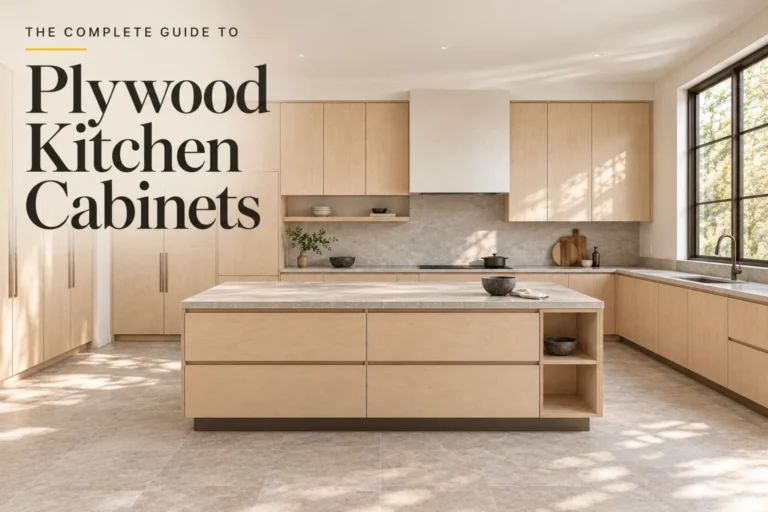
Modern plywood kitchen cabinets feature flat-panel doors, clean lines and natural wood veneer finishes. In this design, warm wood tones and simple forms create a streamlined look, while stone surfaces add subtle contrast. This style is ideal for homeowners who want a contemporary kitchen with natural texture and a calm, uncluttered feel.

Scandinavian Plywood Kitchen Cabinets
Scandinavian plywood kitchen cabinets combine light wood finishes, natural grain patterns and simple, functional designs. In this kitchen, pale wood cabinetry pairs with warm neutral tones, open shelving and minimal hardware to create a bright, relaxed atmosphere. This style is ideal for homeowners who appreciate natural materials and understated elegance.

Industrial Plywood Kitchen Cabinets
Industrial plywood kitchen cabinets combine natural wood grain with dark accents and robust materials. In this design, warm wood cabinetry pairs with black hardware, dark stone countertops and metal pendant lights to create a balanced industrial look. This style is ideal for homeowners who appreciate natural textures with a bold, modern edge.

Transitional Plywood Kitchen Cabinets
Transitional plywood kitchen cabinets blend classic Shaker-style doors with clean, modern details. In this design, warm wood finishes pair with light stone countertops, simple hardware and stainless steel appliances to create a balanced look. This style is ideal for homeowners who appreciate traditional craftsmanship with a fresh, contemporary feel.
6 Plywood Kitchen Cabinet Design Ideas
Beyond choosing an overall style, the right combination of materials, colors and details can make a plywood kitchen feel truly distinctive. From natural wood finishes and contrasting countertops to carefully selected hardware and functional layouts, these six plywood kitchen cabinets design ideas offer practical inspiration for creating a kitchen that reflects your personal taste and everyday needs.
Natural Plywood Cabinets with White Countertops
- Light natural wood veneer cabinetry throughout
- White countertops and matching tile backsplash
- Brushed metal hardware and pale wood flooring
Natural plywood kitchen cabinets bring warmth and texture to this U-shaped kitchen. White countertops and a simple tile backsplash create a clean contrast against the light wood grain, while brushed metal handles add a subtle modern touch. Large windows enhance the bright, airy feel, making the kitchen both welcoming and practical.
Light Wood Plywood Cabinets in Scandinavian Kitchens
- Light wood veneer with simple, flat-panel cabinet fronts
- White stone countertops and soft neutral finishes
- Large windows and natural wood ceiling details
Light wood plywood cabinets create a calm, natural atmosphere in this Scandinavian kitchen. White countertops and warm wood ceiling panels complement the pale veneer, while large windows bring in plenty of daylight. The streamlined cabinetry and subtle dark hardware keep the design simple, functional and inviting.
Two-Tone Plywood Cabinets with White Cabinetry
- Natural wood veneer on base and tall cabinets
- White upper cabinets and Shaker-style island fronts
- White stone countertops and warm wood accents
This two-tone kitchen combines natural plywood cabinets with white cabinetry to create a balanced, layered look. Warm wood grain adds texture, while white upper cabinets and island fronts keep the space bright. White stone countertops and simple metal hardware complete the design, creating a welcoming kitchen with a clean, contemporary feel.
Plywood Cabinets with Dark Hardware and Stone
- Natural wood veneer cabinetry with clean, flat-panel doors
- Matte black hardware and contrasting dark island cabinets
- White marble countertops and matching backsplash
Natural plywood cabinets create a warm foundation for this modern kitchen, while black handles and dark island cabinetry add definition and contrast. White marble countertops and a matching backsplash introduce elegant stone textures, balancing the warmth of the wood. Glass-front cabinets and pendant lighting complete the look with subtle visual detail.
Plywood Cabinets with Open Shelving
- Natural wood veneer cabinetry with matching open shelves
- Integrated display areas for dishes and everyday essentials
- Light stone countertops and backsplash for a balanced look
Natural plywood cabinets create a warm, cohesive look, while open shelving breaks up the solid cabinet fronts and provides space for displaying everyday items. Matching wood finishes connect the shelves with the surrounding cabinetry, while light stone surfaces keep the overall design balanced and inviting.
Custom Plywood Cabinets with a Large Kitchen Island
- Spacious plywood island with integrated seating
- Floor-to-ceiling cabinets for ample storage
- Built-in coffee station and open display shelving
The large kitchen island combines food preparation, seating and storage in one functional centerpiece. Natural wood plywood cabinets add warmth, while white upper cabinets create visual contrast. Floor-to-ceiling storage and a built-in coffee station make the layout practical, showcasing the flexibility of custom plywood kitchen cabinets.
How to Choose and Customize Plywood Kitchen Cabinets
Choosing the right plywood kitchen cabinets involves more than selecting a color or door style. Material specifications, cabinet construction, surface finishes and storage requirements all affect the final result. Consider the following factors when planning your kitchen renovation or bespoke plywood kitchen project.

01
Check Plywood Grade and Thickness
Plywood quality varies depending on its grade, veneer construction and manufacturing standards. Ask about the board grade and thickness used for cabinet boxes, shelves and other structural components. The appropriate thickness should be determined by the cabinet application, shelf span and expected load to ensure adequate strength and stability.
02
Select Materials for Cabinet Boxes and Doors
Cabinet boxes and doors serve different functions and do not necessarily require the same material. Plywood is particularly suitable for cabinet structures because of its stability, load-bearing capacity and screw-holding strength. For doors, consider the desired appearance and construction, including plywood panels with natural wood veneer or other decorative finishes.
03
Choose the Right Surface Finish and Edge Treatment
Natural wood veneer highlights the grain and warmth of plywood, while laminate finishes offer a wider selection of colors and patterns. Regardless of the finish, pay attention to edge banding and joint sealing, especially around sinks and other moisture-prone areas. Proper protection helps reduce moisture penetration and supports long-term cabinet performance.
04
Consider Hardware and Functional Details
Quality hinges, drawer runners and soft-close mechanisms improve everyday convenience and cabinet durability. For custom plywood kitchen cabinets, consider pull-out organizers, deep drawers, corner storage and integrated appliance solutions to make better use of available space.
05
Plan Dimensions, Installation and Budget
Before ordering plywood kitchen cupboards, confirm the kitchen measurements, ceiling height, appliance dimensions and plumbing locations. A detailed layout helps ensure accurate cabinet sizing and smooth installation. When setting your budget, consider not only the kitchen cabinet plywood material but also finishes, hardware, customization and installation costs. This helps you balance design preferences with practical requirements.
Conclusion
The right kitchen cabinetry is not simply about choosing a material; it is about creating a space that works for your home, lifestyle and design vision. Plywood offers plenty of possibilities for different layouts and finishes, but the best results come from considering how each element works together as part of the overall kitchen.
Turning your ideas into a cohesive kitchen design starts with the right customization plan. CenSo Home offers custom kitchen cabinets and whole-house cabinetry solutions tailored to individual spaces and preferences. Share your floor plan and inspiration images with our team to explore a bespoke plywood kitchen designed around your home.
Frequently Asked Questions
Are Plywood Kitchen Cabinets Durable?
Yes. Their cross-layered construction provides excellent structural stability, strong load-bearing capacity and reliable screw-holding performance. With quality materials and proper installation, plywood kitchen cabinets can withstand everyday use while maintaining their structural integrity over time.
Are Plywood Kitchen Cabinets Waterproof?
No. Plywood offers good resistance to moisture but is not completely waterproof. Prolonged exposure to water can still cause damage, especially around exposed edges and joints. Proper surface finishing and edge sealing help protect the cabinets.
Are Plywood Kitchen Cabinets Better Than MDF?
It depends on your project requirements. Plywood offers greater structural strength, load-bearing capacity and screw-holding performance, making it suitable for cabinet boxes. MDF provides smoother surfaces and greater flexibility for curved panels and decorative door designs.
Are Plywood Kitchen Cabinets Expensive?
Plywood kitchen cabinets can cost more than MDF or particleboard options, depending on board grade, thickness and surface finish. Custom dimensions, hardware and installation requirements also affect the final price, so comparing complete specifications is important.
How Long Do Plywood Kitchen Cabinets Last?
With quality materials, proper installation and regular maintenance, plywood kitchen cabinets can last for many years. Keeping surfaces dry, sealing exposed edges and addressing water leaks promptly can help extend their service life.