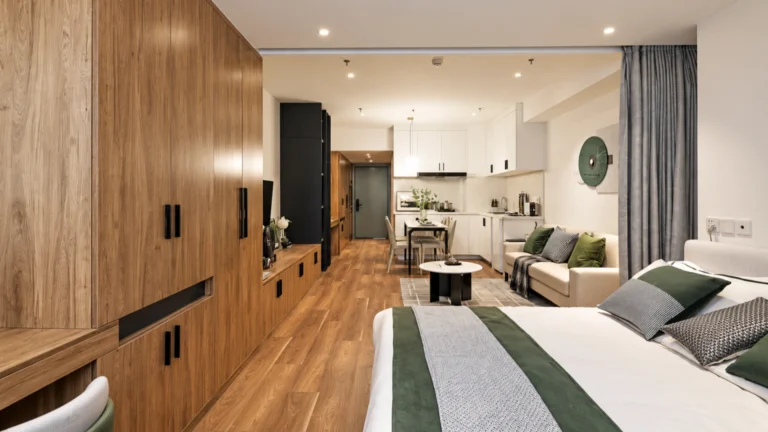
Hotel casegoods are an essential part of hotel guestroom furniture and play a major role in every hotel FF&E plan. Unlike loose decorative pieces, hotel casegoods such as desks, dressers, TV panels, nightstands, and wardrobes are used every day by guests and must support both the visual identity and practical function of the room.
A well-planned casegoods package can improve the overall guestroom experience by creating a clean, organized, and comfortable space. It also helps hotel owners, developers, and procurement teams control long-term performance, including durability, storage efficiency, cleaning and maintenance, installation coordination, and replacement costs.
For hotel projects, hotel room furniture specifications should not focus only on appearance. Materials, dimensions, hardware, surface finishes, electrical integration, packaging, and installation details all need to be considered before production. Clear specifications help reduce project delays, avoid site installation problems, and ensure consistent quality across guest rooms, suites, and large-scale hospitality developments.
This guide explains how to specify key hotel casegoods for guest rooms, including desks, dressers, TV panels, nightstands, and wardrobes, with practical considerations for materials, dimensions, durability, storage, and supplier selection.
Understanding Casegoods
What Are Hotel Casegoods?
Hotel casegoods refer to the hard-surface furniture pieces used in hotel guest rooms, including desks, dressers, TV panels, nightstands, wardrobes, minibars, luggage benches, and related built-in or freestanding storage units. These pieces are an important part of hotel guestroom casegoods and are usually included in the hotel FF&E package.
Unlike loose seating or decorative furniture, hospitality casegoods are closely connected with room layout, storage function, electrical planning, wall finishes, installation details, and long-term maintenance. For this reason, hotel FF&E casegoods need to be specified carefully before production, especially for projects with multiple room types, brand standards, or large-scale guestroom quantities.
For a more detailed explanation of casegoods categories and applications, you can read our full guide on hotel casegoods.

Specification Guide
Key Specification Factors for Hotel Casegoods
Clear hotel casegoods specifications help ensure that every furniture piece fits the room layout, supports daily guest use, and meets the operational requirements of the hotel. Before production begins, buyers should review the dimensions, materials, finishes, hardware, installation details, and project coordination requirements. These factors directly affect hotel casegoods quality, durability, maintenance cost, and long-term guestroom performance.
Materials
Selecting appropriate boards, veneers, laminates, finishes, and surface materials.
Dimensions
Ensuring furniture sizes match guestroom layouts and operational requirements.
Durability
Considering daily hotel usage, maintenance needs, and long-term performance.
Hardware
Using reliable hinges, slides, fittings, and functional components.
Shop Drawings
Coordinating technical details before manufacturing and installation.
01 / Understanding Casegoods
Hotel Desk Specifications
A hotel desk is not only a writing surface. In modern guest rooms, it often functions as a workstation, vanity counter, luggage drop zone, charging area, and part of the overall casegoods system. For this reason, hotel writing desk specifications should be confirmed together with room layout, chair size, power access, cable management, surface durability, and nearby furniture such as the TV panel, minibar, dresser, or wardrobe.

Recommended Hotel Desk Dimensions
The final desk size should depend on the room type, hotel positioning, and guest profile. Business hotels usually need a larger work surface, while resort rooms, boutique hotels, and compact rooms may use a smaller writing desk or vanity-style counter.
| Specification Item | Common Reference Range | Notes |
|---|---|---|
| Desk Width | 900–1400 mm | Compact rooms may use 800–1000 mm; business rooms often use 1200 mm or wider. |
| Desk Depth | 450–600 mm | 500–550 mm is common for laptop use and daily guest items. |
| Desk Height | 730–760 mm | Should match the chair height and guest comfort. |
| Leg Clearance Width | 600–760 mm | Wider clearance improves comfort for laptop use. |
| Knee Clearance Height | 680–700 mm minimum recommended | Accessible rooms may require stricter local standards. |
| Chair Pull-Out Space | 750–900 mm behind chair | Important for circulation and housekeeping access. |
| Desktop Thickness | 25–50 mm | Depends on structure, material, and design style. |

Desktop Materials and Surface Durability
Because the desk surface is used daily for laptops, cosmetics, food, drinks, bags, and housekeeping items, the material should be selected for both appearance and durability.
| Material / Finish | Best For |
|---|---|
| HPL / Laminate | High-traffic hotel rooms, scratch resistance, and easy cleaning. |
| Wood Veneer | Luxury guest rooms requiring a warm natural appearance. |
| Lacquer Finish | Modern hotel rooms with smooth and refined surfaces. |
| Compact Laminate | Stronger commercial-grade applications requiring enhanced durability. |
| Stone / Sintered Stone Top | Premium rooms, minibar integration areas, and applications requiring higher durability. |
| Metal Trim | Edge protection and luxury detailing for upscale hospitality interiors. |

02 / Hotel Dresser Specifications
Hotel Dresser Specifications
A hotel dresser is mainly used for guest storage, room organization, and visual coordination with the overall guestroom furniture package. In mid-to-high-end hotels, extended-stay hotels, resorts, and serviced apartments, the dresser often plays a more important role because guests may stay longer and need more practical storage space.

Recommended Hotel Dresser Dimensions
The final size of a guestroom dresser depends on the room type, wall length, storage requirements, and whether the dresser is used together with a TV panel or mirror. Compact hotel rooms may use a narrow drawer unit, while suites or long-stay rooms often require a wider dresser with more storage capacity.
| Specification Item | Common Reference Range | Notes |
|---|---|---|
| Dresser Width | 800–1600 mm | Suites and extended-stay rooms may use wider units. |
| Dresser Depth | 400–550 mm | 450 mm is common for practical drawer storage. |
| Dresser Height | 750–900 mm | Should coordinate with TV height, mirror, or wall panel. |
| Drawer Depth | 300–450 mm usable depth | Deeper drawers improve storage but need more pull-out clearance. |
| Drawer Height | 120–250 mm | Depends on storage purpose and number of drawers. |
| Clearance in Front | 700–900 mm | Allows drawers to open and guests to move comfortably. |
| Top Panel Thickness | 25–50 mm | Depends on structure, finish, and durability requirement. |
Durable Top Surface
The top surface of a hotel room dresser is often used for bags, drinks, cosmetics, keys, devices, brochures, and housekeeping items. For this reason, the top panel should be resistant to scratches, stains, moisture, and daily cleaning.
| Surface Material | Best For |
|---|---|
| HPL / Laminate | High-traffic rooms requiring easy cleaning and scratch resistance. |
| Wood Veneer with Protective Coating | Luxury rooms requiring a warm natural appearance and premium hospitality atmosphere. |
| Lacquer Finish | Modern rooms requiring smooth surfaces and refined visual effects. |
| Stone / Sintered Stone Top | Premium rooms, minibar areas, and coffee stations requiring durability and elegant appearance. |
| Metal Edge Trim | Edge protection and decorative detailing for upscale hotel interiors. |

03 / Hotel TV Panel and Media Wall
Hotel TV Panel and Media Wall Specifications
For mid-range and luxury hotels, the hotel TV wall panel often becomes the visual center of the room. A well-designed hotel media wall can improve the room’s overall appearance, hide cables, organize equipment, and create a more premium guest experience. However, it also requires detailed specifications before production and installation.
Recommended TV Panel and Media Wall Dimensions
The size and layout of a hotel TV unit should be based on the room type, bed position, viewing distance, TV size, and whether the panel is integrated with a dresser, desk, minibar, or storage cabinet.
| Specification Item | Common Reference Range | Notes |
|---|---|---|
| TV Size | 43–55 inches for standard rooms; 55–65 inches for suites | Final size depends on hotel positioning and viewing distance. |
| TV Center Height | 1000–1200 mm from finished floor | Should align with bed viewing angle and room layout. |
| TV Bottom Height | Usually above dresser or media console height | Avoid conflict with countertop items or decorative objects. |
| TV Panel Width | 1200–2400 mm or full wall width | Depends on room size and design concept. |
| TV Panel Height | 1200–2600 mm or floor-to-ceiling | Full-height panels create a stronger luxury effect. |
| Media Console / Dresser Height | 700–900 mm | Should coordinate with TV mounting height. |
| Viewing Distance | Commonly 2000–3500 mm | Depends on TV size and bed position. |
| Wall Panel Thickness | 18–25 mm for panel boards; larger build-up for framed systems | Confirm with structure, wiring, and installation method. |
Wall Panel Materials and Finishes
The material of the hotel media wall should match the design level of the hotel while also meeting durability and maintenance requirements. Since the TV wall is highly visible, finish consistency and panel joint quality are very important.
| Material / Finish | Best For |
|---|---|
| Wood Veneer | Luxury rooms requiring a warm, premium appearance and natural material feeling. |
| Laminate / HPL | High-traffic rooms requiring scratch resistance, durability, and easy maintenance. |
| Lacquer Panel | Modern hotel rooms requiring smooth surfaces and a clean visual effect. |
| Fabric or Leather Panel | Soft luxury effects, often used with headboard-style feature walls. |
| Metal Trim | Decorative detailing, edge protection, and refined architectural accents. |
| Stone / Sintered Stone Accent | Premium suites and luxury feature walls requiring high-end visual impact. |
| Melamine Panel | Cost-effective hotel projects requiring scalable production and consistent quality. |
04 / Hotel Nightstand
Hotel Nightstand Specifications
A well-designed hotel bedside table should align with the mattress height, coordinate with the headboard wall, provide practical storage, and integrate power access without creating visual clutter.

Recommended Hotel Nightstand Dimensions
The final size of a hotel bedside cabinet depends on bed size, room width, headboard design, wall panel layout, and whether the nightstand is freestanding or wall-mounted.
| Specification Item | Common Reference Range | Notes |
|---|---|---|
| Nightstand Width | 400–600 mm | Compact rooms may use 350–450 mm; luxury rooms may use wider units. |
| Nightstand Depth | 350–500 mm | Should provide enough surface space without blocking circulation. |
| Nightstand Height | 500–650 mm | Should align with the mattress top or be slightly lower. |
| Drawer Height | 100–180 mm | Suitable for storing small personal items. |
| Open Shelf Height | 120–220 mm | Useful for books, room menus, or guest items. |
| Clearance Beside Bed | 600–800 mm where possible | Helps guest movement and housekeeping access. |
| Top Panel Thickness | 18–40 mm | Depends on structure, design style, and durability requirement. |
Built-In Power Outlets and USB Ports
Modern guests expect convenient charging access beside the bed. Built-in power outlets, USB ports, Type-C ports, or wireless charging areas can be integrated into the nightstand, headboard, or wall panel.
| Electrical Detail | Practical Specification |
|---|---|
| Outlet Position | Side panel, rear panel, desktop surface, or headboard wall. |
| USB / Type-C Ports | Recommended for modern hotel rooms to support guest charging needs. |
| Cable Management | Hidden cable routes behind the unit or wall panel for a clean appearance. |
| Switch Position | Should be easy to reach from the lying position for guest convenience. |
| Maintenance Access | Removable panels or accessible wiring routes are recommended for future maintenance. |
05 / Hotel Wardrobe
Hotel Wardrobe Specifications
A hotel wardrobe is one of the most functional casegoods pieces in a guest room. Unlike a simple storage cabinet, it needs to support hanging clothes, luggage storage, safe box placement, open shelving, drawers, lighting, ventilation, and sometimes minibar integration. For extended-stay hotels, resorts, serviced apartments, and suites, a well-designed hotel room wardrobe can significantly improve guest comfort and room organization.

Recommended Hotel Wardrobe Dimensions
The final size of a hotel closet cabinet depends on the hotel positioning, room category, and storage requirements. Standard hotel rooms may use a compact wardrobe near the entrance, while suites, resorts, and serviced apartments often require larger wardrobe systems with more hanging space, shelves, drawers, and luggage storage.
| Specification Item | Common Reference Range | Notes |
|---|---|---|
| Nightstand Width | 400–600 mm | Compact rooms may use 350–450 mm; luxury rooms may use wider units. |
| Nightstand Depth | 350–500 mm | Should provide enough surface space without blocking circulation. |
| Nightstand Height | 500–650 mm | Should align with the mattress top or be slightly lower. |
| Drawer Height | 100–180 mm | Suitable for storing small personal items. |
| Open Shelf Height | 120–220 mm | Useful for books, room menus, or guest items. |
| Clearance Beside Bed | 600–800 mm where possible | Helps guest movement and housekeeping access. |
| Top Panel Thickness | 18–40 mm | Depends on structure, design style, and durability requirement. |
Integration with Minibar Cabinet
In many hotel rooms, the hotel closet cabinet is combined with a minibar cabinet, coffee station, safe box, or luggage area to save space and create a cleaner entry wall. This integrated design is common in resorts, serviced apartments, business hotels, and compact guest rooms.
When the wardrobe is connected with a minibar cabinet, the specification must include appliance dimensions, ventilation gaps, heat dissipation, power outlet location, removable panels, water-resistant surfaces, and service access. Without these details, the wardrobe may look complete in drawings but create problems during installation or daily operation.
A successful hotel wardrobe cabinet should provide organized storage, comfortable guest access, durable surfaces, and easy maintenance while matching the overall hotel guestroom furniture design.

Quality Control Checklist
Quality Control Checklist for Hotel Casegoods
For hotel projects, hotel casegoods quality control should start before mass production, not after the furniture is completed. Desks, dressers, TV panels, nightstands, wardrobes, and minibar cabinets are usually produced in large quantities, so small mistakes in drawings, materials, color, or hardware can become costly project problems.
A reliable hotel casegoods manufacturer should have a clear inspection process covering design confirmation, material approval, production quality, packaging, delivery, and installation coordination. The following checklist can help hotel owners, developers, contractors, designers, and procurement teams manage hotel furniture quality inspection more effectively.
| QC Item | What to Check | Why It Matters |
|---|---|---|
| Drawing Confirmation | Dimensions, structure, material codes, finishes, hardware, electrical openings, and wall fixing details. | Prevents production errors and site installation conflicts. |
| Material Sample Approval | Board type, veneer, laminate, lacquer, metal trim, stone top, and edge banding. | Ensures the final product matches the approved design and budget. |
| Color and Finish Consistency | Color tone, wood grain direction, gloss level, texture, and joint alignment. | Keeps all guest rooms visually consistent. |
| Edge Banding Quality | Edge thickness, glue line, corner finishing, and moisture protection. | Improves durability and reduces peeling or chipping. |
| Hardware Testing | Hinges, drawer slides, handles, soft-close systems, adjustable feet, and connectors. | Ensures smooth daily use and reduces future maintenance issues. |
| Drawer and Door Alignment | Gap consistency, opening clearance, smooth movement, and soft-close performance. | Improves appearance, function, and guest experience. |
| Surface Durability Check | Scratch resistance, stain resistance, easy-clean performance, and moisture resistance. | Helps furniture withstand high-frequency hotel use. |
| Mock-Up Room Approval | Full-size sample room furniture, installation details, visual effect, and guest usability. | Confirms design, function, and quality before batch production. |
| Batch Production Inspection | Size consistency, finish consistency, hardware position, and assembly quality. | Reduces variation across multiple rooms. |
| Packing Protection | Corner protection, surface film, foam, cartons, wooden crates, and labeling. | Prevents damage during transportation and site handling. |
| Installation Coordination | Room numbering, installation sequence, wall fixing, electrical connection, and site adjustment. | Ensures smoother delivery, installation, and handover. |

Hotel Casegoods Suppliers
How to Choose a Hotel Casegoods Manufacturer or Supplier
After confirming the specifications for desks, dressers, TV panels, nightstands, wardrobes, and other casegoods, choosing the right hotel casegoods manufacturer or supplier becomes an important step. A reliable partner should not only produce furniture according to drawings, but also understand hotel project requirements, room-type variations, material control, packaging, delivery, and installation coordination.
For custom hotel casegoods, buyers should pay attention to the supplier’s experience with hotel projects, ability to support shop drawings, material sample approval, mock-up room production, finish consistency, and batch manufacturing. These capabilities are especially important for hotels, resorts, serviced apartments, and large-scale renovation projects where furniture quality and delivery consistency directly affect the project schedule.
When comparing a hotel casegoods supplier, the following points are worth checking:
- Experience with hotel, resort, or serviced apartment projects
- Ability to produce custom desks, dressers, TV panels, nightstands, wardrobes, and minibar cabinets
- Shop drawing and engineering support
- Material and finish sample confirmation
- Mock-up room support before mass production
- Stable production capacity for multiple room types
- Packing protection and international shipping experience
- Installation guidance or overseas project coordination support
The complete guide How to Choose the Right Hotel Casegoods Manufacturer in 2026
As a hotel furniture supplier, CenSo Home provides custom hotel casegoods and guestroom furniture solutions for overseas hospitality projects, including design coordination, shop drawings, material selection, manufacturing, packaging, shipping, and installation support. For buyers who need a more detailed supplier evaluation process, you can link to the full guide on how to choose a hotel casegoods manufacturer here.
Conclusion
Conclusion
A well-planned hotel casegoods specification guide helps hotel owners, developers, designers, contractors, and procurement teams make better decisions before production begins. Hotel casegoods are not only visual furniture pieces; they directly affect guest comfort, storage function, room durability, housekeeping efficiency, installation coordination, and long-term operating costs.
Each casegoods item has its own specification focus. A hotel desk should support work, charging, and cable management. A dresser should provide practical storage and a durable top surface. A TV panel or media wall should coordinate wiring, lighting, heat dissipation, and maintenance access. A nightstand should align with the mattress height and provide convenient bedside functions. A wardrobe should combine hanging space, luggage storage, safe box placement, lighting, ventilation, and minibar integration where needed.
For custom hotel casegoods, clear specifications are especially important because different hotel brands, room types, and project locations may require different dimensions, materials, finishes, hardware, packaging, and installation methods. Confirming shop drawings, material samples, mock-up rooms, and quality inspection standards before mass production can reduce rework, control costs, and improve consistency across all guest rooms.
Choosing the right hotel casegoods supplier is also part of the specification process. A reliable supplier should understand hospitality project requirements and provide support from design coordination and engineering drawings to manufacturing, quality control, international shipping, and installation guidance. With the right specifications and supplier support, hotel casegoods can create guest rooms that are not only beautiful, but also durable, practical, and easier to maintain over the full project lifecycle.