FRAMELESS CABINETS · DESIGN GUIDE
Introduction
Why are more homeowners considering frameless kitchen cabinets for modern interiors? As contemporary homes embrace cleaner lines, efficient storage and coordinated living spaces, frameless cabinetry offers a practical way to achieve a streamlined look. Its versatility also makes it a natural fit for modern home interior design, where the kitchen often connects visually with surrounding spaces.
Unlike traditional framed cabinets, frameless kitchen cabinets eliminate the front face frame, allowing doors and drawers to attach directly to the cabinet box. This construction provides a wider cabinet opening and supports various door styles and storage configurations. However, precise manufacturing and installation are essential to achieve consistent alignment and smooth operation.
From understanding the benefits of frameless construction to comparing framed and frameless cabinets, this guide explores what makes this cabinet system appealing for modern homes. You’ll also discover practical design ideas, kitchen styles and customization considerations to help you choose a solution that suits your space and preferences.
Why Frameless Kitchen Cabinets Appeal to Modern Homeowners
Modern kitchens increasingly favor clean lines, integrated appliances and personalized storage, as highlighted in the NKBA 2026 Kitchen Trends Report. Frameless kitchen cabinets align with these trends through streamlined cabinet fronts, wider openings and flexible design options.
Clean Cabinet Lines for Contemporary Interiors
Frameless kitchen cabinets create a streamlined appearance with clean panel lines and minimal visual interruptions. In this design, smooth beige flat-panel drawers and recessed pulls form a continuous cabinet front, while the natural oak end panel and light stone countertop add subtle texture. Consistent drawer spacing and precise panel alignment help maintain a refined look, making this approach particularly suitable for contemporary kitchens that favor simplicity and balanced proportions.

Easier Access to Cabinet Storage
Often called full access kitchen cabinets, frameless cabinets provide wider openings without a front face frame obstructing access. As shown here, a deep pull-out drawer keeps pots and pans within easy reach, while the adjustable shelf above provides additional storage for smaller items. This arrangement makes it easier to organize cookware and retrieve items without reaching deep into the cabinet. Drawer dimensions and hardware capacity can also be customized to suit different storage needs.

Better Integration with Built-In Appliances
Frameless kitchen cabinets allow built-in appliances to fit neatly within coordinated cabinet fronts. In this design, a built-in oven, concealed refrigerator and panel-ready dishwasher blend with the blue-grey cabinetry, creating a clean, consistent appearance. When planning a similar layout, confirm appliance dimensions, ventilation requirements and door-opening clearances to ensure the cabinets look seamless while remaining practical for everyday use.

A Coordinated Look Across Living Spaces
Frameless kitchen cabinets can create a cohesive look across connected kitchen and living areas. In this design, muted green cabinet fronts extend from the kitchen to the dining sideboard and floating TV unit, while light wood finishes tie the spaces together. Consistent panel lines and coordinated materials maintain visual continuity, allowing each area to serve a different purpose without making the entire interior look identical.

Frameless vs. Framed Cabinets: What's the Difference?
The main difference between frameless vs framed cabinets is their construction. Commonly associated with European style kitchen cabinets, frameless units eliminate the front face frame, with doors and hinges mounted directly to the cabinet box. Framed cabinets include a front frame that influences door installation, storage access and overall appearance.
| Comparison | Frameless Cabinets | Framed Cabinets |
|---|---|---|
| Construction | No front face frame | Face frame attached to cabinet box |
| Door Installation | Hinges mounted to cabinet side panels | Hinges commonly mounted to the face frame |
| Storage Access | Wider openings with less obstruction | Face frame may reduce clear opening |
| Design Options | Commonly uses full-overlay doors | Supports inset, partial-overlay and full-overlay doors |
| Installation | Requires precise cabinet alignment | Face frame offers different fitting and adjustment options |
Both constructions can deliver durable, high-quality cabinetry. Frameless cabinets offer a streamlined appearance and accessible openings, while framed cabinets provide more traditional door configurations. The best choice depends on your preferred style, construction quality and installation requirements.
6 Frameless Kitchen Cabinet Design Ideas for Modern Homes
Frameless kitchen cabinets offer versatile design possibilities for modern homes. These six ideas explore different layouts, material combinations and architectural details, helping you find inspiration for a kitchen that suits your space and personal style.
Frameless Cabinets with a Waterfall Kitchen Island
- Soft grey Shaker-style cabinetry
- Waterfall island with natural stone
- Warm walnut accents
The waterfall island creates a striking focal point, with natural stone extending down its sides for a seamless finish. Soft grey cabinetry balances the design, while walnut accents add warmth and texture. Coordinated island proportions, stone veining and cabinet finishes create a cohesive look.
Two-Tone Frameless Kitchen Cabinets
- Light beige upper cabinets and tall storage
- Deep navy blue base cabinets and island
- Light stone countertops and backsplash
Light beige upper cabinets contrast with deep navy base cabinets and the island, while light stone surfaces connect the two tones. This combination adds depth while keeping the kitchen bright. Balanced color proportions help create a cohesive, contemporary look.
Frameless Kitchen Cabinets with Natural Wood and Stone
- Light oak-style wood grain cabinetry
- Marble-look stone countertops and backsplash
- Warm metal hardware and neutral tones
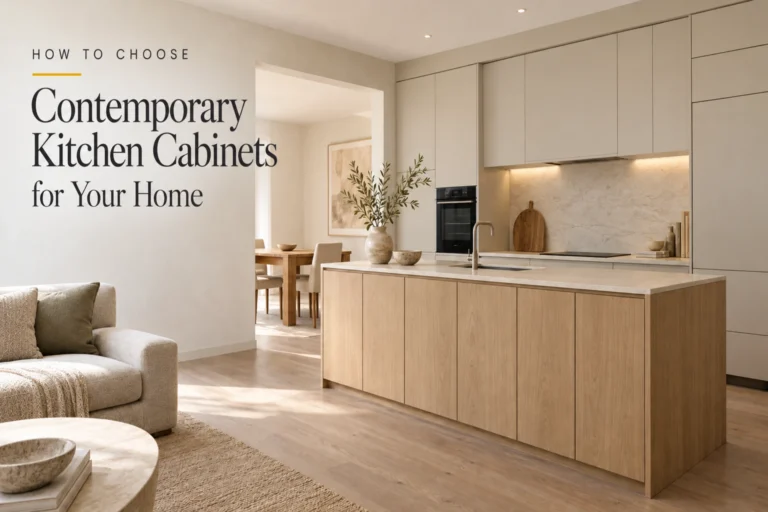
Light oak cabinetry brings natural warmth, while pale stone countertops and backsplash add texture and brightness. Consistent wood grain and complementary stone tones create a balanced, refined look without overwhelming the kitchen with competing materials.
Frameless Kitchen Cabinets in a U-Shaped Layout
- Three-sided cabinetry for an efficient workflow
- Continuous countertops across the main work areas
- Integrated appliances and organized corner storage
The U-shaped layout keeps the sink, cooking area and preparation surfaces within easy reach. Continuous countertops provide generous workspace, while well-planned corner storage and clear walkways make the kitchen practical and comfortable for everyday use.
Floor-to-Ceiling Frameless Kitchen Cabinets with a Central Island
- Full-height cabinetry for a clean storage wall
- A central island defining the main work zone
- Integrated appliances and pantry storage
Floor-to-ceiling cabinets create a unified storage wall, while the central island provides extra preparation space and a visual focal point. Coordinating appliance placement, cabinet proportions and circulation helps larger kitchens feel organized and balanced.
Frameless Kitchen Cabinets with Curved End Panels
- Curved end panels that soften the island profile
- Straight cabinet lines balanced with rounded corners
- Light wood finishes and stone surfaces
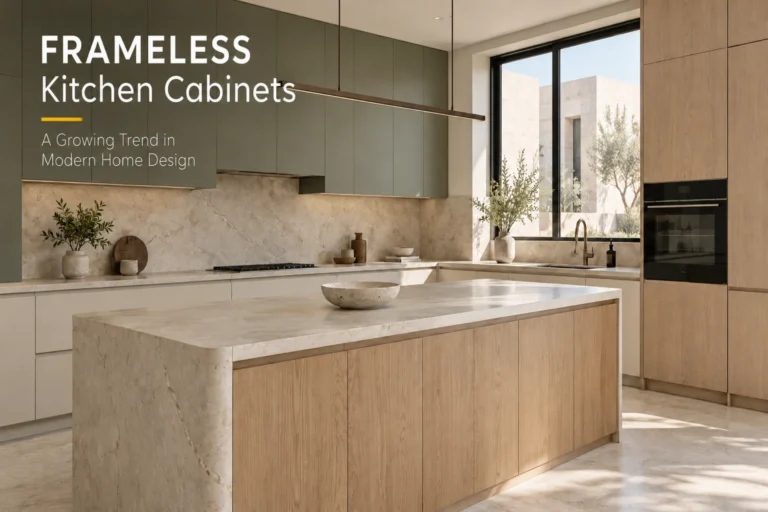
Curved end panels soften the island’s outline and contrast with straight cabinet fronts. Light wood finishes add warmth, while carefully planned curves, smooth transitions and clear walkways create a distinctive design without compromising everyday functionality.
4 Frameless Kitchen Cabinet Styles for Modern Homes

Modern Minimalist Frameless Kitchen Cabinets
This modern minimalist kitchen pairs soft grey frameless cabinets with clean lines and integrated appliances. Subtle material contrasts add depth while maintaining a seamless, uncluttered look, ideal for contemporary villas and spacious apartments.

Japandi Frameless Kitchen Cabinets
Many homeowners love Japandi design for its natural materials and calming atmosphere. Light oak frameless cabinets, warm neutral tones and textured stone create a simple, inviting kitchen. Soft lighting and subtle wood grain add warmth, making it ideal for modern villas and homes.

Warm Contemporary Frameless Kitchen Cabinets
Warm contemporary kitchens pair taupe frameless cabinets with walnut finishes and softly veined stone. The warm wood adds depth, while subtle contrasts between textures create a refined, welcoming look suited to modern villas and upscale homes.

Contemporary Luxury Frameless Kitchen Cabinets
This contemporary luxury kitchen combines dark walnut cabinetry, light grey frameless cabinets and dramatic marble surfaces. Contrasting wood tones and bold stone veining create a refined, luxurious look suited to high-end villas and modern residences.
Conclusion
Frameless cabinetry offers a versatile foundation for modern kitchens, combining clean cabinet lines, accessible storage and flexible door styles. From minimalist interiors to warm contemporary and luxury designs, it can complement different materials and residential layouts.
When choosing frameless kitchen cabinets, consider your kitchen dimensions, cabinet materials, hardware and installation requirements. Coordinating these elements early helps create a design that balances appearance, functionality and long-term use.
CenSo Home provides custom kitchen cabinets and coordinated whole-house cabinetry solutions tailored to your project. Share your floor plan and reference images with our team to discuss a kitchen design that fits your home and requirements.
Frequently Asked Questions
Are Frameless Kitchen Cabinets Better Than Framed Cabinets?
Frameless kitchen cabinets offer wider openings and a streamlined appearance, while framed cabinets provide a traditional structure and more door configuration options. The better choice depends on your preferred style, storage needs, installation conditions and budget.
Are Frameless Kitchen Cabinets More Expensive?
The cost of frameless kitchen cabinets depends on the cabinet materials, door finishes, hardware, manufacturing quality and customization requirements. Neither construction type is always more expensive, so compare specifications and complete quotations before making a decision.
Are Frameless Kitchen Cabinets Durable?
Yes, frameless kitchen cabinets can be highly durable when manufactured with suitable materials, strong cabinet joints and quality hardware. Proper installation, accurate alignment and appropriate moisture protection also play important roles in their long-term performance.
Can Frameless Cabinets Have Shaker Doors?
Yes, frameless cabinets can feature Shaker doors, including slim-profile designs. The frameless construction refers to the cabinet box, not the door style, allowing homeowners to combine different door profiles, finishes and hardware to suit their interior design.
Do Frameless Kitchen Cabinets Offer More Storage Space?
Frameless kitchen cabinets generally provide wider openings because they lack a front face frame. This can improve access to drawers and internal organizers, although actual storage capacity depends on cabinet dimensions, internal fittings and the overall layout.