
In hotel guestrooms, the hotel headboard is more than a decorative panel behind the bed. It is the visual center of the sleeping area and one of the most important elements affecting room atmosphere, guest comfort, and the overall quality of hotel guestroom furniture.
Modern hotel headboard design often works together with wall panels, lighting, nightstands, switches, power outlets, USB ports, Type-C charging points, and the bed frame. Instead of being treated as a separate furniture piece, the headboard should be planned as part of the full bedside wall system.
Well-designed hotel headboards can make the room feel warmer, more comfortable, and more complete. They also help protect the wall behind the bed, organize bedside functions, improve lighting convenience, and create a stronger brand style for hotels, resorts, suites, and serviced apartments.
This guide explains how to design hotel headboards and wall panels from the perspective of materials, lighting, bedside function, installation, and project coordination.
What Is a Hotel Headboard?
In hotel guestrooms, the hotel headboard refers to the bed-back feature or bedside wall system placed behind the bed. It may be a simple upholstered panel, a wooden wall feature, or a larger decorative background that defines the sleeping area and creates a more complete guestroom atmosphere.
The hotel bed headboard should be planned together with the bed frame, mattress height, wall surface, nightstands, lighting, switches, and power outlets. Its height, width, thickness, and installation method all affect the visual balance, guest comfort, and functionality of the bedside area.
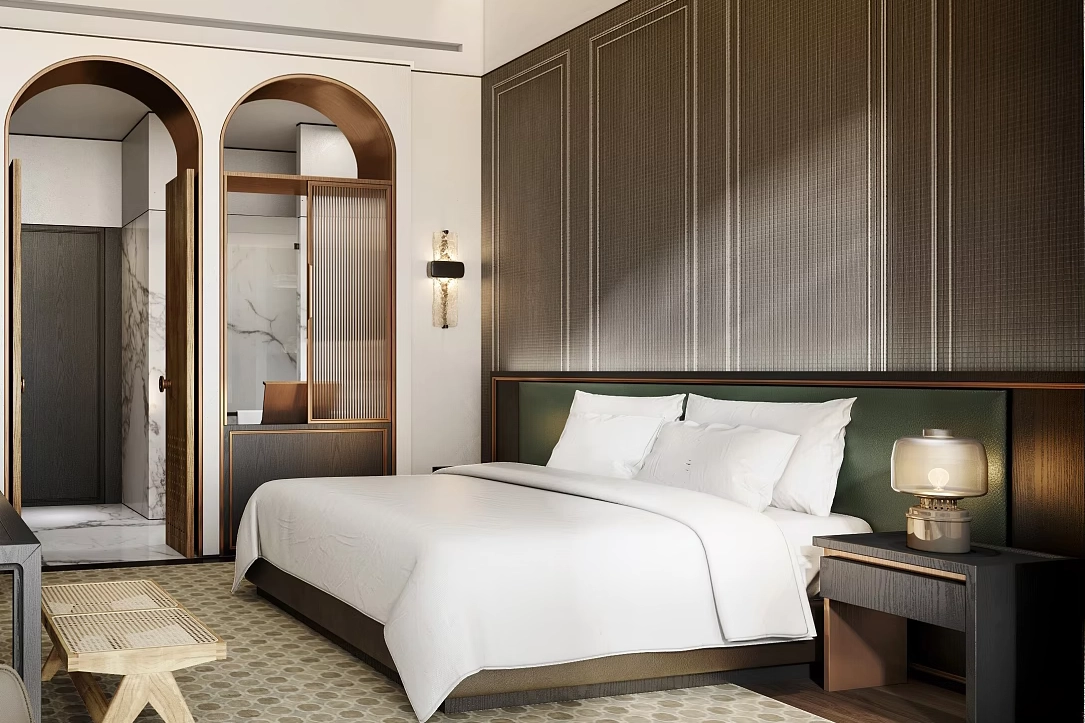
For more integrated guestrooms, hotel headboard wall panel can combine the headboard, hotel wall panel, reading lights, ambient lighting, power outlets, USB ports, decorative materials, and bedside modules into one coordinated design. As a hotel furniture headboard, it is also part of hotel guestroom furniture and hotel casegoods, so production, packaging, installation, maintenance, and future replacement should be considered from the beginning.
Key Design Factors for Hotel Headboards
Good hotel headboard design should not focus only on appearance. Since the headboard is located in the sleeping area, it needs to work with the bed size, wall width, mattress height, nightstands, lighting, switches, power outlets, installation method, and long-term maintenance. For hotel projects, hotel headboards should be designed as part of the full hotel guestroom furniture system rather than as separate decorative panels.
1. Headboard Size and Bed Alignment
The size of a hotel bed headboard should be coordinated with the bed frame, mattress height, room width, and nightstand position. If the headboard is too narrow, the bed area may look incomplete. If it is too wide or too high for the room proportion, it may make the guestroom feel heavy or crowded.
In most hotel rooms, the headboard width is planned to align with the bed and nightstands, while the height depends on the design style, wall panel layout, ceiling height, and lighting position. For a more comfortable hotel headboard design, the mattress, bed base, wall panel joints, reading lights, switches, and bedside tables should be checked together before production.

2. Wall Panel Layout and Room Proportion
A hotel headboard wall panel can be designed in different ways depending on the room concept. Common options include half-height panels, full-height panels, full-wall panels, divided panel sections, symmetrical layouts, or integrated designs with nightstands and side panels.
The hotel wall panel should match the room proportion and not conflict with windows, doors, HVAC outlets, switches, sockets, or bedside lighting. In compact rooms, a simple horizontal headboard panel can make the room feel wider. In suites or luxury guestrooms, a full-height wall panel can create a stronger visual feature and make the sleeping area feel more premium.

3. Comfort, Safety, and Daily Use
Because hotel headboards are close to the guest’s body and sleeping area, comfort and safety are important. Material texture, padding thickness, edge finishing, corner treatment, lighting position, switch height, and outlet access should all be considered during design.
For long-term hotel operation, the headboard should also be easy to clean, durable under frequent use, and practical for maintenance. Fabric, leather, veneer, laminate, lighting components, and electrical openings should be selected and detailed according to the hotel level, room type, cleaning workflow, and guest usage habits. A well-planned headboard improves both the visual quality and daily functionality of hotel guestroom furniture.

Materials and Finishes for Hotel Headboards
Material selection is a key part of hotel headboard design because the headboard affects both the visual atmosphere and daily guest experience. A hotel headboard should match the room style while also supporting durability, cleaning efficiency, maintenance, and long-term project cost control.
For a hotel furniture headboard, the right material depends on the hotel positioning, room type, cleaning frequency, budget, and design concept. Soft upholstered finishes can create comfort and warmth, while wood veneer, metal trim, stone accents, or lacquer panels can give the bedside wall a more premium and architectural appearance.
| Material / Finish | Best For | Common Application |
|---|---|---|
| Upholstered Fabric | Soft comfort and warm atmosphere | Standard guestrooms, boutique hotels |
| Leather / Faux Leather | Luxury look and easy cleaning | Suites, premium rooms |
| Wood Veneer | Natural luxury appearance | Resorts, luxury guestrooms |
| Laminate / HPL | Durability and easy maintenance | High-traffic hotel rooms |
| Lacquer Panel | Modern clean appearance | Contemporary hotels |
| Metal Trim | Detail and edge protection | Luxury headboard panels |
| Stone / Sintered Stone Accent | Premium feature wall effect | Suites and high-end hotel rooms |
| Acoustic Panel | Noise reduction and comfort | Business hotels, urban hotels |
When selecting hotel wall panel materials, designers and procurement teams should consider more than appearance. Fabric and leather should be checked for cleaning performance and wear resistance. Wood veneer should be reviewed for grain direction and color consistency. Laminate and HPL are practical for high-use rooms because they are easier to clean and maintain. Metal, stone, or sintered stone details can improve the luxury effect, but they should be carefully coordinated with installation weight, edge safety, and maintenance requirements.
For large hotel projects, material samples and mock-up room approval are especially important. They help confirm texture, color, lighting effect, panel joints, and overall guestroom atmosphere before batch production.
Headboard Lighting and Bedside Electrical Planning
Lighting is an important part of hotel headboard design because the bedside area is where guests read, rest, charge devices, and control the room environment. Hotel style headboards with lights can include reading lights, wall sconces, hidden LED strips, ambient lighting behind panels, or integrated bedside lighting modules to create a warmer and more functional sleeping area.
For a practical hotel headboard with lights, the lighting position should be coordinated with the bed size, mattress height, nightstand location, wall panel joints, and guest reading posture. Reading lights should be easy to reach without causing glare, while bedside switches, power outlets, USB ports, and Type-C charging points should be placed where guests can use them comfortably from the bed.
Electrical details should also be planned for long-term maintenance. LED drivers, transformers, wiring routes, switch modules, and outlet boxes should remain accessible for future repair or replacement. Before mass production, lighting positions, outlet openings, cable routes, and driver access should be clearly shown in shop drawings and checked during the mock-up room stage.

Hotel Headboard with Nightstands and Bedside Function
A hotel style headboard with nightstands creates a complete bedside function system by combining the headboard, bedside tables, lighting, switches, power outlets, USB charging, and storage into one coordinated design. This layout helps the sleeping area look more organized while improving guest convenience.
For a comfortable hotel headboard layout, the nightstand height should align with the mattress and bed base, allowing guests to reach phones, books, water, switches, and charging ports easily. The hotel bedside table can be floating or floor-standing, with drawers or open shelves depending on room size, cleaning requirements, and hotel positioning.
Before production, the headboard, nightstands, reading lights, outlet openings, drawer clearance, and wall panel joints should be checked together. A coordinated bedside module improves visual consistency, simplifies installation, and makes daily cleaning and long-term maintenance easier.

Hotel Headboard Specification Checklist
Before production begins, every hotel headboard design should be checked from both design and installation perspectives. Unlike loose furniture, headboards are often connected with wall panels, lighting, switches, outlets, nightstands, and the bed frame, so small errors in dimensions or openings can affect the final guestroom result.
| Checklist Item | What to Confirm |
|---|---|
| Bed Size and Headboard Width | Confirm bed type, mattress size, bed frame width, and whether the headboard aligns with nightstands |
| Headboard Height | Check half-height, full-height, or full-wall design according to room proportion and ceiling height |
| Wall Panel Layout | Confirm panel divisions, symmetry, vertical lines, horizontal joints, and relationship with the bed centerline |
| Material Samples | Approve fabric, leather, veneer, laminate, lacquer, metal trim, or stone accent samples before production |
| Lighting Position | Confirm reading lights, wall sconces, hidden LED strips, and ambient lighting locations |
| Switch and Outlet Openings | Check bedside switches, power outlets, USB ports, Type-C charging points, and control panel openings |
| Nightstand Connection | Confirm floating or floor-standing nightstand position, height, storage style, and wiring route |
| Wall Fixing Method | Review wall structure, backing board, fixing points, brackets, and installation safety |
| Panel Joint Alignment | Check fabric seams, veneer grain direction, metal trim lines, and wall panel joint consistency |
| Packaging and Installation Sequence | Confirm room-number labeling, panel protection, installation order, and on-site assembly method |
For headboards for hotels, this checklist should be reviewed during the mock-up room stage before batch production. A well-prepared hotel furniture headboard can reduce installation errors, improve visual consistency, and make lighting, power access, and bedside functions easier to manage across multiple guest rooms.
How to Choose Headboards for Hotels
When choosing headboards for hotels, buyers should focus on suppliers that understand both design quality and project execution. A hotel furniture headboard may involve upholstery, veneer panels, wall-mounted installation, lighting openings, power outlets, nightstand connections, and room-by-room installation details, so the supplier should be able to support more than basic furniture production.
Key supplier capabilities to check include custom headboard and wall panel production, upholstery quality control, veneer and panel finish consistency, lighting and outlet coordination, shop drawing support, mock-up room development, and stable batch production for different room types. For large hotel projects, a reliable hotel furniture supplier should also provide protective packaging, room-number labeling, installation guidance, and clear coordination with contractors to reduce site errors and improve guestroom consistency.
Conclusion
A well-designed hotel headboard is more than a decorative panel behind the bed. It combines the sleeping area, visual background, lighting system, bedside function, wall protection, and guest comfort into one coordinated design. For hotel projects, hotel headboard design should consider materials, wall panels, nightstands, reading lights, power outlets, USB charging, bed frame alignment, installation method, and long-term maintenance.
The best hotel headboards are planned as part of the full guestroom furniture system rather than as separate furniture pieces. When the headboard works together with wall panels, bedside tables, switches, lighting, and electrical openings, the room becomes more comfortable, organized, and visually complete.
For hotels, resorts, suites, and serviced apartments, choosing the right headboards for hotels also depends on project requirements such as room type, brand style, material durability, batch consistency, packaging, and installation coordination. CenSo Home supports custom hotel headboards, wall panels, nightstands, and complete guestroom furniture solutions for hospitality projects, helping buyers coordinate design, production, delivery, and installation more efficiently.