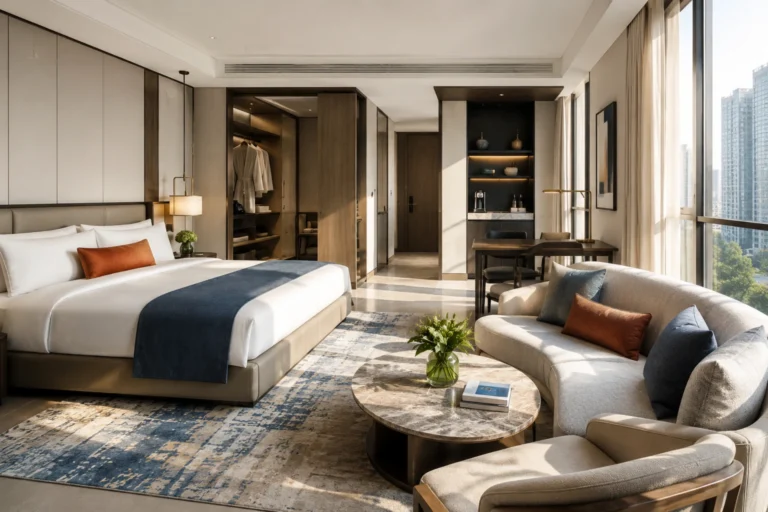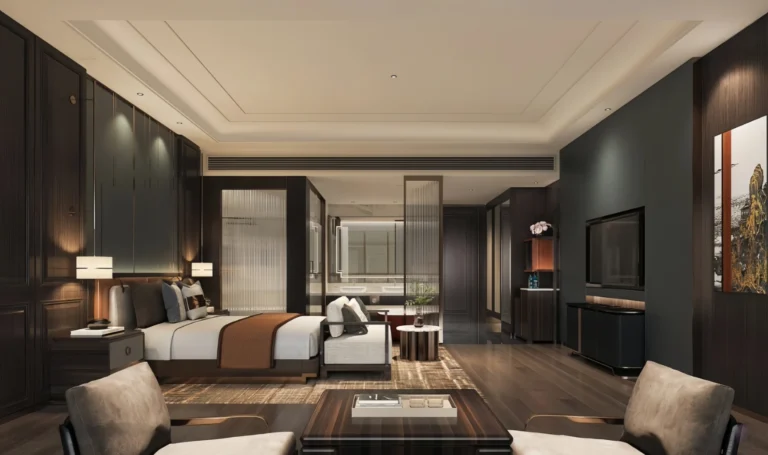
The bed frame is one of the most important pieces of furniture in any hotel room—affecting not only aesthetics, but also stability, durability, guest comfort, and long-term maintenance. Unlike typical home bed frames, commercial hotel bed frames are engineered to withstand years of constant use, heavy luggage impact, and frequent cleaning.
“A well-designed hotel bed frame lasts 8–12 years and directly influences guest satisfaction and brand consistency.”
Because hotels operate different room types—King, Queen, Double, and Twin—procurement teams must choose frames that align with both brand standards and guest expectations. Modern hotel bed frames also contribute to the room’s visual identity and luxury perception.
As more travelers expect a “home-like” sleep experience, hotel owners are paying closer attention to mattress support systems, structural materials, and frame engineering. This guide covers everything from hotel bed sizes to bed frame materials and how hotels choose the right frame.
What Bed Frames Do Hotels Use?
Most hotels don’t use the same bed frames you’d find in a typical home. Instead, they rely on
commercial-grade bed frames specifically engineered for durability, stability,
guest safety, and long-term performance. Everything—from the structural design to the materials— is
built to handle high guest turnover, daily housekeeping, heavy weight loads, and years of continuous use.
Here’s a clear, practical breakdown of the bed frame types used across global hotel brands today.
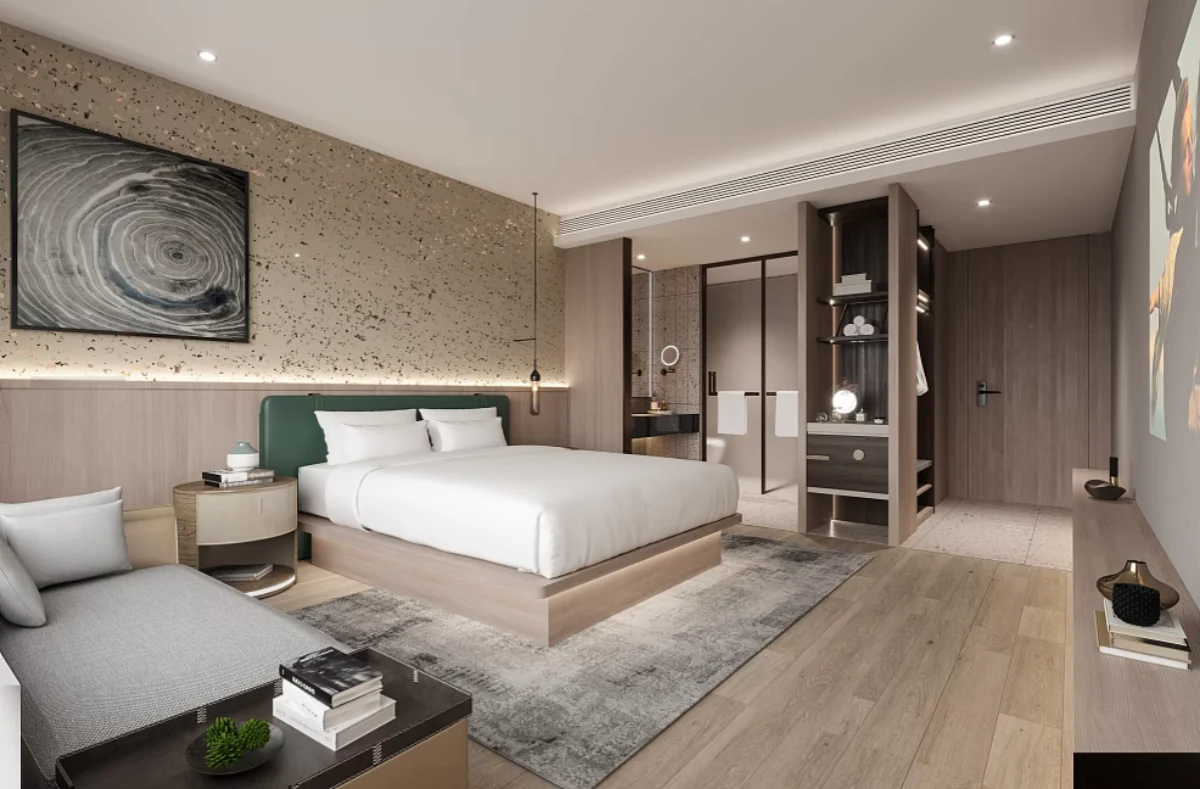
1. Platform Bed Frames (The Standard for 3–5 Star Hotels)
If you’ve stayed at Marriott, Hilton, Hyatt, Sheraton, or any major chain, chances are you slept on a platform bed frame. This design eliminates the need for a box spring and offers strong, even support.
Why hotels prefer platform frames:
- Excellent stability with minimal movement
- No creaking or noise
- Lower maintenance over time
- Works with all standard hotel mattress types
- Available in King, Queen, Double, and Twin sizes
This is the most widely used bed frame type in international hotels today.
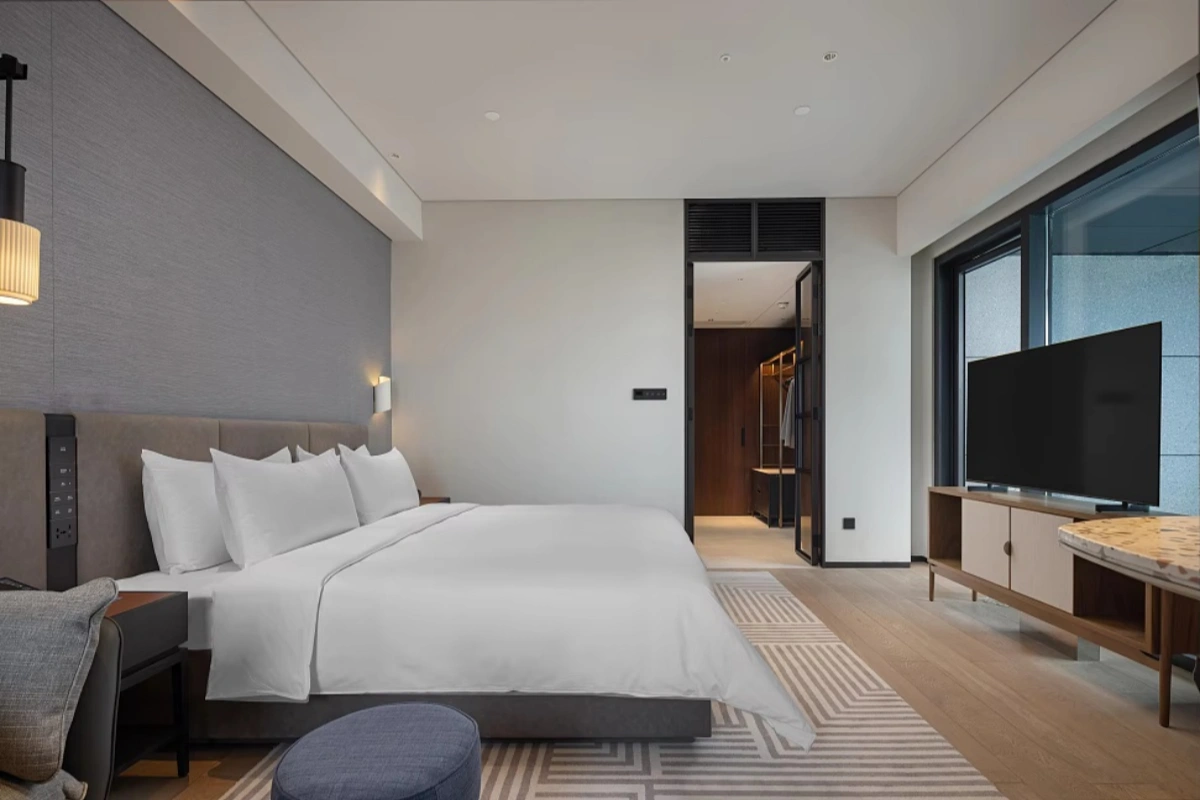
2. Wood or Wood-Hybrid Bed Frames (Warm, Premium Look)
Design-focused hotels, luxury resorts, and boutique properties often choose engineered hardwood or wood-hybrid frames for a more elevated appearance.
Why they’re popular:
- Warm, inviting visual appeal
- Easy to customize for brand identity
- Coordinates with headboards, wall panels, and casegoods
- Hospitality-grade finishing improves durability
Used in: Sofitel, Westin, Hyatt Regency, Renaissance, and many 4–5 star hotels.
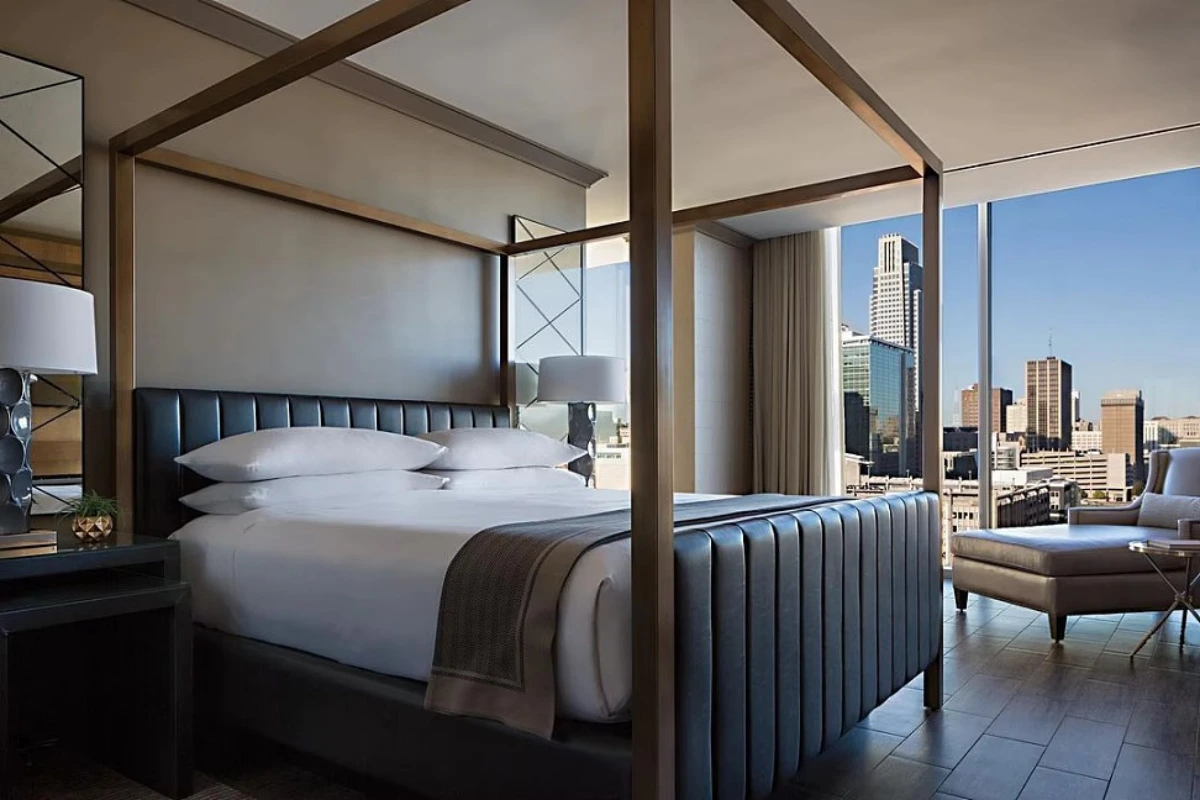
3. Upholstered Bed Frames (Soft, Luxury Aesthetic)
Upholstered bed bases wrapped in fabric or leather bring a soft, premium vibe to the room. They’re less common than wood or platform frames but still widely used in design-oriented properties.
Benefits:
- Softer, upscale appearance
- Adds warmth and comfort
- No sharp corners — improves guest safety
- Matches luxury or lifestyle hotel themes
Popular in boutique hotels, high-end suites, and lifestyle brands.
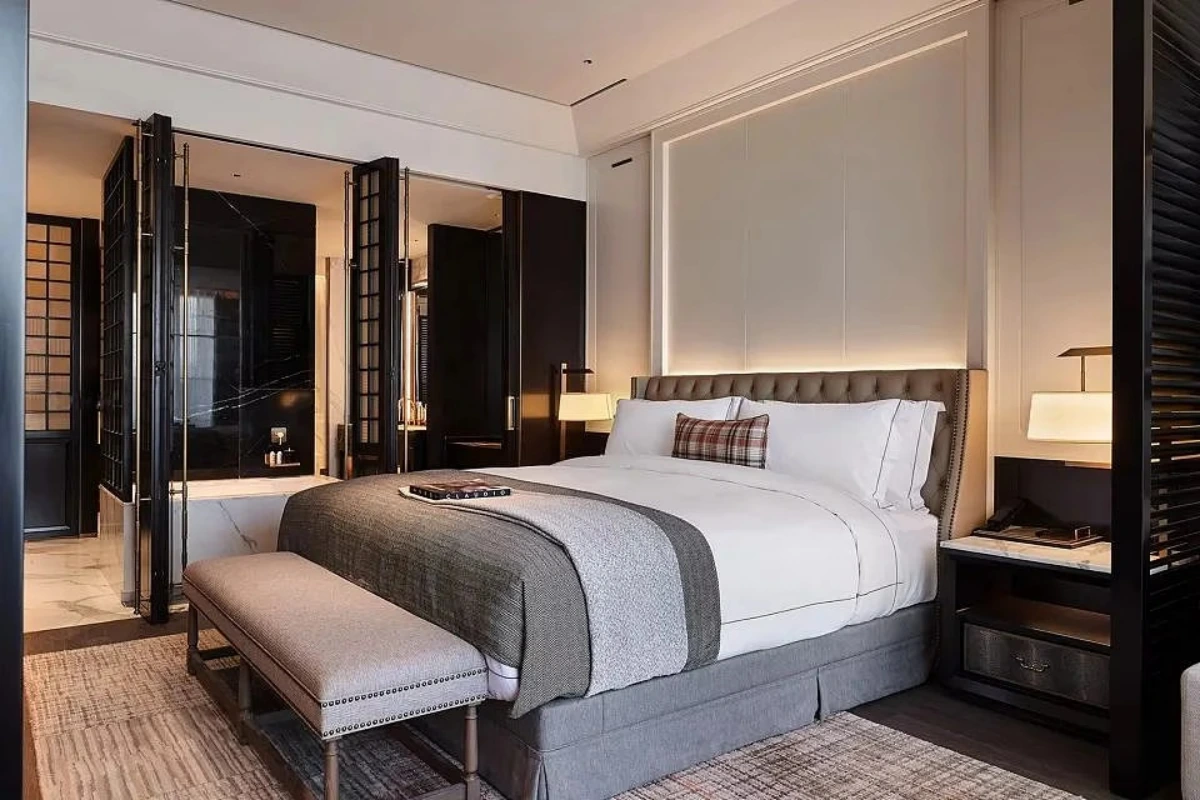
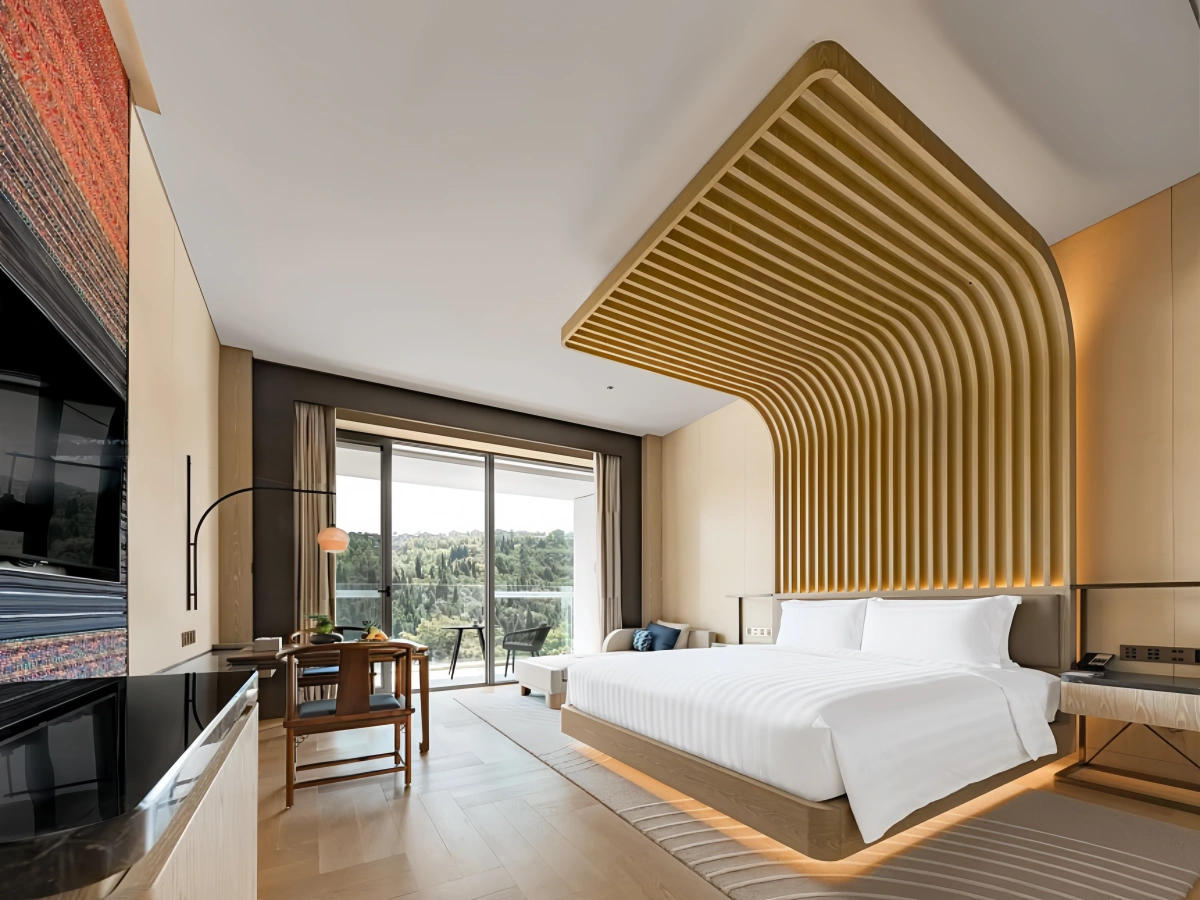
4. Floating Bed Frames (Modern & Space-Enhancing)
Floating bed frames—where support legs are recessed to create a “floating” illusion—have become a trend in upscale and lifestyle hotels.
Why hotels love them:
- Modern, minimalist design
- Easier for housekeeping to clean underneath
- Creates an open, spacious feel
Used in luxury resorts and contemporary design hotels.
5. Box Spring + Metal Frame (Mostly in Older Hotels)
Some traditional hotels—mainly older properties in the U.S.—still use box spring + metal frame combinations. However, this setup is being phased out due to durability and noise issues.
Why hotels are moving away from them:
- Prone to squeaking
- Bulkier appearance
- Shorter lifespan
- More frequent replacements needed
Still found in a few legacy properties but becoming increasingly rare.
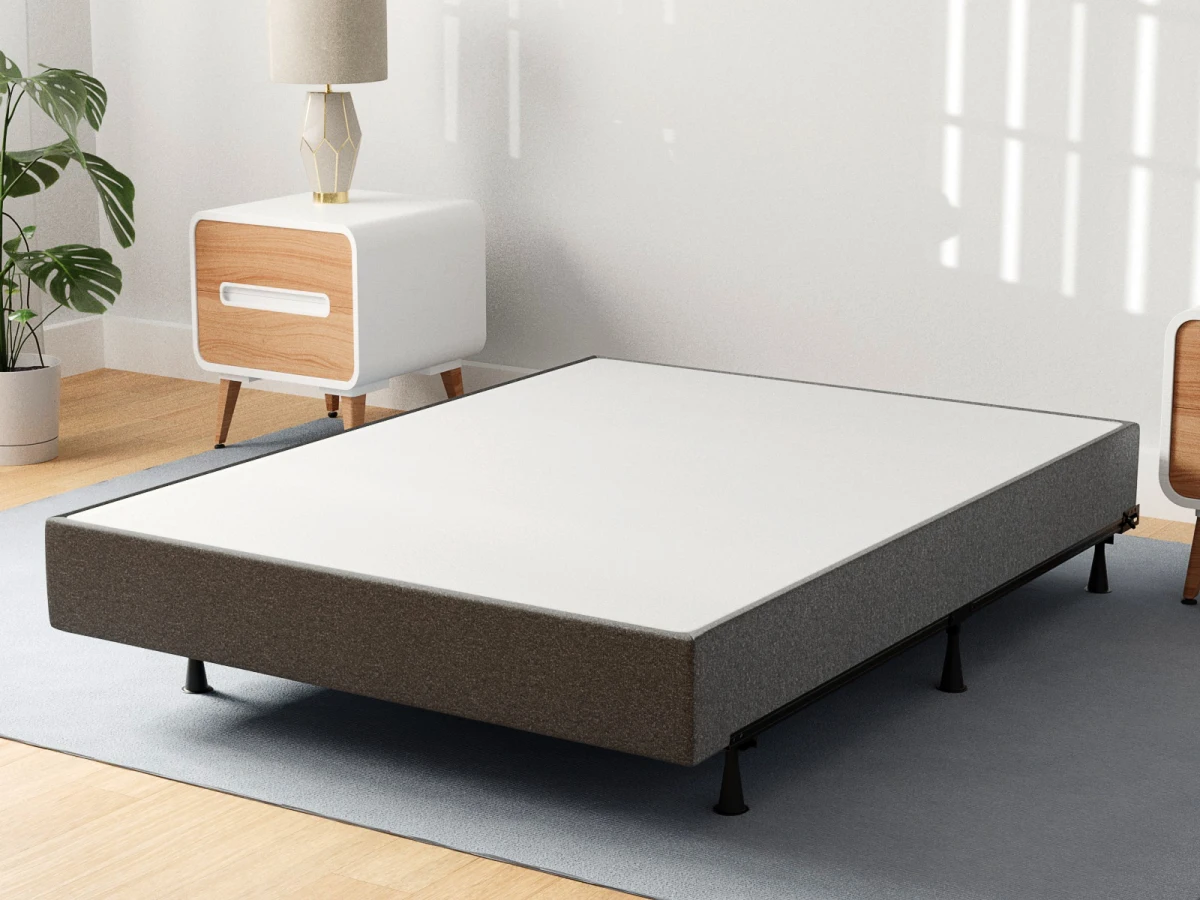
Picture from Mattress firm
Smmary: What Bed Frames Do Hotels Use Most?
Across modern hotels, the universal standard comes down to three main categories:
- Platform Bed Frames – stable, quiet, and low-maintenance
- Reinforced Commercial Bed Bases – ideal for heavy use and long-term durability
- Wood or Upholstered Frames with Integrated Headboards – best for design-driven hotels
These options offer the best blend of cleanability, strength, guest comfort, and a polished hotel look.
For developers, hotel owners, and interior designers looking for commercial-grade hotel bed frame solutions,
partnerships with a reliable hotel bed frame supplier (such as CenSo Home
) ensure you get
durable, hospitality-standard frames that meet global branding and FF&E requirements.
How Hotels Choose the Right Hotel Bed Frame
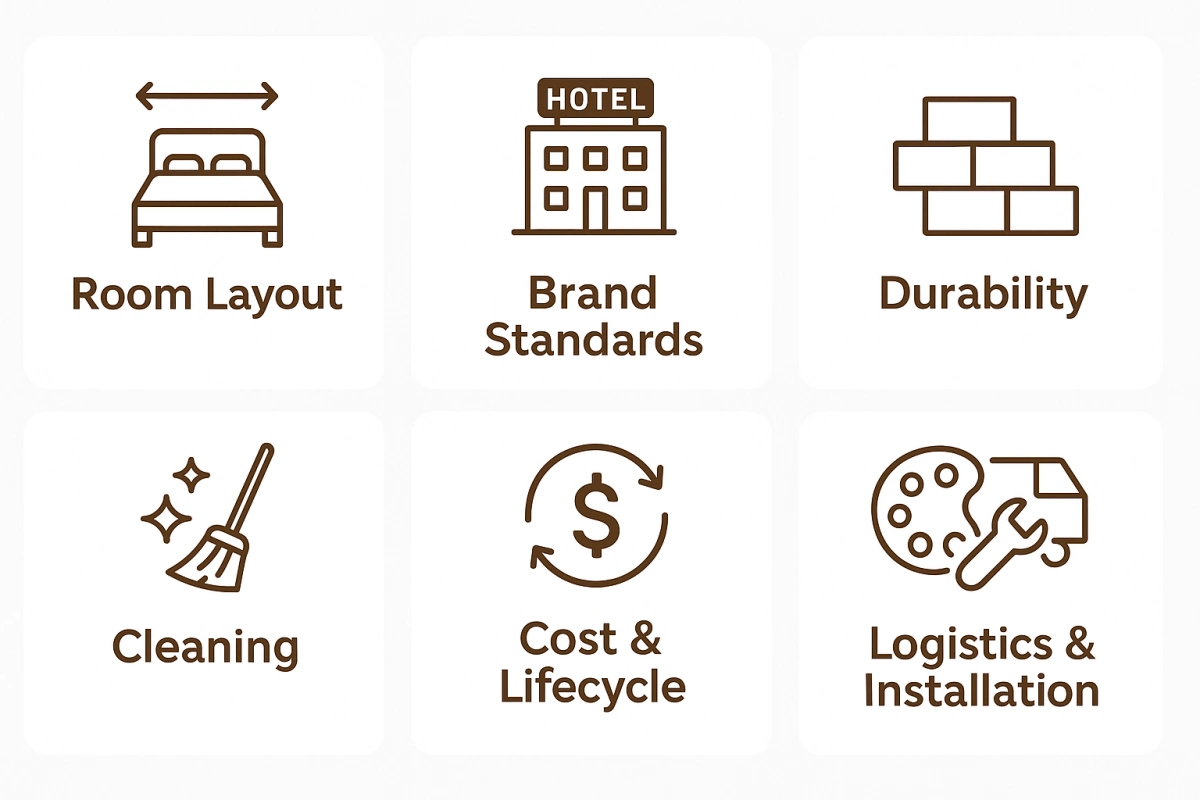
Hotels evaluate multiple technical and design factors before finalizing hotel bed frame specifications. Here are the key considerations used across global hotel brands.
Room Size & Layout Planning
- Comfortable circulation space
- Correct distance from furniture
- ADA / accessibility compliance
- Balanced room proportions
- Queen: efficiency in business hotels
- King: preferred in resorts
- Twin: flexible for shared rooms
Brand Standards & Guest Expectations
- Specified bed height
- Required safety features
- Mattress support system
- Material & color compliance
- Integrated headboard standards
- Noise level requirements
Durability & Structural Integrity
- Commercial-grade reinforced base
- Anti-squeak construction
- High load-bearing capacity
- Moisture-resistant finishing
- Strong brackets & joinery
- Mock-up room testing
Cleaning & Maintenance Efficiency
- Space below for vacuum / robots
- Rounded corners for guest safety
- Easy-to-wipe surfaces
- Minimal dust-collecting gaps
- Platform & floating frames preferred
Budget & Lifecycle Cost
- Frame lifespan (8–12 years)
- Maintenance frequency
- Repair & replacement cost
- Overall lifecycle savings
Customization Requirements
- Custom headboards
- Integrated lighting
- Upholstered or wood finishes
- USB/Power integrations
- Coordinated FF&E packages
Logistics, Lead Time & Installation
- Reliable production schedule
- Export-ready packaging
- On-site installation support
- Consistency across 100+ rooms