HOTEL FF&E EDITORIAL GUIDE
A Complete Guide to Fixed & Loose Furniture
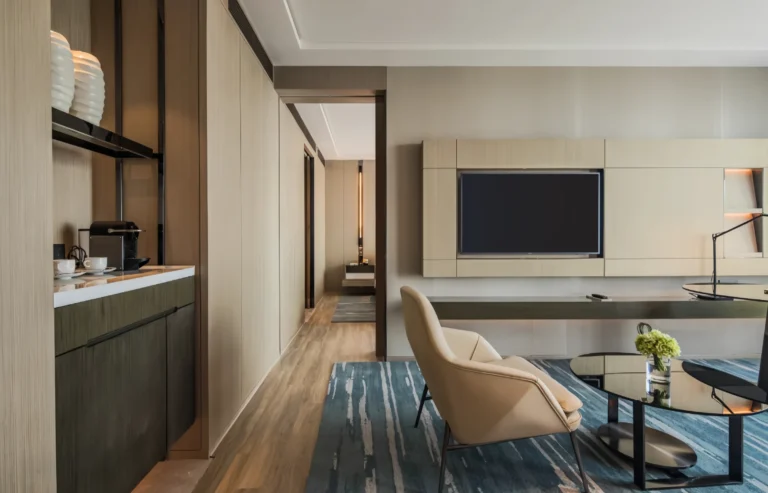
Guest room furniture is far more than a simple checklist of bedroom items. A complete hotel room furniture list refers to all furniture elements within a hotel guest room, which may include different functional zones depending on room type and hotel positioning. While standard guest rooms are typically centered around the bedroom area, luxury rooms and suites often function as fully integrated living spaces.
In higher-end hotel projects, a hotel room may include multiple zones such as a bedroom, living room, dining or pantry area, and walk-in closet. As a result, hotel room furniture extends beyond hotel bedroom furniture to cover a broader furniture system similar to residential layouts, but built to commercial standards.
In professional hotel projects, hotel room furniture is typically divided into two main categories: fixed furniture and loose furniture. This distinction is essential for designers, developers, and FF&E teams, as each category involves different design considerations, budgets, installation processes, and procurement strategies. Understanding this structure is the foundation for creating a complete and functional hotel room furniture system in 2026.

What Is Included in a Hotel Room Furniture List?
Fixed Furniture vs Loose Furniture in Hotel Projects
A complete hotel room furniture list should be understood from a project-based perspective rather than a single-room or bedroom-only view. Depending on the room type, hotel room furniture may cover different functional zones, including the bedroom, living room, dining or kitchen, and walk-in closet, bathroom—especially in suites and luxury accommodations.

Fixed Furniture vs Loose Furniture – Project Perspective
The table below explains the fundamental difference between fixed furniture and loose furniture in hotel guest rooms from a project and FF&E standpoint.
| Aspect | Fixed Furniture (Built-in Furniture) | Loose Furniture (Movable Furniture) |
|---|---|---|
| Installation | Fixed to walls, floors, or building structure | Freestanding, placed after fit-out |
| Customization Level | Highly customized, project-specific | Standardized or semi-customized |
| FF&E Scope | Partially included, depending on contract | Always included in FF&E |
| Replacement & Maintenance | Difficult to replace, long lifecycle | Easy to replace or upgrade |
| Cost Structure | Higher upfront cost, long-term value | Flexible budget control |
This classification helps clarify responsibilities between design, construction, and furniture procurement, and forms the foundation of professional commercial hotel furniture planning.
Complete Hotel Room Furniture List by Functional Area
Once the distinction between fixed and loose furniture is clear, a hotel room furniture list can be organized more effectively by functional zones. The table below provides a comprehensive overview covering both standard guest rooms and suites.
| Area / Zone | Fixed Furniture (Built-in) | Loose Furniture (Movable) |
|---|---|---|
| Bedroom Area |
|
|
| Living Room (Suites) |
|
|
| Dining / Pantry Area (Suites) |
|
|
| Entrance / Corridor |
|
|
| Walk-in Closet |
|
|
| Bathroom (FF&E Scope) |
|
|
| Balcony / Outdoor |
|
|
The exact composition of a hotel furniture list varies based on hotel brand standards, room type, and target market. Standard guest rooms typically focus on the bedroom area, while suites and luxury rooms require additional living, dining, and storage zones. For this reason, hotel projects plan furniture by functional areas rather than individual items.

Where to Buy Hotel Room Furniture
After defining a clear hotel room furniture list, the next critical step in hotel projects is sourcing the right suppliers. Furniture purchasing decisions directly affect design execution, budget control, delivery timelines, and long-term operational performance. For this reason, hotel room furniture sourcing should always be approached from a project perspective rather than a retail mindset.
In practice, hotel developers and owners typically choose between local hotel furniture suppliers and international manufacturers, most commonly from China. Each option has its advantages depending on project scale, customization requirements, and delivery schedules.
OPTION 1
Local Hotel Furniture Suppliers
Local suppliers are often suitable for small to mid-scale hotel projects or renovations where speed and proximity are priorities.
- Faster communication and on-site coordination
- Easier after-sales service and maintenance
- Suitable for standardized or lirited furniture scope
- Lirmited customization and higher cost at scale
OPTION 2
For medium to large hotel projects, developers increasingl
work directly with China-based manufacturers driven by
capacity, customization,and global project experience.
Strong fixed & loose furniture capability
Integrated production of complete room sets
Competitive pricing for large-scale developments
Proven experience with international brands
Choosing Suppliers Based on Hotel Projects
- Can the supplier handle both fixed and loose furniture?
- Do they understand hotel FF&E processes?
- Have they delivered similar hotel projects before?
For large developments, working directly with an experienced hotel furniture manufacturer allows better control over design consistency, quality standards, and production schedules. This is especially important for hotel room furniture packages, where coordination between furniture, construction, and interior design is critical.
Recommended Top Hotel Furniture Suppliers by Market
For each of these markets, supplier selection should be based on project experience, compliance with local requirements, and the ability to deliver a complete hotel room furniture list aligned with brand and design expectations.
Conclusion
A well-defined hotel room furniture list is not simply a checklist of items, but a structured system that supports hotel design, construction, and long-term operation. As hotel projects continue to evolve in 2026, furniture planning must take into account different room types, functional zones, and brand positioning—especially the distinction between fixed furniture and loose furniture.
From standard guest rooms to luxury suites, hotel room furniture extends beyond the bedroom to include living, dining, and storage areas. Understanding how furniture requirements vary by hotel type and star rating allows developers and owners to allocate budgets more effectively, improve space efficiency, and enhance overall guest experience.
Equally important is sourcing the right partners. Whether working with local suppliers or international hotel furniture manufacturers, successful hotel projects depend on suppliers who understand commercial standards, FF&E coordination, and project-based delivery. Choosing experienced hotel furniture manufacturers helps ensure consistency, quality control, and smooth execution from design to installation.
Ultimately, investing time in planning a complete and practical hotel room furniture system lays the foundation for long-term value, operational efficiency, and brand success—making furniture a strategic asset rather than a simple procurement item.
FAQ
What furniture is included in a hotel room furniture list?
A hotel room furniture list typically includes both fixed furniture and loose furniture. Depending on room type, this may cover bedroom furniture, living room furniture, dining or pantry furniture, storage units, and bathroom vanity cabinets. Suites usually include more functional zones than standard guest rooms.
What is the difference between fixed furniture and loose furniture in hotel rooms?
Fixed furniture refers to built-in items such as headboard walls, wardrobes, minibar cabinets, and vanity units that are integrated into the room structure. Loose furniture includes movable items like beds, nightstands, sofas, desks, and chairs. This distinction is important for design coordination, FF&E planning, and long-term maintenance.
Is hotel room furniture the same as hotel bedroom furniture?
Not exactly. Hotel bedroom furniture only covers the sleeping area, while hotel room furniture refers to all furniture within a guest room unit. In luxury rooms and suites, this often includes living areas, dining or pantry spaces, walk-in closets, and additional seating zones.
How does FF&E relate to hotel room furniture?
Hotel room furniture is a major component of hotel furniture FF&E. Loose furniture is always included in FF&E, while fixed furniture may be partially included depending on the project scope and contract structure. Clear FF&E definitions help avoid gaps between construction and furniture procurement.
Does the hotel room furniture list vary by hotel star rating?
Yes. Budget and 3-star hotels usually focus on basic bedroom furniture, while 4-star and 5-star hotels require more customized fixed furniture and complete furniture systems. Luxury hotels and suites often include living, dining, and storage furniture beyond the bedroom.
Should hotel room furniture be customized for hotel projects?
In most hotel projects, customization is recommended—especially for fixed furniture. Custom solutions improve space utilization, align with brand standards, and ensure durability under commercial use. Loose furniture may be standardized or semi-customized depending on project scale and budget.
Where is the best place to buy hotel room furniture?
Hotel room furniture can be sourced from local suppliers or international manufacturers. Local suppliers are suitable for small or fast-track projects, while China experienced hotel furniture manufacturers, particularly those handling both fixed and loose furniture, are often preferred for large-scale hotel developments.