In hotel development, room typology isn’t simply a checklist of “standard, deluxe, suite.” It forms the foundation of how a hotel earns revenue, defines its brand promise, and operates efficiently. Long before the guest steps into the lobby or experiences the hospitality touch, the balance and intention behind the room mix silently determine who the hotel will attract, how long they will stay, and how much they are willing to pay.
For hotel owners and developers, room planning is not an aesthetic conversation — it is a strategic business exercise. A well-designed typology balances the realities of construction cost, market demand, and long-term operational performance. It answers critical questions:
• What revenue profile do we expect?
• How do we future-proof the investment against changing traveler behavior?

Consider two markets. In European and North Ameriacan city hotels, compact deluxe rooms and executive floors perform as profit-driven inventory, catering to business and short-stay travelers. Meanwhile, in the Middle East, where family travel and extended leisure stays dominate, connecting rooms, suites, and flexible layouts often outperform standard rooms. Both markets succeed when the room mix reflects real customer needs, not a generic blueprint.
At the operational level, thoughtful room typology reduces maintenance stress, shortens cleaning cycles, optimizes circulation, and extends FF&E lifespan. A hotel room is not just a guest sanctuary — it is also a cost center. When designed well, it quickly becomes one of the property’s most reliable and scalable income engines.

Ultimately, smart room planning is an investment in profitability, guest satisfaction, and the longevity of the asset. In a hospitality landscape shaped by hybrid travel, wellness-driven stays, and sustainable hotel room design, room typology has become a competitive advantage — not a checkbox.
Standard Hotel Bedroom Types Explained
Understanding standard hotel room types is essential not only for design and planning teams, but also for owners and developers making decisions that directly influence profitability, guest satisfaction, and brand perception.
While room categories may look similar across markets, their purpose, pricing power, and operational expectations vary greatly between business-focused urban hotels and resort-driven leisure destinations. Below, we explore the core room types most commonly found in international hospitality projects — not just what they are, but how they perform and when they matter.

In any hotel, single, double, and twin rooms form the majority of inventory. These rooms serve as the foundation of occupancy stability, accommodating business travelers, couples, or friends sharing a space. Their layouts are typically efficient, comfortable, and consistent — making them reliable, easy to turn over, and predictable in operational cost.
● Corporate-driven city markets
● Airport and convention hotels
● Short-stay business and solo travel
Well-planned single or twin room layouts maximize square-meter revenue and support overall ADR without overspending on build-out or FF&E.
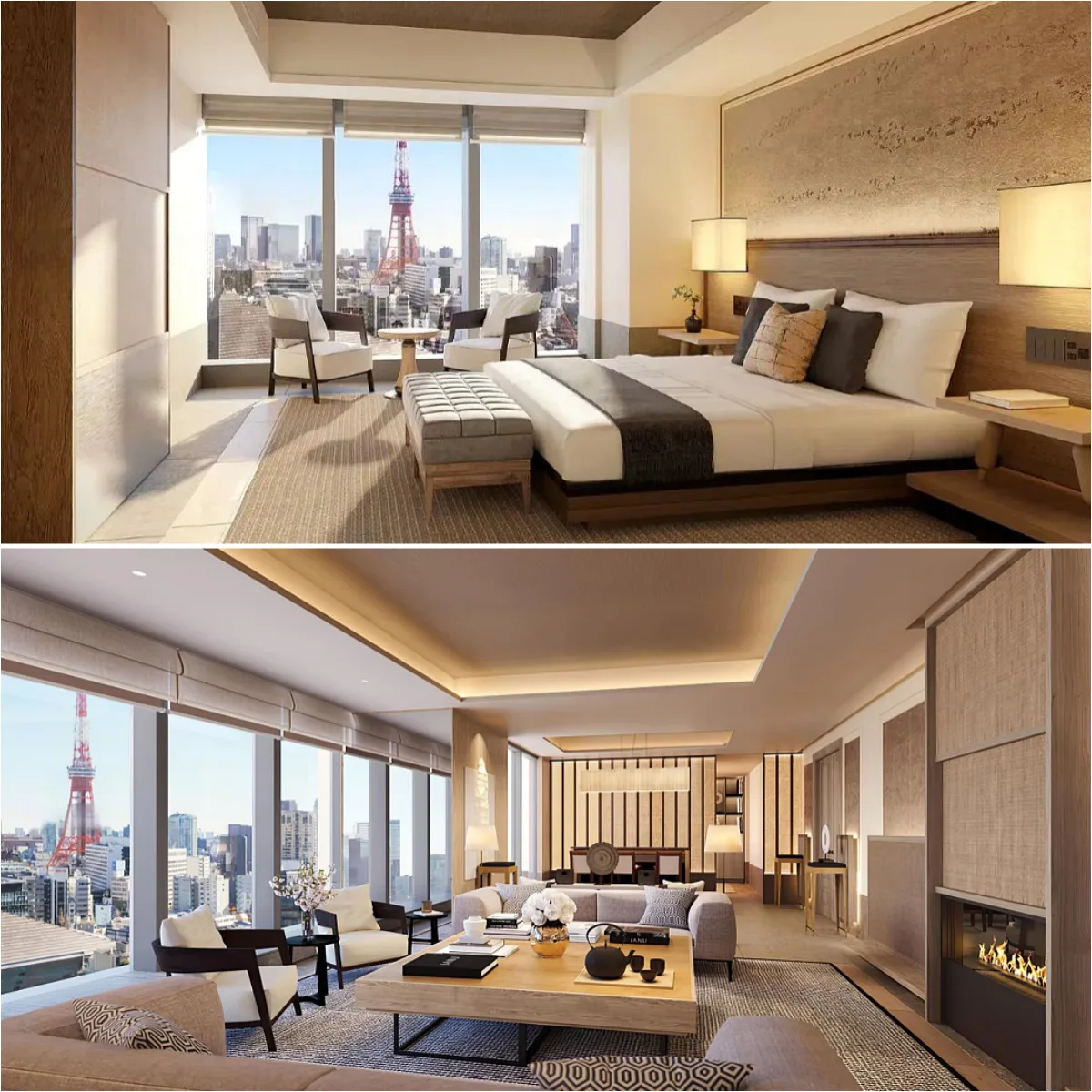
Superior and deluxe categories represent incremental upgrades in space, view, furnishings, or overall comfort level. These rooms are where a hotel begins to express aspiration — through softer materials, more generous layouts, and thoughtful interior design touches.
● Higher yield per square meter than standard rooms
● Strong appeal for couples and premium business travelers
● Opportunity for subtle luxury without suite-level investment
Small enhancements — smart lighting layers, curated textiles, upgraded mattresses — deliver meaningful value and improve review scores with limited CapEx difference.
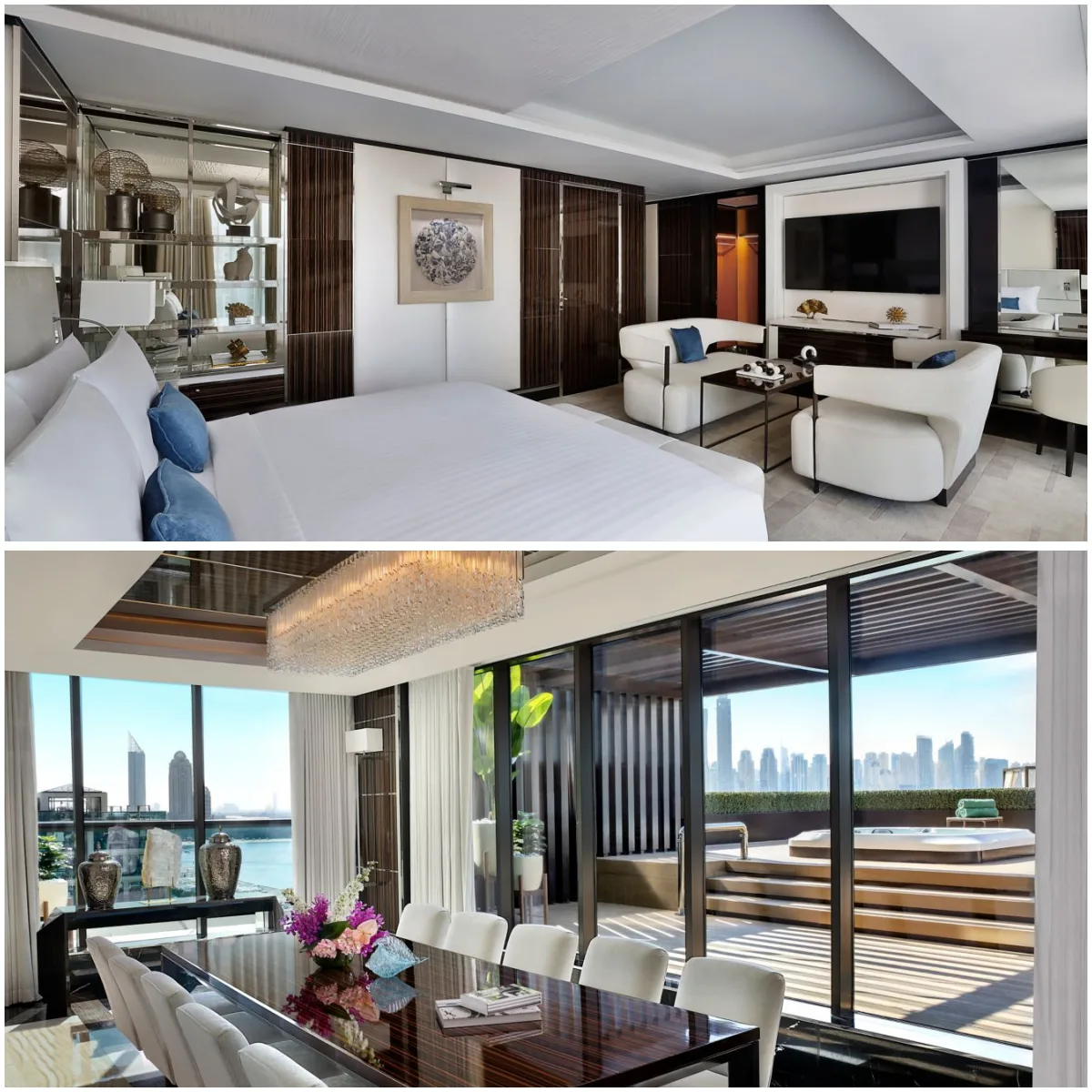
Executive and club rooms speak directly to high-value business travelers and long-stay professionals. Beyond larger floor plans or refined finishes, these categories often include lounge access, priority check-in, meeting privileges, or curated amenities.
● Financial districts and business capitals
● Hotels targeting MICE and corporate contracts
A strong executive room offering builds loyalty and supports partnerships with corporations and travel agencies — lifting both ADR and repeat business.
Junior suites and one-bedroom suites offer a clear upgrade path without the footprint or build complexity of luxury signature suites. For many hotels, these suites strike the perfect balance — elevated, experiential, yet feasible at scale.
● Ideal upsell product for honeymooners, VIPs, and long-stay guests
● Often deliver strong incremental revenue with minimal operational lift
Suites are emotional products — they showcase taste, brand DNA, and hospitality philosophy. A strategic number adds aspiration and storytelling power.

Family-oriented accommodations — including connecting rooms — are no longer niche. In regions like the Middle East, they are essential.
● High demand from family leisure travelers
● Critical for multi-room bookings and longer stays
● Major influence on review quality for family-focused properties
In Dubai, Doha, and Riyadh, hotels without thoughtful family configurations risk losing competitiveness, even with strong luxury positioning.
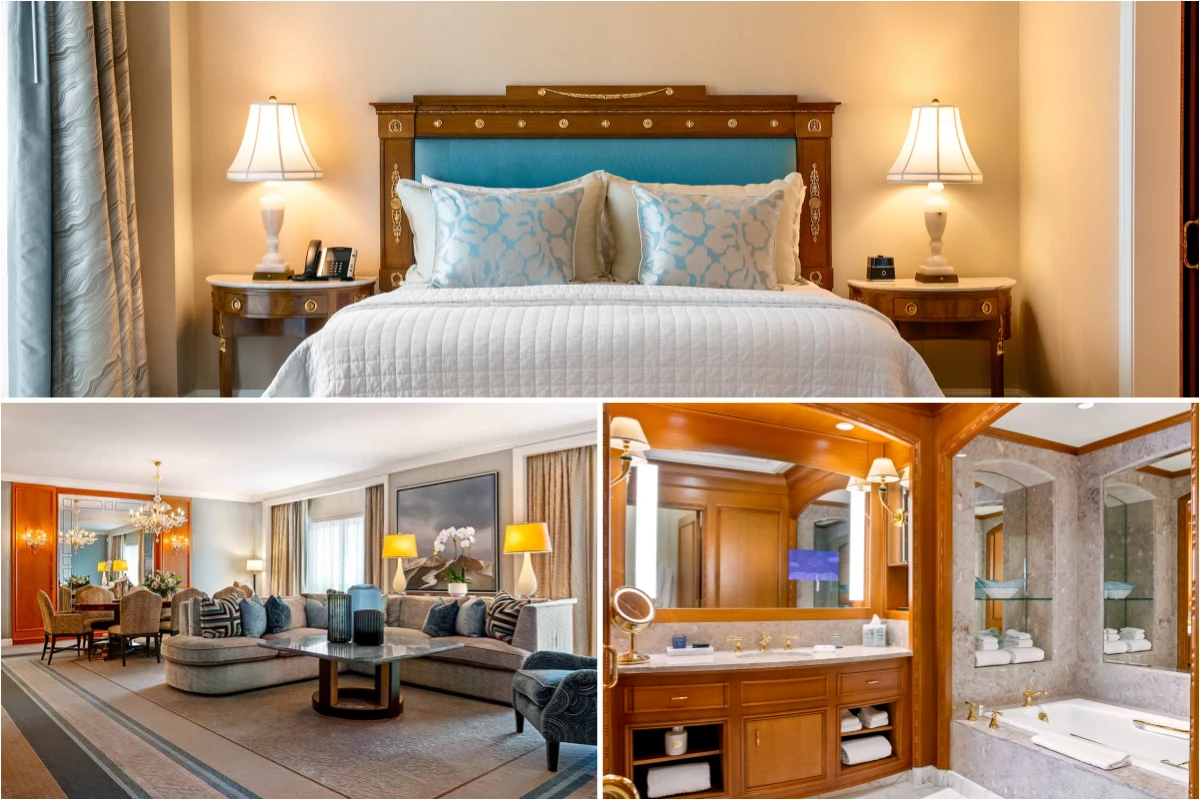
Pictures from The Grand America Hotel
Presidential or signature suites are rarely booked compared to standard inventory — yet their symbolic value is extraordinary. These rooms host VIPs, celebrities, dignitaries, and brand campaigns. They function as the hotel’s “flagship experience.”
● PR and image building: showpiece suites signal luxury credibility
● Crucial for diplomatic & ultra-luxury markets
● Can command premium rates and exclusive hosting opportunities
These suites are not cost-driven — they are positioning-driven.
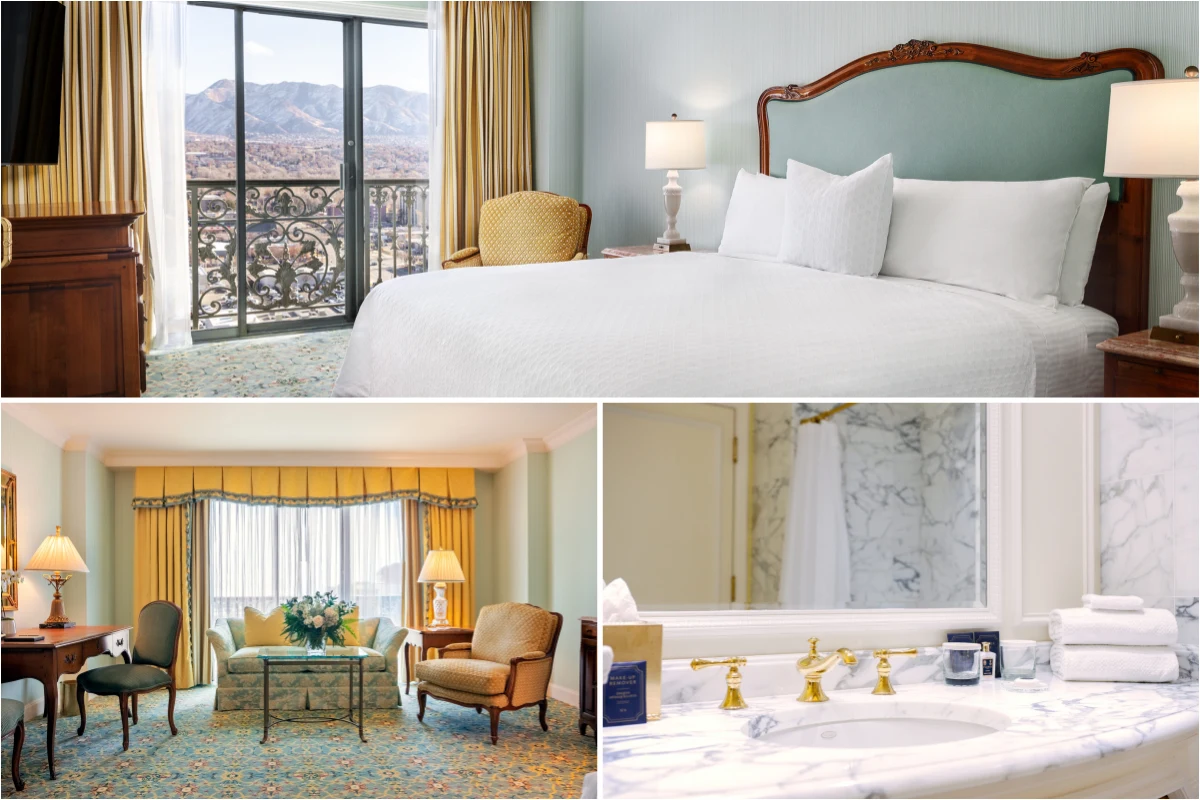
Pictures from The Grand America Hotel
Accessible rooms must go beyond regulation. Today, inclusive design is not only a hospitality standard but also a marker of brand values. Proper accessibility planning reflects respect, foresight, and hospitality in its truest form.
Offer accessible rooms across multiple categories — not only standard rooms — to ensure dignity, flexibility, and equal experience.
Market-Driven Room Categories for Developers
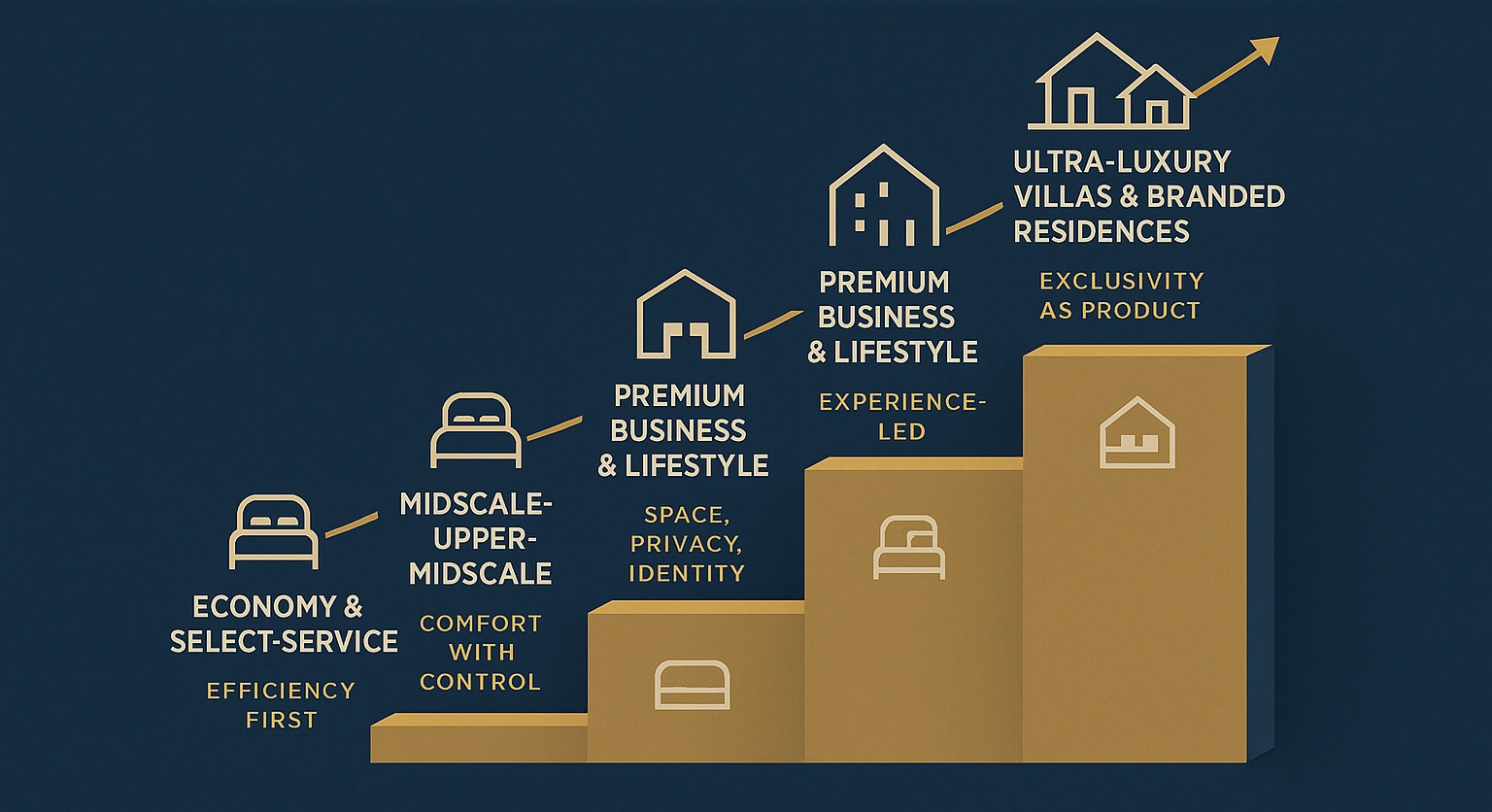
While room types define how guests stay, market positioning defines why those rooms exist at all. No successful hotel is built with a generic room strategy; instead, the best-performing properties build their guest room mix around demand patterns, pricing power, and long-term brand ambition.
A hotel’s room strategy should answer a simple yet powerful question:
“Who am I serving — and how do I want to be valued in this market?”
Different hotel tiers attract different guests, and those guests expect different room offerings. Understanding this dynamic allows developers and project owners to align construction investments, FF&E specifications, and operational models with a clear return profile.
Below are the most common market-driven room categories seen across Europe, the Middle East, and global hospitality markets — and how each drives value.
These rooms serve travelers who prioritize functionality and value. Efficient footprints, standardized furnishing, and high turnover make this category cost-efficient to build and operate.
● Transit hotels, urban hubs, business districts
● Budget-conscious corporate and leisure travelers
● Compact layouts
● Simplified finishes
● Multi-functional furniture
● High occupancy + predictable demand = dependable returns
In this segment, success lies in smart planning rather than lavish finishes.
The most common category in international business travel. Hotels in this tier balance style, comfort, and cost efficiency — appealing to business and short-stay leisure guests.
● Comfortable bed
● Functional workspace
● Quality finishes without opulence
Higher daily rates than economy hotels with controlled build cost. These projects require careful balance — comfort matters, but so does operational efficiency.
Positioned between business hotels and luxury hotels, this segment focuses on experience — design-driven interiors, curated details, and lifestyle-oriented amenities.
● Cultural capitals, design districts, mixed-use developments
● Hotels competing on story, brand charm, and guest feel-good factor
Soft materials, warm lighting, feature furniture, curated textures.
Guests here are not just staying — they’re living the brand.
In luxury hotels, rooms and suites are not just categories — they are expressions of brand prestige and guest aspiration.
● Generous footprint
● Suites as a core category (not an afterthought)
● Design quality equal to global benchmarks
Luxury travelers seek space, comfort, discretion, and personalized experience. Room strategy here becomes part of the hotel's brand narrative and global competitiveness.
A fast-growing segment, especially in the Middle East and resort destinations. These are not simply large rooms — they are private sanctuaries, often with pools, gardens, and dedicated services.
● Highest ADR category
● Long-stay, UHNW guest segment
● Strongest appeal for privacy and exclusivity
This model blends hospitality with real estate, extending revenue beyond nightly rates.
Room mix should never start from “how many square meters per room?”
It should start from:
● Demand segmentation
● ADR goal
● Brand promise
● Guest lifestyle expectations
Design follows strategy — and strategy follows the market. Hotels win when the room mix reflects real guest needs and investor goals, not template thinking.
2026 Hotel Bedroom Trends
Hotel bedrooms are evolving faster than ever, shaped by technology, wellness demands, sustainability consciousness, and a guest mindset that blends work, rest, and ritual into one journey. Below are the defining shifts setting new expectations for 2026.
The next generation of hotel rooms will feel responsive, intuitive, and privacy-conscious.
● AI-powered climate & lighting
● App/voice control for room functions
● Predictive maintenance & energy sensors
● AI concierge & automation
● Digital key & smart check-in
Technology must remain invisible, intuitive, and optional.
Hotels are designing spaces around sleep science, sensory comfort, and wellbeing rituals.
● Circadian lighting
● Zoned bedding systems
● Air purification & noise control
● Natural textures & aromatherapy
● Meditation/stretch spaces
● In-room fitness
“Quiet luxury” today means restorative sleep, air quality, hydration, and softness.
Sustainability is now an operational requirement, not a slogan.
● Circular FF&E
● Recycled or certified materials
● Water-efficient fixtures
● Local sourcing
● Elegant linen reuse programs
Durable, repairable, responsible materials build long-term trust and ROI.
Rooms now support productivity, comfort, and lifestyle all at once.
● Multi-purpose surfaces
● Lounge seating for laptop use
● Acoustic comfort for calls
● Easy-access charging
● Task vs Relax lighting modes
A room where you can work, unwind, stretch, and think clearly.
Future hospitality blends calm, sensory richness, and nature-inspired design.
● Natural textures
● Warm blended lighting
● Plants & scented atmosphere
● Soft acoustics
● Curved forms & organic palettes
Comfort = harmony of touch, sound, scent, and light.