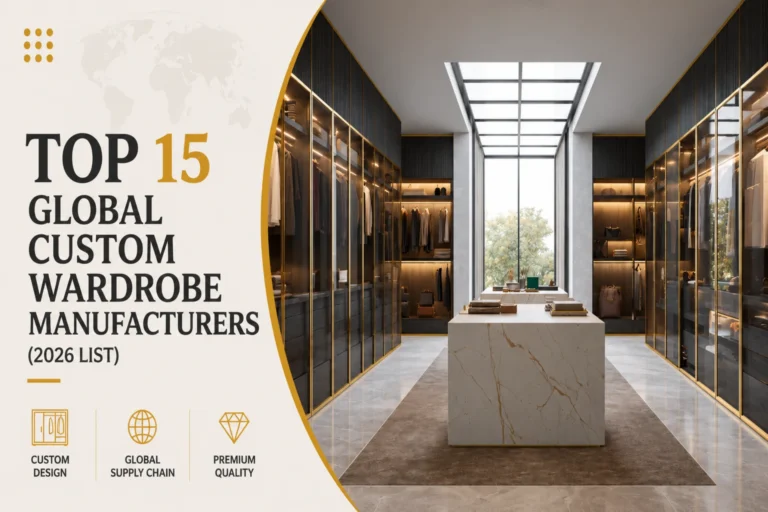
In every hotel guestroom, cabinets do more than store belongings. The wardrobe, bathroom vanity, minibar cabinet, and media console together define the room’s visual rhythm and provide essential functionality. During hotel construction, these built‑to‑order pieces represent a significant portion of the guestroom millwork – and getting them right is critical to both guest satisfaction and operational efficiency.
Yet many owners and developers underestimate the complexity of specifying custom cabinets for hotels. It is not just about choosing a wood finish or a drawer pull. Material stability, hardware longevity, dimensional accuracy, and seamless integration with loose furniture (beds, desks, chairs) all require careful planning. A cabinet that looks perfect in a rendering may swell in humid conditions, or its doors may start sagging after a year of commercial use.
For those managing hotel construction cabinets as part of a new build or large‑scale renovation, this guide offers a complete roadmap. We will walk you through material selection, structural design, manufacturing processes, space planning, and the crucial coordination between custom hotel cabinets and the rest of the FF&E. Whether you are a hotel owner, developer, or project manager, you will gain practical knowledge to make informed decisions – and avoid costly mistakes.
Why Custom Cabinets Matter in Hotel Construction
Custom cabinetry for hotels are specifically designed around the dimensions, operational needs, and brand identity of each property. In modern hospitality projects, every square meter matters — especially in guestrooms where storage, circulation space, and visual balance must all work together efficiently.
This is why many developers choose fully customized hotel cabinetry solutions instead of adapting off-the-shelf products.
Custom cabinetry allows hotel projects to:
- Maximize limited guestroom space
- Integrate wardrobes, minibars, luggage storage, and work areas seamlessly
- Maintain consistent proportions across different room types
- Coordinate cabinetry with lighting, power outlets, and HVAC systems
- Achieve a unified interior design language throughout the property
In addition to aesthetics, durability is another major reason why custom hotel millwork is essential in hospitality environments.
Unlike residential cabinets that may only be used a few times per day, hotel cabinets experience constant daily operation from guests and housekeeping staff. Wardrobe doors, vanity drawers, minibar cabinets, and TV units may be opened and closed thousands of times every year. As a result, hospitality cabinetry requires:
- Stronger structural engineering
- Commercial-grade hinges and drawer slides
- More durable edge banding
- Better moisture resistance
- Higher-quality finishes and hardware
Poorly manufactured cabinetry can quickly lead to:
- Loose hinges
- Delaminated edges
- Warped panels
- Surface scratches
- Maintenance complaints
- Increased replacement costs after opening
Custom cabinetry also plays a critical role in hotel branding. Through consistent use of wood tones, panel detailing, handles, finishes, and millwork styling, hospitality casegoods help create a recognizable guest experience that aligns with the hotel’s positioning — whether luxury, boutique, business, or resort-focused. In many hotel projects, cabinetry becomes one of the most visually dominant elements in the guestroom, making it a key part of the overall FF&E design strategy.
👉 You may also like: What Are Casegoods? — A foundational guide to understanding hospitality casegoods and fixed furniture categories.

Key Types of Custom Cabinets in a Hotel Guestroom and Public Area
In modern hospitality projects, hotel guestroom cabinets and built-in millwork are far more than simple storage units. They are an essential part of the overall guest experience, combining functionality, aesthetics, operational efficiency, and long-term durability.
Different hotel spaces require different types of hotel cabinets and hotel fixed furniture, each with its own structural, ergonomic, and operational considerations. Proper cabinet planning helps maximize space utilization while maintaining a cohesive interior design language throughout the property.
Guestroom Custom Cabinets & Casegoods
| Cabinet Type | Primary Function | Key Design Considerations |
|---|---|---|
| Wardrobe / Walk-in Closet | Clothing & luggage storage | Hanging rods, drawers, safe compartment, luggage shelf; door height typically ≤2400mm or segmented panels for stability |
| TV Cabinet / Media Unit | TV placement & equipment storage | Cable routing slots, ventilation design, hidden wire management, optional lift-up TV systems |
| Minibar Cabinet | Mini fridge, kettle, cups & beverage storage | Ventilation openings, moisture-resistant countertop, integrated lighting, easy housekeeping access |
| Kitchen Cabinets (Suites / Presidential Suites) | Food preparation & storage | Durable countertop materials, integrated appliances, concealed storage, high-end finish coordination |
| Nightstands / Bedside Cabinets | Personal storage & charging | Integrated USB/power outlets, soft-close drawer slides, sufficient weight capacity |
| Hotel Vanity Cabinets / Bathroom Vanities | Bathroom storage & grooming | Waterproof plywood or marine board substrate, under-mount or integrated sink, mirror cabinet storage |
| Tea Cabinet / Pantry Cabinet (Suites) | Beverage preparation & light service | Water-resistant surfaces, concealed power outlets, compact storage optimization |
| Laundry Cabinets (Luxury Suites) | Laundry equipment & storage | Ventilation design, utility organization, concealed appliance integration |
Swipe horizontally to view the full table.

Lobby & Public Area Millwork
Beyond guestrooms, custom hotel millwork is also widely used in public spaces to support hotel operations and reinforce brand identity.| Public Area Cabinetry | Primary Function | Key Design Considerations |
|---|---|---|
| Reception Desk Millwork | Check-in operations & brand presentation | Durable surfaces, integrated lighting, hidden cable management, staff ergonomics |
| Concierge & Storage Cabinetry | Guest services & document storage | Security, accessibility, organized storage layout |
| Lobby Display Cabinets | Decorative display & branding | Integrated lighting, premium finishes, visual focal points |
| Restaurant Service Stations | Cutlery, beverage & service storage | Operational efficiency, moisture resistance, easy cleaning |
| Bar Back Cabinets | Bottle & glassware storage | Integrated lighting, reinforced shelving, humidity resistance |
| Buffet & Banquet Cabinetry | Food presentation & storage | Heat resistance, mobility coordination, durable countertops |
| Lounge & Public Seating Storage | Multi-functional public area organization | Hidden storage integration, seamless aesthetic coordination |
Swipe horizontally to view the full table.

Material Selection for Commercial Durability
Material selection is one of the most critical factors in determining the lifespan, maintenance cost, and visual quality of hotel casegoods and cabinetry systems. Unlike residential projects, hospitality environments require materials that can withstand continuous daily usage, housekeeping operations, luggage impact, moisture exposure, and frequent cleaning.
For this reason, selecting the right substrate, finish, and hardware is essential when designing custom cabinets for hotels and commercial hotel millwork.
Substrate (Core Material) Comparison
| Substrate | Picture | Composition | Pros | Cons | Best Application |
|---|---|---|---|---|---|
| Plywood (multilayer / hardwood plywood) | 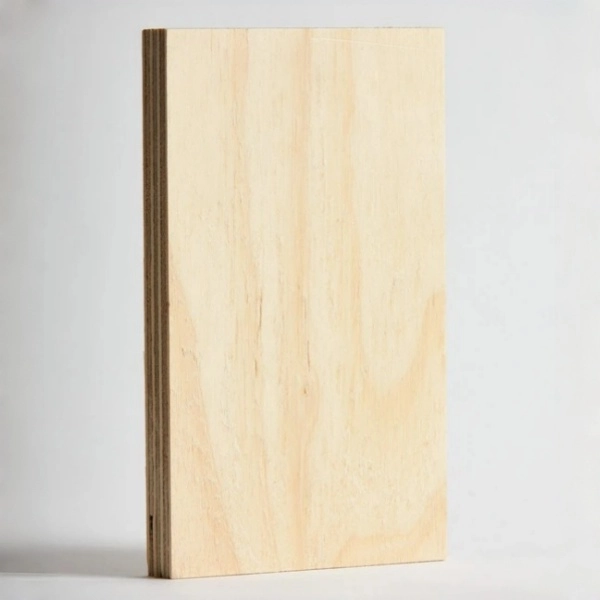 |
Thin wood veneer layers cross-laminated with waterproof adhesive | Excellent moisture resistance; high screw-holding strength; stable under humidity changes | More expensive than particleboard; heavier | Bathroom vanities, kitchen cabinets, any high-humidity area |
| Particleboard (PB) | 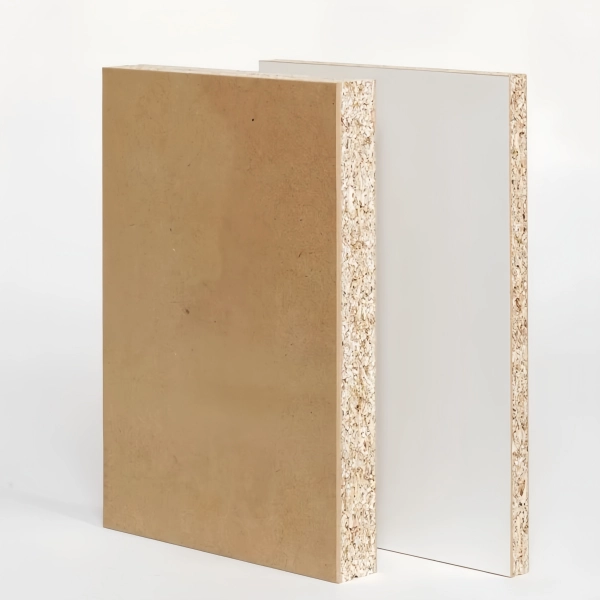 |
Wood chips bonded with resin under heat and pressure | Low cost; flat surface for laminates | Poor moisture resistance; edges swell when wet; low screw-holding | Budget hotels, dry areas (upper cabinets, back panels) – not recommended for bathrooms |
| Medium Density Fiberboard (MDF) | 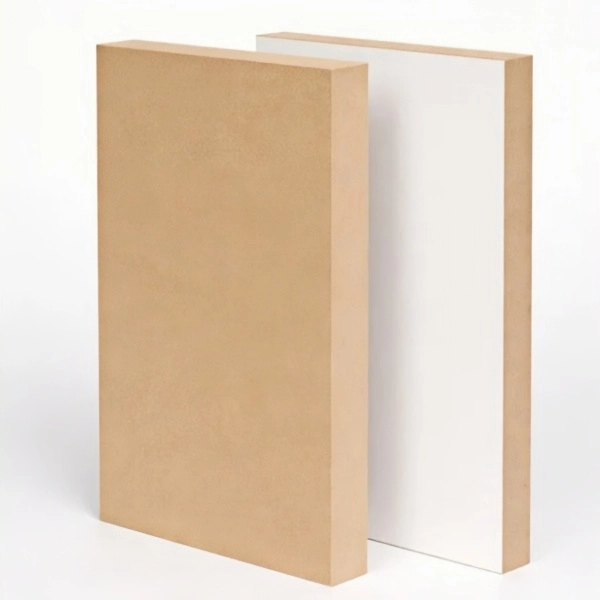 |
Fine wood fibers mixed with resin, pressed into dense panels | Very smooth surface; excellent for painted or routed designs; no grain show-through | Low screw-holding strength; swells if moisture penetrates | Decorative door panels, mouldings, painted cabinets (dry locations) |
Swipe horizontally to view the full table.
Veneer & Laminate Finish Options
| Finish | Picture | Description | Advantages | Disadvantages | Relative Cost |
|---|---|---|---|---|---|
| Wood Veneer | 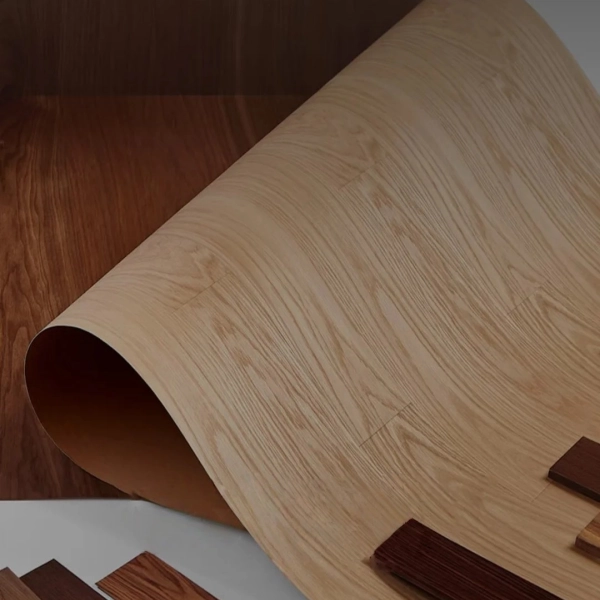 |
Thin slice of real wood adhered to substrate (plywood or MDF) | Natural warmth, unique grain, high-end look; can be stained and repaired | Requires sealing; more expensive; susceptible to scratching and moisture if not properly finished | High |
| High-Pressure Laminate (HPL) | 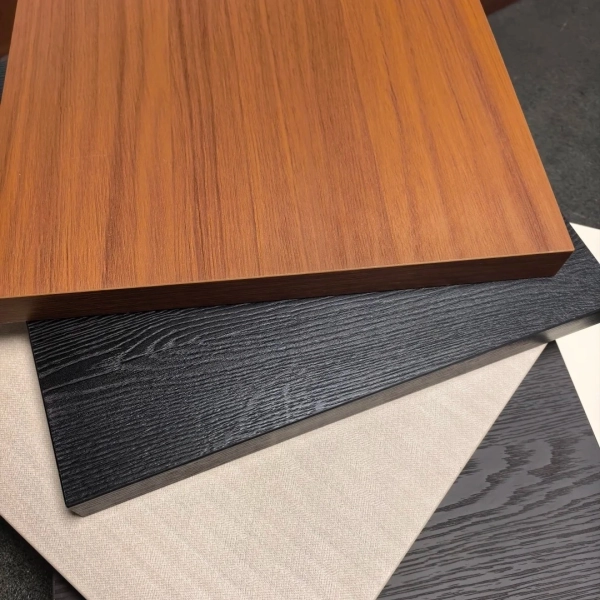 |
Multiple layers of kraft paper with resin, fused under heat and pressure | Extremely durable, scratch- and chemical-resistant, wide colour/pattern range, easy to clean | Can look artificial; edges require banding; difficult to repair | Medium |
| Thermally Fused Melamine | 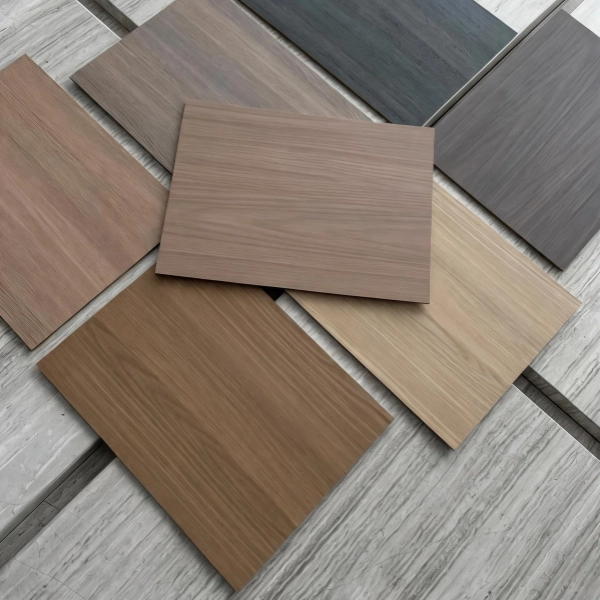 |
Melamine resin directly fused to particleboard or MDF | Very affordable, decent scratch resistance, uniform colour | Low moisture resistance (edges swell); low impact resistance; limited to flat panels | Low |
| Lacquer | 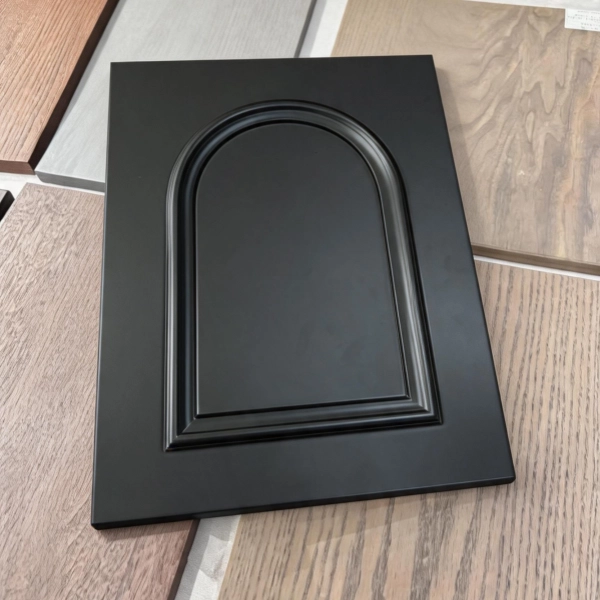 |
Multiple coats of sprayed and sanded paint (often over MDF) | High-gloss or matte, smooth finish, unlimited colour options | Chips and scratches are visible and hard to repair; shows fingerprints (gloss) | Medium-High |
Swipe horizontally to view the full table.
Swipe horizontally to view the full table.
Recommended Substrate + Finish Combinations by Area
| Hotel Area | Recommended Substrate | Recommended Finish | Key Reason |
|---|---|---|---|
| Guestroom wardrobe / media cabinet | Plywood or high-grade particleboard | Melamine or wood veneer | Balance of cost, durability, appearance |
| Bathroom vanity | Marine plywood | High-pressure laminate (HPL) or 2K polyurethane paint | Moisture resistance essential |
| Minibar / tea cabinet | Plywood | HPL or lacquer | Spill-prone area, needs easy-clean surface |
| Nightstand | Plywood or MDF (top) + plywood (case) | Wood veneer or lacquer | High-touch surface; appearance important |
| Public area reception desk | Plywood + solid wood edges | High-durability laminate or veneer with clear coat | Heavy use, brand visibility |
| Kitchen / pantry (suite) | Marine plywood | HPL or quartz / stone countertop | Water, heat, heavy use |
Hardware: The Moving Parts That Matter Most
Cheap hardware is the #1 cause of premature cabinet failure in hotels. Specify commercial-grade components:| Hardware Type | Recommended Specification | Brands |
|---|---|---|
| Drawer slides | Full-extension, soft-close, load rating ≥45 kg | Blum (TANDEM plus), Hettich (Quadro), GRASS |
| Hinges | Soft-closing, opening angle 135° or 165°, nickel or zinc plating | Blum (CLIP top), Hettich (Sensys), Salice |
| Handles / pulls | Solid metal (zinc alloy, stainless steel, brass), powder-coated or plated finish | Local sourcing from reputable brands |
| Lift systems (for overhead cabinets) | Gas-spring assisted, soft-close | Blum (AVENTOS), Hettich (AvanTech) |
Swipe horizontally to view the full table.
Cost Guidance (Per Square Foot / Per Room)
| Material + Finish Combination | Relative Cost (1 = lowest) | Typical Use Case |
|---|---|---|
| Particleboard + Melamine | 1 | Economy hotels, back panels, interior shelves |
| Plywood + Melamine | 3 | Mid-scale hotel wardrobes, media cabinets |
| MDF + PU Lacquer (matte) | 3 | Modern design hotels, painted cabinets |
| Plywood + High-gloss lacquer | 4 | Luxury suites, public area focal pieces |
| Plywood + Wood Veneer (clear coat) | 5 | Upscale and luxury hotels |
Swipe horizontally to view the full table.
Structural & Joinery Details That Ensure Longevity
Even the finest materials will fail if the cabinet construction is weak. When specifying custom hotel millwork, pay close attention to the invisible details – joinery, edge treatment, and structural reinforcement. These elements determine whether your cabinets will last 10+ years in commercial use or start falling apart after the first seasonal humidity change.
Below are critical construction specifications to demand from your cabinet manufacturer. Share this list with your supplier to ensure your hotel cabinetry solutions meet commercial‑grade standards.
Back Panel
| Requirement | Why It Matters |
|---|---|
| Thickness ≥ 5 mm | Prevents the cabinet from racking (leaning) when doors are opened or during transport. |
| Reinforced attachment | Screwed or stapled into the side walls and top/bottom panels at intervals ≤ 150 mm. Glue alone is insufficient. |
| Plywood preferred | Plywood resists warping better than particleboard for back panels, especially in high-humidity areas. |
Swipe horizontally to view the full table.
Drawer Construction
| Component | Specification | Why It Matters |
|---|---|---|
| Bottom thickness | ≥ 12 mm (solid wood or high-density plywood) | Supports heavy items (e.g., guest luggage, books) without sagging. |
| Joint type | Dovetail (for wood drawers) or metal locking pins (for system drawers) | Dovetail joints are strongest for natural wood; metal pins ensure precision in modular systems. Stapled drawers will fail quickly. |
| Slide attachment | Slides screwed into both the drawer side and the cabinet wall – not just stapled | Prevents detachment under repeated heavy loads. |
Swipe horizontally to view the full table.
Edge Banding
| Requirement | Why It Matters |
|---|---|
| Method | Laser or hot-melt adhesive (PUR) – not standard EVA hot melt. Laser banding creates a seamless, waterproof seal. PUR is moisture-resistant and flexible. EVA can peel or allow moisture ingress. |
| Thickness | ≥ 1 mm (3 mm for high-impact edges like the front of shelves). Protects the substrate from chipping, water, and cleaning chemicals. |
| Material | ABS or PP (polypropylene) – avoid PVC in eco-conscious projects. ABS and PP are more durable and recyclable; PVC can yellow over time. |
| Colour match | Exact match to the panel surface or a deliberate contrasting edge. Aesthetics and perception of quality. Mis-matched edges look cheap. |
Swipe horizontally to view the full table.
Swipe horizontally to view the full table.
Space Planning & Functional Design for Hotel Cabinets
Successful hotel cabinetry is not only about aesthetics or material quality — it is also about how efficiently the cabinets function within the overall guestroom layout. In hospitality projects, every cabinet must balance storage capacity, guest comfort, circulation space, housekeeping efficiency, and visual harmony with the entire interior design concept.
Well-planned hotel guestroom cabinets can significantly improve both guest experience and operational workflow, while poor space planning often leads to cramped layouts, inconvenient storage, and long-term usability issues. This is why space planning is one of the most important aspects of designing hotel construction cabinets and hospitality millwork systems.
Standard Dimension Planning for Hotel Cabinets
Unlike residential projects, hotel guestrooms usually operate within strict size limitations. Cabinet dimensions must therefore be carefully coordinated with:
- Entry door swing areas
- Window positions
- Curtain systems
- Bed layouts
- Walkway clearance
- HVAC and MEP coordination
Common Hospitality Cabinet Dimensions
| Cabinet Type | Typical Recommended Size |
|---|---|
| Wardrobe Depth | 550–650mm |
| Vanity Cabinet Height | 850–900mm |
| Nightstand Height | Similar to mattress height |
| TV Cabinet Depth | 400–500mm |
| Minibar Cabinet Ventilation Gap | ≥50mm rear clearance |
| Walkway Clearance | ≥800mm recommended |
Swipe horizontally to view the full table.
ADA & Accessibility Considerations
Modern hospitality projects increasingly require ADA-compliant or accessible guestrooms. Cabinet planning must therefore account for wheelchair accessibility and ergonomic usability.
Important accessibility considerations include:
- Reachable handle heights
- Adequate wheelchair turning radius
- Lower hanging rods or shelving options
- Accessible vanity cabinet clearance
- Easy-to-operate drawer and door systems
For example:
- Pull handles should remain within comfortable reach zones.
- Open circulation space should allow wheelchair turning near wardrobes and bathroom areas.
- Vanity designs may require knee clearance depending on accessibility standards.
Accessibility-friendly cabinetry not only improves compliance but also enhances overall guest inclusivity and comfort.
Coordinating Cabinets With Loose Furniture
One of the most overlooked aspects of hospitality design is visual consistency between built-in cabinetry and movable furniture.
Successful hotel cabinetry solutions should coordinate closely with:
- Beds and headboards
- Writing desks
- Seating
- Coffee tables
- Wall panels
- Decorative finishes
This coordination helps create a unified guestroom identity through:
- Matching wood tones
- Consistent metal finishes
- Similar edge profiles
- Harmonized handle designs
- Repeated material textures and colors
In luxury hospitality projects, cabinetry often becomes the visual anchor that ties all FF&E elements together into one cohesive design language.
Integrated Lighting for Hotel Cabinetry
Lighting integration has become increasingly important in modern hospitality millwork design.
Well-designed lighting improves:
- Guest convenience
- Ambience
- Luxury perception
- Operational usability
Popular integrated lighting applications include:
- Motion-sensor wardrobe lighting
- Under-cabinet ambient lighting
- Mirror-front vanity illumination
- Minibar accent lighting
- Floating vanity base lighting
- LED shelving displays in suites or public areas
Lighting systems should also be coordinated early with:
- Electrical planning
- Power outlet locations
- Driver placement
- Maintenance accessibility
Poor coordination between lighting and cabinetry can create difficult installation issues later during construction.
Functionality Is as Important as Appearance
Beautiful cabinetry may attract attention during opening, but functional cabinetry determines long-term operational success.
Well-designed hotel cabinets should:
- Support guest convenience
- Simplify housekeeping operations
- Reduce maintenance problems
- Improve room organization
- Maintain durability under constant commercial usage
In hospitality projects, functional design is not separate from aesthetics — the two must work together as one integrated system.
Choosing the Right Hotel Casegoods Manufacturer
Selecting the right manufacturing partner is just as critical as the design itself. While this guide focuses on product selection, a few key criteria will help you narrow down your shortlist:
- Hospitality experience – Does the manufacturer have a proven track record with hotels (not just residential or office)? Ask for references and photos of completed projects.
- Production capacity – Can they handle your project’s volume and meet your construction timeline? Inquire about their factory size, equipment, and current workload.
- Shop drawing capability – Do they have an in‑house engineering team to convert design drawings into precise shop drawings and cut lists? This avoids costly on‑site errors.
- Mock‑up support – Will they produce a full‑size sample cabinet or an entire mock‑up room before mass production? This is essential for verifying fit, finish, and function.
- Logistics coordination – Do they offer export packing, freight forwarding, and customs documentation? For international projects, this can save weeks of delays.
- Installation experience – Can they provide on‑site supervision or detailed installation manuals? Proper installation is half the battle for cabinet longevity.
For a complete, step‑by‑step guide to evaluating and selecting a hotel furniture manufacturer – including factory audits, contract negotiation, and quality control – please refer to our dedicated resource: How to Choose the Right Hotel Furniture Supplier: The Ultimate Guide to 2026
Conclusion
In hotel construction projects, cabinetry is far more than a basic storage solution. From wardrobes and minibar units to vanity cabinets and integrated millwork systems, custom hotel cabinets play a major role in shaping guest experience, operational efficiency, and the overall visual identity of the property,and efficient utilization of space helps control the project budget.
Well-designed hotel casegoods help maximize space utilization, improve housekeeping workflow, support long-term durability, and maintain brand consistency across guestrooms and public areas. At the same time, poor cabinetry planning can lead to operational inefficiencies, maintenance issues, premature wear, and costly replacements after opening.
Experienced hospitality manufacturers such as CenSo Home provide custom hotel cabinets, hospitality casegoods, and integrated FF&E solutions for hotel construction and renovation projects worldwide. These services typically include shop drawing development, mock-up production, large-scale manufacturing, logistics coordination, and installation support to help hotel projects achieve durable and operationally efficient millwork solutions.
Whether for luxury hotels, boutique properties, business hotels, or resort developments, professionally engineered hotel FF&E casegoods provide long-term value that extends well beyond the initial construction phase. Investing in high-quality cabinetry solutions early can significantly reduce future operational costs while improving the guest experience for years to come.